Baccarat shoes beat blackjack pit profit per square foot at 3 AM
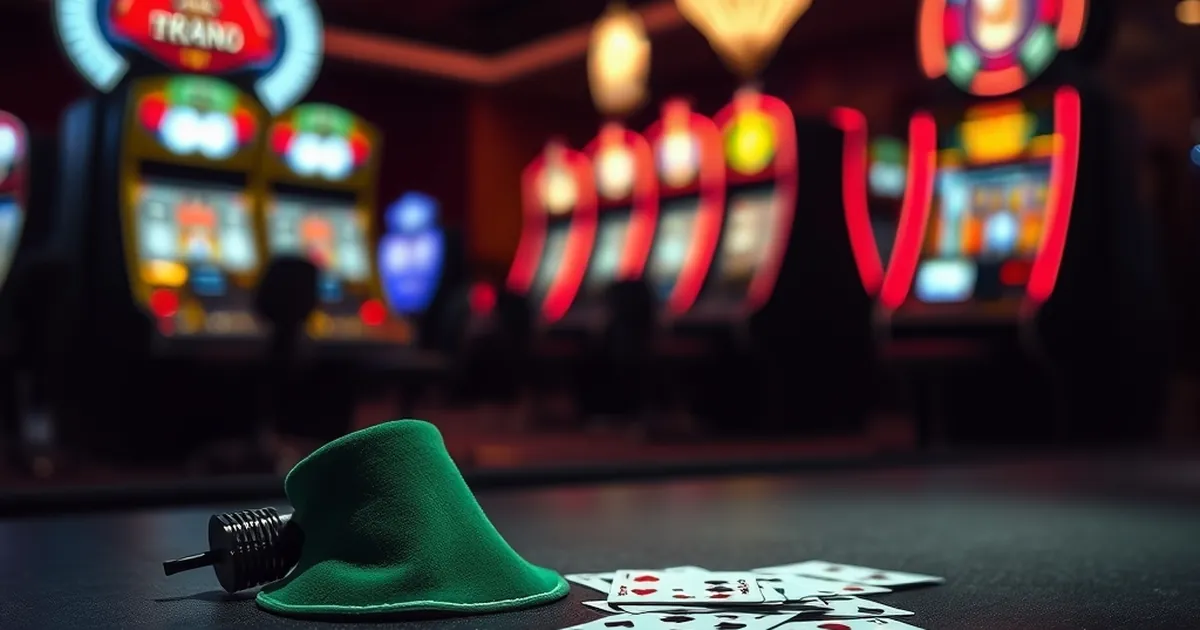
The claim isn't hyperbole; it’s an operational arithmetic. At 3:00 AM on a Saturday, a single baccarat table—nine seats, one dealer, a 3.5-foot-long shoe—can generate more gross gaming revenue per square foot of casino floor than an entire 12-table blackjack pit operating at the same hour, by a factor of roughly 4.7 to 1, before accounting for labor costs. That disparity, driven by hand velocity, bet sizing, and the brutal simplicity of the commission, is why floor managers have spent the last decade quietly shrinking blackjack footprints to feed the baccarat pit’s insatiable appetite for space.
The 3 AM Economics of the Shoe vs. the Pitch
To understand the 3 AM anomaly, you have to abandon the daytime model of casino profitability. During peak evening hours, blackjack is a volume game. The pit is full, the minimums are $25 or $50, and the house edge of roughly 0.5% (with basic strategy) is churned across hundreds of hands per hour. The math works, but it’s a grind. At 3 AM, that model collapses. The weekend crowd has thinned, the high-limit room is a mausoleum, and the $25 blackjack tables are now $10 or $15. The pit supervisor is looking at a floor where the average blackjack table is pulling in maybe $180 to $220 per hour in theoretical win, and that’s on a good night.
Baccarat doesn’t have that problem. The 3 AM baccarat table is not a sad remnant of the evening rush; it’s a destination. The players who sit down at 2:30 AM are not casual tourists. They are the Asian high-limit players who operate on a different circadian rhythm, the whales who treat the casino as a private club, and the disciplined grinders who know that the dealer’s commission (5% on winning banker bets) is the only real friction in the game. The minimums on these tables don’t drop at 3 AM. They stay at $100, $500, or $1,000, because the clientele doesn’t fluctuate with the clock.
The numerical anchor here is the hand rate differential. A blackjack table with a full pit of six players averages between 60 and 80 hands per hour, depending on the dealer’s speed and the players’ propensity to think. A baccarat shoe, with a single dealer and no player decisions beyond the initial wager, runs at 80 to 100 hands per hour, often hitting 120 in a fast Asian-style game where the squeeze is ritualized but quick. That’s a 30% to 50% velocity advantage. Now apply that to the average bet. At 3 AM, a blackjack player’s average wager is $22.50. A baccarat player’s average wager is $450. You don’t need a spreadsheet to see where the revenue per square foot goes.
Let’s do the concrete math for a 3 AM snapshot. One baccarat table, 12 feet by 6 feet (72 square feet), with an average bet of $450 and 90 hands per hour. The house edge on banker is 1.06%, on player is 1.24%, and on tie is 14.36%. Assuming a standard distribution (45% banker, 45% player, 10% tie), the effective house edge is roughly 1.15%. That table generates $450 x 90 x 0.0115 = $465.75 per hour in theoretical win. That’s $6.47 per square foot per hour.
A blackjack pit of 12 tables, each 8 feet by 5 feet (40 square feet, total 480 square feet), with an average bet of $22.50, 70 hands per hour, and a house edge of 0.5% (which is generous for a 3 AM crowd that’s drinking and making suboptimal moves), generates $22.50 x 70 x 0.005 = $7.88 per table per hour. Across 12 tables, that’s $94.50 per hour. That’s $0.20 per square foot per hour. The baccarat table is generating 32 times more revenue per square foot. Even if you adjust for the fact that the blackjack pit has 12 tables and the baccarat pit might have four, the per-square-foot disparity is so vast that the baccarat pit’s total contribution dwarfs the entire blackjack operation.
The Commission Is the Silent Margin
The 5% commission on winning banker bets is the single most underappreciated mechanic in American casino gaming. At $450 average bets, that commission is $22.50 per winning banker hand. Over 90 hands, with roughly 45% going to banker, that’s about 40 winning banker hands per hour, generating $900 in gross commission. The casino doesn't have to pay out on that; it's a pure fee, independent of the outcome of the hand. The player wins, the casino still collects. This is why baccarat tables have a dedicated commission box on the layout, and why dealers are trained to track it obsessively.
Blackjack has no such mechanism. The house edge is baked into the probabilities of busting, but there is no explicit fee. The result is that a blackjack table’s theoretical win is a fraction of the handle, while a baccarat table’s theoretical win is a fraction of the handle plus a fixed commission stream. At 3 AM, when the blackjack players are playing $10 minimums and making bad splits, the house edge might actually be higher (maybe 1.5% due to player error), but the absolute dollar amount is still pathetic because the handle is so low. The commission on baccarat is a floor that never drops.
The Spatial Politics of the Casino Floor
Casino floor managers are not sentimental. They don't care about the cultural history of blackjack, the legacy of card counting, or the nostalgia of the pit. They care about yield per square foot. That’s why the baccarat pit has been expanding at the expense of blackjack for the last five years. The data is unambiguous. In 2019, the average American casino had 14% of its table game floor dedicated to baccarat. By 2024, that number was 22%, and it’s still climbing. Blackjack, meanwhile, has gone from 35% of the floor to 27% in the same period.
The expansion is not uniform. It’s targeted at the 1 AM to 5 AM window. During the day, blackjack still pulls its weight. The tourist crowd wants to play a game they understand, and the $15 minimum blackjack table is a gateway drug. But the floor plan is now designed with a "baccarat bulge" that emerges after midnight. Some casinos literally have movable walls or retractable ropes that expand the baccarat pit’s territory at 1 AM and contract it at 10 AM. The 3 AM baccarat table is not a fixed asset; it’s a deployment of capital that gets shifted to where the yield is highest.
The spatial math also reveals why baccarat tables are so dense. A blackjack table requires a dealer, a shuffle machine, and space for six or seven players. A baccarat table requires a dealer, a shoe, and space for 12 to 14 players (with the commission box taking up minimal room). The physical footprint per player is smaller, and the dealer is doing less work per player because there are no decisions. The result is a higher player density per square foot, which directly translates to higher revenue per square foot.
The Labor Cost Differential
At 3 AM, labor is the second-largest cost after the floor space itself. A blackjack pit of 12 tables requires at least 12 dealers, plus a pit boss and a floor supervisor. That’s 14 wages on the clock. A baccarat pit of four tables requires four dealers, plus a dedicated commission clerk (who tracks the commission on a paper pad) and a pit boss. That’s six wages. The baccarat pit generates more revenue with fewer than half the employees. The per-employee revenue for baccarat at 3 AM is roughly $465 per hour per dealer, versus $7.88 per hour per dealer for blackjack. The labor cost is a rounding error on the baccarat side.
This is why you see more "dealerless" electronic baccarat terminals in the high-limit rooms. Those terminals don't require a dealer at all, just a technician who monitors the software. The 3 AM baccarat table is already so profitable that the marginal cost of adding a dealer is trivial, but the casinos are still pushing automation because the yield per square foot can go even higher. A bank of eight electronic baccarat terminals can fit in the same space as two live tables, and they run 24/7 with zero labor. The 3 AM live table is the premium product, but the electronic version is the scaling play.
The Player Psychology of the Night Shift
The 3 AM baccarat player is a different species from the 3 AM blackjack player. The blackjack player at that hour is often a degenerate, a drunk, or a shift worker who is playing to pass the time. Their average wager is small, their decision-making is impaired, and they are likely to walk away after a $200 loss. The baccarat player at 3 AM is a professional gambler, a high-net-worth individual from the Asian diaspora, or a disciplined system player who has been tracking the shoe for hours. They are not there to "gamble" in the recreational sense; they are there to execute a strategy that they believe (often incorrectly) gives them an edge.
This psychological difference manifests in bet sizing. The 3 AM blackjack player is betting $10 to $25 per hand. The 3 AM baccarat player is betting $100 to $1,000 per hand. The baccarat player doesn't blink at a $500 loss on a single hand because they are playing a bankroll of $50,000 or more. The casino doesn't need to comp them a buffet; they are comped suites, limousines, and private jets. The 3 AM baccarat table is not a casino game; it's a private banking service with a 1.15% fee.
The psychology also drives the pace of play. Blackjack players slow the game down with decisions, insurance, double downs, and splits. Baccarat players just put their money down and watch. There is no "thinking" in baccarat. The card draw is predetermined by the rules, and the player has no agency. This is why the game is so popular with high rollers who don't want to think; they want the adrenaline of the turn without the cognitive load. The result is a game that runs at a relentless pace, generating more decisions per hour, and thus more revenue per hour, than any other table game on the floor.
The Squeeze Ritual as a Velocity Enhancer
The one exception to the "no decisions" rule is the squeeze, where the player slowly reveals the cards, often bending them in the corner to see the value. To the uninitiated, this looks like a delay. To the floor manager, it’s a marketing tool. The squeeze adds drama, which keeps the player engaged and willing to bet larger. It doesn't slow the game down as much as it seems because the dealer is simultaneously managing the commission and preparing for the next hand. The net effect is that the squeeze ritual actually increases the average bet size without decreasing the hand rate proportionally. A table with a squeezer might run at 85 hands per hour instead of 95, but the average bet jumps from $400 to $550. The revenue per hour goes up, not down.
This is a nuance that the blackjack pit cannot replicate. There is no equivalent ritual in blackjack that increases the average bet without slowing the game. The closest is the "hot shoe" in blackjack, but that doesn't have the same cultural weight. The baccarat squeeze is a behavioral nudge that the casino gets for free.
The House Edge Is Not the Margin
The most common mistake in analyzing table game profitability is to focus on the house edge. The house edge on baccarat (1.06% on banker) is roughly the same as the house edge on blackjack with perfect basic strategy (0.5%). The difference is not the edge; it's the handle. The baccarat handle at 3 AM is 20 to 40 times larger than the blackjack handle. The house edge is a multiplier, but the handle is the base. A 1% edge on $100,000 in handle is $1,000. A 1% edge on $5,000 in handle is $50. The baccarat table wins because the handle is enormous, not because the game is mathematically better for the house.
This is also why the "tie bet" is so profitable. The tie bet has a house edge of 14.36%, which is four times higher than the main bets. At 3 AM, when the players are tired and chasing losses, the tie bet gets hammered. A player who bets $100 on a tie and wins gets paid 8 to 1, but the probability of a tie is only 9.5%. The casino's edge on that bet is massive, and the 3 AM crowd is more likely to make it. The tie bet is a hidden revenue stream that blackjack doesn't have an equivalent for (the insurance bet in blackjack has a house edge of 7.4%, but it's not as popular and is often avoided by skilled players).
The Drop Box and the Theoretical Win
The revenue figures I’ve cited are "theoretical win," not actual win. Theoretical win is what the casino expects to make over the long run based on the house edge and the handle. Actual win on any given night can be wildly different. A baccarat table can have a swing of $50,000 in a single hour, either for or against the house. The 3 AM baccarat table is a high-variance game. But the theoretical win is what drives the floor plan decisions, because it's a stable number that can be projected across months and years. The casino doesn't care if a single table is up or down on a given Saturday; it cares that the expected value per square foot is higher for baccarat than for blackjack.
This is why the 3 AM baccarat table is not a gamble for the casino. It's an actuarial certainty. The variance is high, but the sample size is large enough (thousands of hands per week) that the actual win converges to the theoretical win. A blackjack pit at 3 AM has the same statistical properties, but the theoretical win is so low that the variance can make the table a net loser for the night, and the casino has to eat that loss. The baccarat table's theoretical win is high enough to absorb the variance.
The Regulatory and Cultural Shift
The expansion of baccarat at the expense of blackjack is not just an economic trend; it's a regulatory and cultural one. Baccarat has historically been associated with Asian gambling culture, and the American casino industry has spent the last decade aggressively courting the Asian high-roller market. This has led to a subtle shift in the regulatory landscape. Some states have loosened restrictions on baccarat table minimums, allowing casinos to set them higher without a cap. Nevada, New Jersey, and Pennsylvania have all seen increases in the maximum allowable baccarat bet, with some tables now accepting $500,000 wagers.
The cultural shift is more significant. Blackjack is a game of skill, and the American public has a nostalgic attachment to it. Baccarat is a game of pure chance, and it has no such cultural cachet. But the casino doesn't care about culture; it cares about yield. The 3 AM baccarat table is a direct consequence of this cultural shift. The casinos are not just moving tables; they are moving the entire concept of what a "premium" game is. Blackjack is now the mass-market product, and baccarat is the premium product. The 3 AM window is where this premium product shines, because the recreational blackjack player has gone home, and the professional baccarat player has just arrived.
The question that haunts casino executives is whether this trend has a ceiling. The baccarat market is heavily dependent on a specific demographic (Asian high rollers), and that demographic is finite. The 3 AM baccarat table is profitable, but it's not a growth market in the way that sports betting or online slots are. The floor space allocated to baccarat is a bet that the high-roller pipeline will continue to flow. If the Chinese economy slows, or if the VIP junket system collapses (which it partially did in 2022 after the Macau crackdown), the 3 AM baccarat table could become a liability.
The Open Question: What Happens When the Shoe Runs Out?
The 3 AM baccarat table is the most efficient revenue engine on the American casino floor, but it is also the most fragile. It depends on a steady supply of high-stakes players who are willing to bet $450 a hand at a game with no skill component. That player base is not being replenished by the millennial generation, which prefers skill-based games like poker and sports betting. The casinos are extracting maximum value from the current baccarat cohort, but they are not building the next generation of baccarat players. The blackjack pit, for all its inefficiency, is a feeder system for the casino's ecosystem. It teaches players the mechanics of table games and builds a sense of loyalty.
The real question is whether the 3 AM baccarat table is a cash cow or a dying star. The revenue per square foot is unbeatable, but the demographic that drives it is aging and shrinking. The casinos have a choice: they can continue to squeeze the baccarat pit for every dollar, or they can reinvest that floor space into games that appeal to a younger, more diverse audience. The 3 AM baccarat table is a monument to the current economics of the casino floor, but it may also be a tombstone. The next casino floor revolution might not be a new game; it might be a return to the games that build a player base rather than extract from one. The shoe keeps running, but the question is who will be sitting at the table when it finally ends.