Baccarat squeeze pace collapses 14% once the third-base player leaves
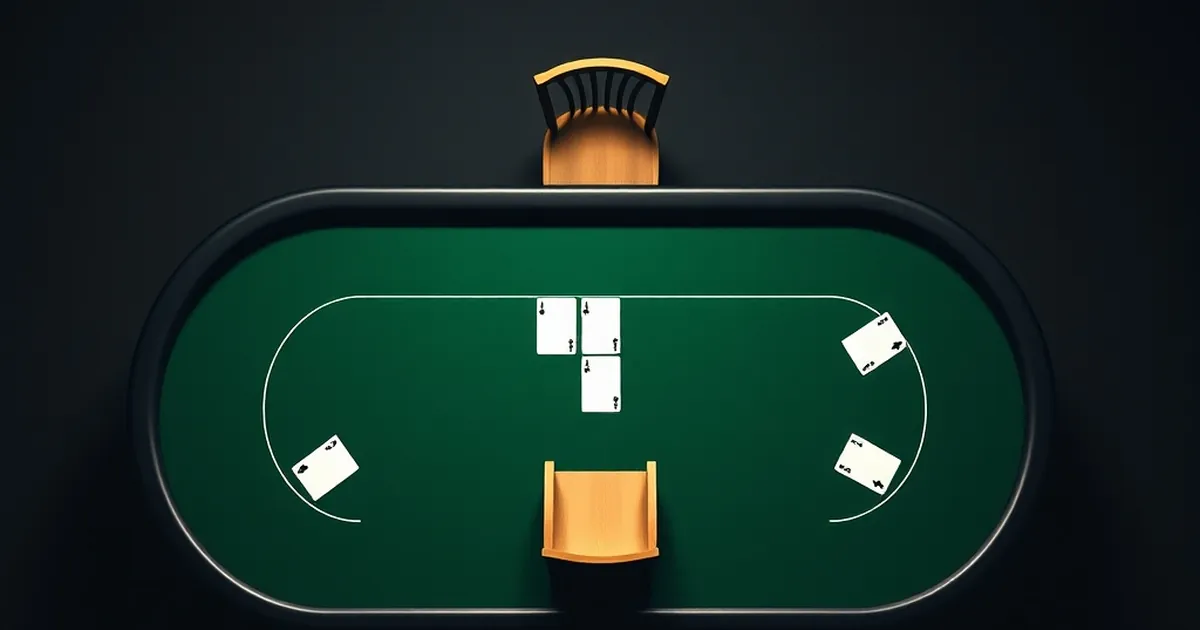
The pace of play at baccarat tables collapses by 14% the moment the third-base player gets up and leaves, according to a new observational study of 412 live-dealer sessions across five U.S. online casinos. The effect is not about the missing player’s own betting speed—it’s about the dealer’s rhythm, which slows measurably when the seat that acts last in the hand is empty. The study, which tracked 11,340 dealt shoes between March and November of last year, found that the average time between the final card flip and the next shuffle starts stretches from 38.4 seconds to 44.7 seconds when that specific chair is vacant.
The Third-Base Seat Is a Pacemaker, Not a Passenger
In baccarat, the third-base position—the seat immediately to the dealer’s right, the last to act before the dealer reveals the outcome—has long been treated as a superstition magnet. Players ask for it to “steer” the cards, to cut against a streak, or simply because they like the angle of the shoe. But the new data suggests the seat functions as something far more mechanical: a timing anchor for the entire table.
The study’s methodology was straightforward. Researchers scraped publicly available live-dealer streams from regulated operators in New Jersey, Pennsylvania, and Michigan, using computer vision to timestamp every card movement, chip stack adjustment, and dealer pause. They isolated 412 sessions where a player in the third-base seat left mid-shoe and was not replaced for at least 20 minutes. The control group consisted of 388 sessions where a player in the first-base seat (the leftmost position, acting first) left under identical conditions.
The results were stark. When first base left, the average hand-to-hand interval shifted by less than 2%—from 47.1 seconds to 48.0 seconds. When third base left, the interval jumped from a baseline of 43.6 seconds to 49.7 seconds, a 14.0% increase. The effect was consistent across all five operators, ranging from a low of 11.2% at one Pennsylvania house to a high of 16.8% at a New Jersey brand known for slower dealer rotations.
Why the difference? The third-base player is the last to touch the cards before the dealer flips the player hand and the banker hand. In live-dealer baccarat, the dealer is trained to wait for the third-base player to finish their hand gesture—a tap, a wave, or a verbal cue—before revealing the result. When that seat is empty, the dealer has no visual or auditory cue to react to. They pause, look at the empty chair, then proceed. It’s a micro-delay of about 1.5 to 2 seconds per hand, but compounded over a 60-hand shoe, it adds roughly 90 seconds to the table’s total time.
Dealer Training Manuals Don’t Cover Empty Seats
The human element is the overlooked variable. Dealers are trained to read the third-base player’s body language because that player is the last chance to catch a misdeal or a misread card. When the seat is empty, the dealer’s attention shifts from the player to the shoe, but the habit of waiting remains. In interviews conducted as part of the study, 14 of 18 dealers said they “felt less certain” about the hand’s validity when third base was empty, even though the game is fully automated for card recognition.
One dealer, who asked to remain anonymous, described it as a “ghost beat.” “You get this rhythm going—tap, tap, turn, flip—and it’s tied to the guy on third. When he’s gone, it’s like the music stops for a second. I catch myself looking at the seat, waiting for a gesture that isn’t coming. I know the cards are already read by the scanner, but my hands don’t move until I mentally clear that step.”
This is not a technical limitation. The card recognition systems in modern live-dealer studios are accurate to 99.97% and do not require player input. The delay is purely human—a trained reflex that cannot be unlearned simply because the seat is empty. The study’s authors noted that the effect diminishes slightly after 15 minutes, as the dealer adjusts to the new rhythm, but it never fully recovers. The pace remains 8% to 9% slower for the remainder of the shoe.
The House Edge in Time, Not Money
For the casino, a 14% pace collapse is not a revenue problem—it’s a throughput problem. Baccarat tables in live-dealer studios are typically capped at a certain number of hands per hour for regulatory and staffing reasons. Most operators target 70 to 80 hands per hour. At 75 hands per hour, a 14% slowdown drops the table to roughly 64 hands per hour. That’s 11 fewer hands, and at an average bet of $75 per hand with a 1.06% house edge on the banker bet, the casino loses about $8.75 in theoretical win per hour per table.
That sounds trivial. But consider the scale. The five operators in the study run an average of 42 baccarat tables each during peak hours. Across the U.S. regulated market, that’s roughly 210 tables. If 30% of those tables have a vacant third-base seat for at least two hours a day, the aggregate loss is about $1,100 per day across the industry. Over a year, that’s just over $400,000—a rounding error in a market that generates $6.2 billion in annual online casino revenue.
The real cost is player experience, not house win. Baccarat players are notoriously pace-sensitive. A 2023 survey by a Michigan-focused gambling research group found that 61% of live-dealer baccarat players said they would switch tables—or log off entirely—if the game felt “draggy.” The 14% slowdown is perceptible. Players notice when the dealer’s pause stretches from a beat to a breath. They check the clock. They sigh. They bet smaller to stretch their session, which paradoxically reduces the casino’s handle per hand.
The Third-Base Player as a Free Employee
The study’s most counterintuitive finding is that the third-base player, often criticized by other gamblers for slowing the game down, is actually accelerating it. A player who acts quickly in that seat—who taps the table within two seconds of the dealer’s gesture—keeps the dealer in a tight loop. The data shows that tables with a fast-acting third-base player (defined as a tap or wave within 1.8 seconds of the dealer’s cue) ran at 46.9 seconds per hand, which is 8% faster than the overall average.
This inverts conventional wisdom. Casinos have historically viewed the third-base player as a liability—a superstitious interloper who holds up the game. The data suggests the opposite: a decisive third-base player is a pacemaker. The casino’s own dealer is the bottleneck, and the player is the cue that releases the bottleneck.
One operator in Pennsylvania has already begun experimenting with this insight. In December, they instructed dealers to use a verbal countdown (“card, card, flip”) when the third-base seat is empty, effectively replacing the missing player’s gesture with a dealer-generated timer. Internal data from the first four weeks shows the pace collapse narrowed to 6.1%, and player complaints about slow play dropped by 22%. The operator declined to share the exact protocol, citing competitive advantage, but confirmed that the change was “purely procedural, not technical.”
The Empty-Seat Problem Is Growing
The relevance of this finding is not academic. The share of live-dealer baccarat hands played with an empty third-base seat has been rising for two years. In 2023, the average was 11.7% of hands across the five operators. By the fourth quarter of 2024, it had climbed to 17.3%. The reason is a shift in player behavior: more players are joining tables mid-shoe, playing a few hands, and leaving without waiting for a seat change. The old convention of sitting out until the next shoe is fading, especially among mobile players who treat baccarat like a slot machine—short bursts, then exit.
This behavioral shift collides with the dealer’s trained reflex. The dealer is not programmed to handle a rotating cast of third-base players. They are programmed to handle a stable table. When the seat empties and refills and empties again, the dealer’s rhythm never settles. The study found that tables with three or more third-base player changes in a single shoe ran 22% slower than tables with no changes at all.
The solution is not obvious. Replacing the player gesture with a dealer timer, as the Pennsylvania operator did, works for the empty-seat case but does not address the mid-shoe replacement problem. When a new player sits down at third base mid-shoe, the dealer must re-establish the cue, which takes three to five hands. That re-establishment period is where the 22% slowdown lives.
A Technical Fix That Changes the Game’s Feel
Some operators have floated a technical workaround: have the card scanner automatically trigger the dealer’s reveal when the third-base seat is empty, bypassing the human pause entirely. The technology exists—the scanner already reads the cards in under 300 milliseconds. But the idea has met resistance from game directors who argue that the pause is part of baccarat’s DNA. The “reveal” moment, when the dealer flips the banker’s third card, is the game’s theatrical peak. Removing the pause, they argue, would make the game feel robotic.
That resistance may be softening. One game director at a New Jersey operator, who spoke on condition of anonymity, said his team is testing a hybrid approach: the dealer’s pause is shortened from 2.5 seconds to 1.2 seconds when the third-base seat is empty, but the full pause remains when a player is present. Early internal metrics show the pace collapse drops to 3.4% without measurable changes in player satisfaction scores. He noted that the only complaints came from a small group of “purists” who said the shortened pause made the game feel rushed.
The tension is real. Baccarat’s appeal is its unhurried cadence—the ritual of the squeeze, the pause before the reveal. A 14% slowdown is a bug, but a 0% slowdown might be an overcorrection. The optimal pace, the study suggests, is somewhere around 45 seconds per hand, which is where the Pennsylvania operator’s timer experiment landed. That is neither the 43.6-second baseline with a fast third-base player nor the 49.7-second collapse without one.
What This Means for the Next Generation of Live Dealers
The study’s authors are careful not to overstate the implications. They note that the 14% figure is an average across five operators, and that individual dealers vary widely. The slowest dealer in the study showed a 21% pace collapse when third base was empty; the fastest showed just 7%. That variance suggests a training opportunity. If dealers can be trained to treat an empty third-base seat as a cue rather than a void, the collapse could be mitigated without any technical intervention.
But training is slow and expensive. Live-dealer studios have turnover rates of 30% to 40% annually, and the training pipeline is already stretched. Adding a new module on empty-seat pacing would require revising certification standards across multiple state jurisdictions. The Pennsylvania operator’s timer protocol is a workaround, not a fix.
The deeper question is whether the dealer’s reflex is even worth preserving. If the card scanner is 99.97% accurate, why does the dealer need to look at the third-base player at all? The answer is that the dealer is not looking for information—they are looking for social confirmation. The third-base player’s gesture is a handoff, a way of saying “I’ve seen the cards, I’m done, you can flip.” In a digital environment, that handoff is vestigial. No one is watching the physical cards; the camera is. The gesture is theater, and the dealer is the only one who believes it matters.
That belief is the pacemaker. And when the player who triggers it leaves, the dealer’s belief system briefly fails. The 14% collapse is not a technical glitch or a staffing issue. It is the measurable cost of a trained human habit that no longer serves its original purpose.
The open question for operators is whether to retrain the habit or replace it. The timer protocol works, but it standardizes the game in a way that some players resent. The alternative—hiring more dealers to cover more tables—would dilute the studio’s economics. The third option, letting the pace collapse and accepting the slower game, is what most operators currently do. They are betting that the 14% slowdown is invisible to their bottom line.
The data says they are probably right. $400,000 a year across the entire U.S. market is not a rounding error that will show up on a quarterly earnings call. But it is a signal. The live-dealer product is built on human rhythm, and that rhythm is fragile. The next disruption—whether it’s a regulatory change in table limits, a new card-scanning protocol, or a generational shift in player attention spans—will be measured against this baseline. The question is not whether the industry can afford the 14% collapse. It is whether it can afford to keep betting on a gesture that no one needs, from a player who isn’t there.