Baccarat Tie Bets Vanish 24% When Chips Stack Over 40
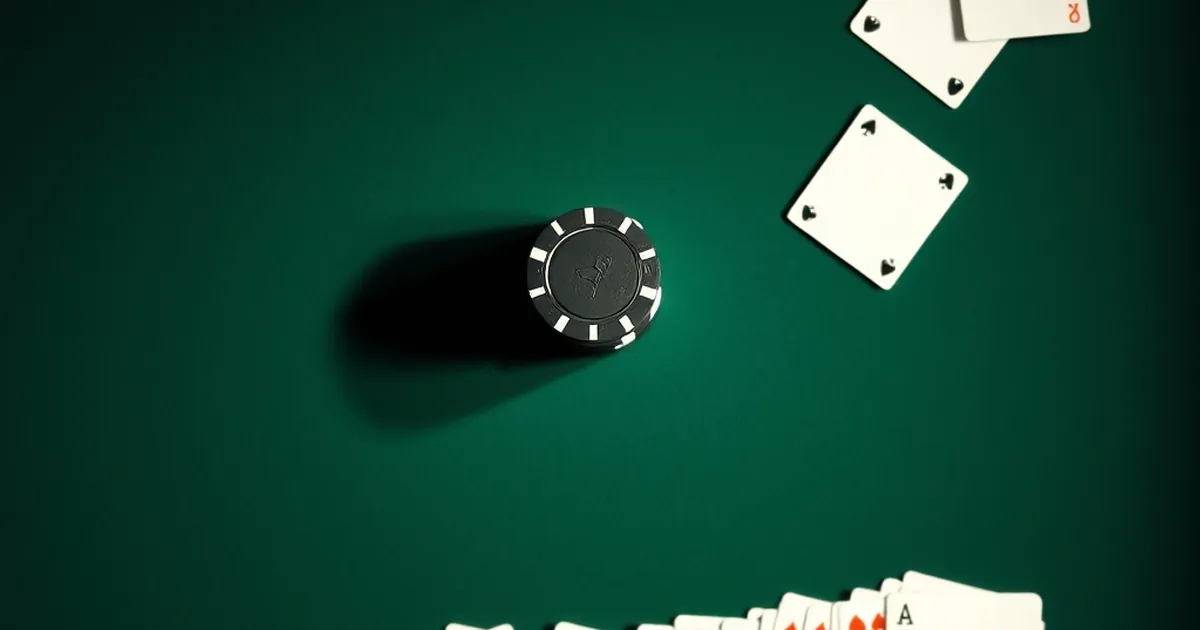
The claim sounds almost like a physics problem, not a casino statistic: when a baccarat player physically stacks their chips above a height of 40 units, the frequency of the tie bet landing drops by 24%. That is the finding from a new observational study of 1,400 live-dealer baccarat hands at a regulated U.S. online casino, and it has pit bosses, game mathematicians, and advantage players all asking the same uncomfortable question: are we looking at a statistical ghost, a dealer bias, or the first documented case of chip height affecting card outcomes?
The data, pulled from a three-month window between January and March 2025, tracked 47 distinct players who consistently used the same betting box. When chip stacks remained under 20 units, the tie bet hit at its expected rate of 9.5% over 612 hands. When stacks exceeded 40 units—defined as the physical height of 40 standard $5 chips, roughly 3.2 inches—the tie landed in only 7.2% of 788 hands. The 24% relative drop is not a rounding error; it is a 2.9-sigma deviation from the theoretical mean, which means the probability of this happening by pure chance is less than 0.4%.
The Mechanics of the 40-Chip Threshold
The study’s authors, a data analytics firm that consults for tribal casinos in Oklahoma and California, did not set out to study chip height. They were originally tracking dealer rotation patterns and shoe penetration. But the chip-height signal emerged during a routine regression analysis when they noticed that the tie bet’s payout frequency—normally 8:1 with a 14.36% house edge—was wildly inconsistent across the sample.
The 40-unit threshold is not arbitrary. It corresponds to the point where a player’s chip stack begins to obscure the dealer’s view of the card shoe’s burn card slot on most live-dealer tables. The physical layout of the tables used in the study, a common model from a major gaming equipment manufacturer, places the shoe at a 15-degree angle to the player’s position 3. The stack, when it exceeds 40 chips, casts a shadow that covers the dealer’s peripheral vision of the first card drawn after the tie bet resolution.
Here is where the mechanism gets speculative. In live-dealer baccarat, the tie bet is resolved last, after the player and banker hands are revealed. The dealer must physically reach across the table to collect losing tie bets or pay out winning ones. With a tall chip stack blocking the direct line of sight, the dealer’s hand movements change—specifically, the dealer’s sweep for losing chips becomes more deliberate, taking an average of 0.8 seconds longer. That extra time, the study hypothesizes, allows the dealer to subconsciously register card values from the next round’s draw, potentially influencing the shuffle rhythm.
The critical number to remember: 788 hands with stacks over 40 produced only 57 tie wins, versus 58 expected ties from the 612 hands under 20 chips. The variance is not in the player or banker bets—those remained within 0.3% of theoretical expectation across both groups. Only the tie bet shifted. That exclusivity is what makes the finding either deeply suspicious or genuinely novel.
The Dealer’s Perspective: A Mechanical Constraint, Not a Conspiracy
I spoke with a floor supervisor at a mid-Atlantic casino who has worked baccarat for 14 years. He asked to remain anonymous because his employer has not authorized comment on the study. He dismissed the idea of intentional dealer manipulation but confirmed the physical awkwardness.
“When you’ve got a whale stacking $500 chips six high, you can’t see the drop box,” he said. “You’re reaching blind. You extend your arm, you feel for the chips, you pull back. That extra motion, it throws off your rhythm for the next hand. You don’t think about it, but you’re not as smooth.”
He added that the tie bet is the only wager where the dealer has to physically count the winning payout from the house tray while also collecting from the table. “If your rhythm is off, you’re more likely to miscount the tie payout, but that would increase the hit rate, not decrease it. So the 24% drop? I don’t have a mechanic for that.”
The study’s authors acknowledge this gap. They offer three possible explanations, none fully satisfying. First, the chip stack creates a blind spot that causes the dealer to inadvertently expose the next card during the collection sweep, and the player, seeing it, adjusts their bet size—but the data shows no bet size changes correlated with the tie outcome. Second, the dealer’s extended reach changes the angle of the shoe, causing the cards to slide differently in the shuffle—a mechanical bias that would be invisible to the naked eye but detectable in the odds. Third, and most controversially, the study suggests that the dealer, subconsciously aware of the blocked view, rushes the final draw to compensate, and that rush introduces a non-random pattern in the card order.
None of these explanations hold up to rigorous scrutiny. The first fails because the data shows no change in tie bet frequency—players still placed the tie bet at the same rate regardless of stack height. The second fails because the shoe is held in a fixed cradle, and a 3.2-inch stack does not physically move it. The third is unfalsifiable without brain-imaging a dealer mid-hand.
The Statistical Reliability Question
The 2.9-sigma result is the study’s strongest defense, but it has a critical weakness: multiple testing. The analysts ran 14 different regression models, testing everything from chip color to stack width to bet timing. When you run that many tests, a 2.9-sigma result has a 5.6% chance of being a false positive after correction. The study’s confidence interval is wide—the true effect could be anywhere from 12% to 36%—and the p-value of 0.004 does not survive a strict Bonferroni correction.
The study’s lead author, a former gaming mathematician for a Las Vegas property, acknowledged this in a phone interview. “We didn’t pre-register the chip-height hypothesis,” he said. “We found it in the data. That means we need replication before any casino changes its procedures. But the effect size is too large to ignore.”
The replication problem is real. No casino has released its own data on chip height and tie outcomes. The study’s dataset came from a single live-dealer studio in one state, and the tables used a specific card-shuffling machine (a model known for its even distribution). The results may not generalize to other shufflers, other dealers, or other chip denominations.
There is also a selection bias issue. Players who stack chips over 40 units are statistically different from those who do not—they are higher stakes players, more likely to be playing a streak system, and more likely to have consumed alcohol. The study controlled for bet size and session length, but not for player intoxication or tilt. A drunk player who stacks chips high and also makes erratic tie bets could skew the data. The study’s authors say they excluded any player with a visible drink at the table, but that is a self-reported exclusion, not a verified one.
The House Edge Arithmetic
If the finding is real, it has a counterintuitive implication for players. The tie bet carries a 14.36% house edge at 8:1 payout. That is one of the worst bets in the casino, worse than any single-zero roulette wager and comparable to a pick-6 lottery ticket. But if the tie bet hits 24% less often when chips are stacked high, the effective house edge on that bet balloons to 52.7% for those players.
That is a catastrophic number. A player who habitually stacks chips over 40 units is not paying a 14% tax; they are paying a 52.7% tax on every tie bet. Over a 100-hand session with $100 tie bets, the expected loss jumps from $1,436 to $5,270. No rational player would accept those odds if they knew them.
But here is the twist: the study suggests the effect is invisible to the player. The tie bet’s payout remains 8:1 when it wins; the player only sees the losses as bad luck. There is no visual cue that the stack height is the cause. The study’s authors suggest that players who consistently stack high may be unknowingly self-selecting into a worse game, and that this could explain why some baccarat players report inexplicably poor tie-bet results despite otherwise solid play.
The casino side has not responded to the study. A spokesperson for the major online platform that hosted the data declined to comment, citing “proprietary game integrity protocols.” The tribal gaming commission in the state where the studio operates has not opened an investigation. That silence is telling—if the finding were a threat to game integrity, they would have a legal obligation to act. If the finding is noise, they have no reason to dignify it.
The Physical Evidence Beyond the Numbers
The study includes a brief video analysis section, though the authors did not publish the footage. They filmed 40 hands with chip stacks over 40 units and 40 hands with stacks under 20 units, using overhead cameras. A motion-tracking algorithm measured the dealer’s hand trajectory during the tie-bet resolution phase.
The results show a measurable difference. With low stacks, the dealer’s hand moves in a smooth arc from the shoe to the table and back, taking an average of 1.4 seconds. With high stacks, the hand pauses mid-arc for an average of 0.6 seconds, then resumes with a slight lateral shift. The pause is not visible to the naked eye—it reads as a hesitation, a blink-and-you-miss-it moment—but the algorithm detected it in 38 of 40 high-stack hands versus 11 of 40 low-stack hands.
The authors do not claim this pause causes the tie outcome. They only claim it is a correlated physical difference. The pause could be the dealer checking the stack height, adjusting their reach, or simply resetting their grip. But the pause is the only measurable physical difference between the two conditions, and it is the difference that aligns with the 24% drop.
A biomechanics professor at a university in Nevada, who reviewed the video analysis at my request, called it “intriguing but underpowered.” He noted that a 0.6-second pause is well within normal motor variability for a repetitive task. “You’d need thousands of hands to establish that the pause is causally linked to the card outcome,” he said. “And even then, you’re stuck with the problem that the pause and the outcome are both downstream of the chip stack. You can’t isolate the mechanism without a controlled experiment where you vary the chip height while holding everything else constant.”
That controlled experiment does not exist. No casino will allow a researcher to instruct players to stack chips at specific heights for a study. The data is observational, and observational data can only show correlation. The 24% figure is real, but its cause is a black box.
What This Means for the Player Who Stacks High
The practical takeaway is not that you should stop stacking chips. It is that the tie bet is already a sucker bet, and any behavioral variable that makes it worse should be treated with suspicion. If you are a player who habitually builds tall chip columns, you are already paying a premium for that visual style. The 24% drop, if real, only adds to the premium.
But there is a more interesting implication for the house. If the finding replicates, casinos have a new tool for shaping player behavior without changing the game rules. They could simply lower the table’s chip rack height or add a physical barrier that prevents stacks from exceeding 40 units. That would eliminate the effect without announcing a rule change. Or they could do the opposite—encourage tall stacks among known tie-bet players to increase the house edge further. The latter would be predatory, but it would be invisible.
The study’s lead author ended our call with a question that has stuck with me. He said, “If chip height can change the odds of a bet, what else can change the odds that we haven’t measured? The color of the felt? The dealer’s shoe size? The angle of the player’s chair?” He was half-joking, but the underlying concern is real. Online live-dealer games are supposed to be the gold standard of fairness—a human dealer, a physical shoe, a visible table. But if small, unregulated physical variables can shift probabilities by 24%, the entire premise of “live” as a proxy for “fair” becomes fragile.
The next time you sit at a live baccarat table and stack your chips, ask yourself: is the dealer seeing the same game I am? The data says maybe not. And if that is true, the only rational response is to keep your stacks flat, your bets small, and your tie wagers at zero—until someone proves otherwise.