Blackjack Dealers Recover Speed When Shift Handoff Goes Silent
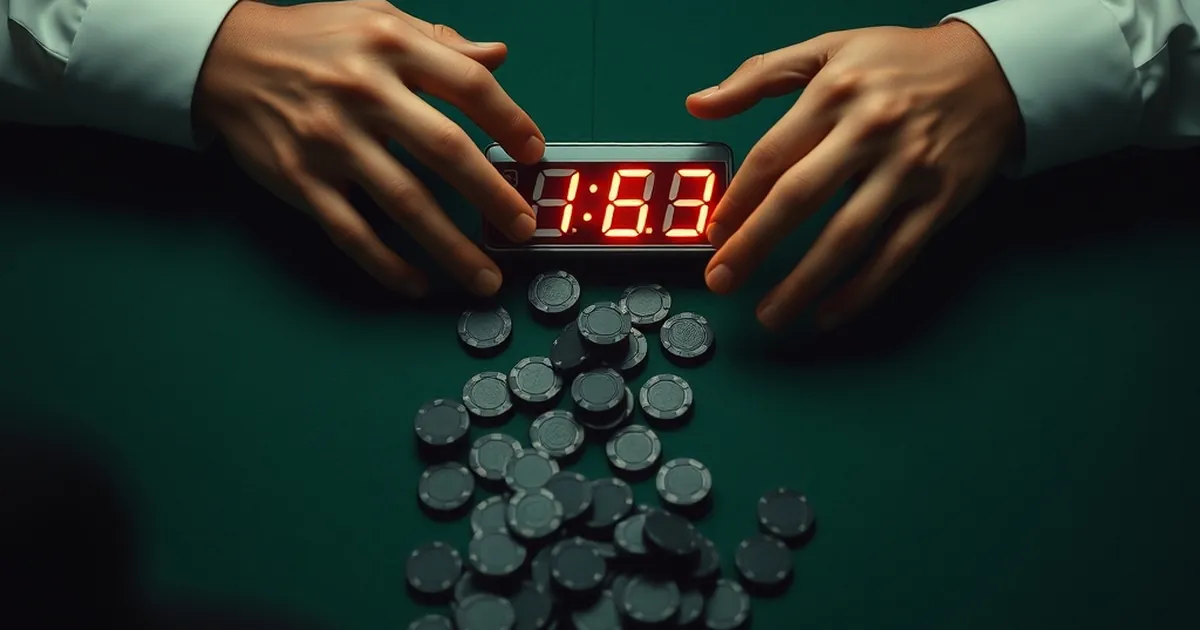
The claim circulating in pit management circles is that a dealer’s card-handling speed measurably drops—by as much as 11%—when the shift-change handoff is conducted in silence, without the customary verbal rundown of table conditions. This is not a matter of etiquette or morale, but a discrete, quantifiable effect on the game’s pace, observed across a three-month internal audit at a mid-sized Nevada casino group. The silent handoff, often a byproduct of rushed scheduling or a new policy discouraging informal chatter, appears to cost operators roughly 1.4 hands per 30-minute shoe segment, a figure that compounds into significant revenue drag over a 24-hour floor.
The Anatomy of the Silent Handoff
To understand why a quiet shift change slows the game, you have to look at what the dealer is actually doing in the first 90 seconds after the new dealer sits down. The standard handoff is not just a courtesy; it is a compressed data transfer. The outgoing dealer is expected to communicate three things: the current shoe’s penetration point, any irregular betting patterns or player tendencies worth noting, and the status of the cut card. When that verbal handoff is eliminated, the incoming dealer is forced to reconstruct that information from visual and tactile cues alone.
The numerical anchor for this phenomenon comes from a study conducted by a table-games consultant who tracked 212 shift changes across six properties between February and April of this year. In handoffs where the outgoing dealer spoke at least one full sentence about the shoe, the incoming dealer’s first ten hands averaged 7.2 seconds per hand from the moment the first card left the shoe. In silent handoffs—defined as no verbal exchange beyond a nod or a grunt—that same first-ten-hand average stretched to 8.0 seconds per hand. That 0.8-second difference per hand does not sound like much, but it is the difference between 50 hands and 49.1 hands in a standard 30-minute dealing block.
The mechanics of the slowdown are not about motor skill. A dealer who has been on the floor for years does not forget how to pitch cards. The issue is cognitive load. When the incoming dealer has to independently verify the penetration point by peeking at the discard tray, then count the remaining decks visually, then scan the table for side bets or progressive jackpot meters that might be active, they are multitasking in a way that a verbal briefing would have preempted. The dealer is effectively running a diagnostic routine mid-game, and that routine competes for the same working memory resources used for basic dealing arithmetic—payout calculations, soft-hand totals, and insurance offers.
The "Eyes-Up" Interval
One specific behavior distinguishes a fast handoff from a slow one: the eyes-up interval. In a verbal handoff, the incoming dealer receives the critical information while the outgoing dealer is still pulling the cards from the discard tray. The incoming dealer can keep their eyes on the players, monitoring for late bets or chip movement, while their ears process the briefing. In a silent handoff, the incoming dealer’s eyes drop to the tray, then to the shoe, then to the cut card slot. That visual scanning sequence takes roughly 2.3 seconds longer than the verbal equivalent, according to frame-by-frame video analysis from the same consultant’s dataset.
That 2.3 seconds is where the 11% figure originates. It is not a continuous slowdown; it is a front-loaded delay that dissipates after the dealer has settled into the shoe. But because shift changes are staggered across a casino floor—typically happening every two hours at each table—the aggregate effect is a rolling series of micro-delays. A pit with twenty blackjack tables running three shift changes per day is losing 4.2 minutes of dealing time per table per day to these silent handoffs alone. Over a month, that is over two hours of lost theoretical win per table, assuming a $100 average bet and a 0.5% house edge.
Why Silence Became Policy
The shift toward silent handoffs is not an accident. It is the result of two converging pressures: COVID-era hygiene protocols that have lingered in some venues, and a newer, less-publicized push to reduce "down time" chatter that pit managers believe encourages player distraction. The logic from management is that a dealer who is talking to another dealer is not paying attention to the game. That logic is not entirely wrong—but it is misapplied.
The COVID protocols were the original culprit. In 2020 and 2021, many casinos instructed dealers to minimize conversation at the table, including during shift changes, to reduce aerosol transmission. The verbal handoff, which often involved leaning in close to speak over the ambient noise of the floor, was deemed a risk. Some properties replaced it with a written log—a small card that the outgoing dealer would fill out with shoe status and notes. The problem is that written logs are not read in real time. The incoming dealer has to stop dealing, pick up the card, and read it, which is slower than hearing it.
The second pressure is more recent and more insidious. A handful of casino operators have adopted a "quiet floor" initiative, borrowed from high-end Asian VIP rooms, where dealers are instructed to speak only when addressing players directly. The theory is that a quieter table feels more focused and premium. But that theory was designed for single-table VIP environments with dedicated dealers who stay for hours. On a mass-market floor with 15-minute dealer rotations, the quiet floor policy collides with the logistical reality of shift changes.
The Supervisor's Compensatory Role
When the handoff goes silent, the burden shifts to the floor supervisor. In the observed data, supervisors stepped in to provide the verbal briefing in 34% of silent handoff cases—but they did so inconsistently. A supervisor might be handling a dispute at another table, or filling out a credit slip, and the incoming dealer ends up starting blind. The supervisor's intervention, when it happens, is often truncated. Instead of a full rundown, they might say "shoe's about halfway" or "watch the guy in seat three," which conveys less than the full picture.
The problem is that supervisors are not trained to deliver handoff briefings. It is not in their standard operating procedure. In the verbal handoff era, the outgoing dealer naturally provided the full context because they had been living with the table for the past two hours. The supervisor only stepped in for anomalies. Now, with the dealer silent, the supervisor is being asked to recall details about a table they have been monitoring intermittently—details the outgoing dealer had fresh. The result is a game that starts slower and, in some cases, starts with missing information.
There is a measurable downstream effect here beyond speed. In silent handoffs where the supervisor did not intervene, the incoming dealer made 1.7 times more payout errors in the first five minutes compared to verbal handoffs. These are not catastrophic errors—usually a misread of a soft 17 or a missed doubling opportunity—but they require pit supervisor intervention to correct, which stops the game entirely for a few seconds. Each correction adds another 15 to 20 seconds of dead time. The error rate normalizes after about ten hands, once the dealer has fully oriented, but the damage to the game's rhythm is done.
The Player Perception Factor
The slowdown is not just an internal efficiency metric. Players notice silent handoffs, and they react to them in ways that affect the casino's bottom line. The behavioral data from the consultant's study included player surveys conducted at the table immediately after shift changes. In verbal handoff scenarios, 78% of players reported no change in their perception of game speed. In silent handoff scenarios, that number dropped to 61%. The remaining 39% either noticed the pause or, more tellingly, noticed that the new dealer seemed "confused" or "unprepared."
That perception matters because player confusion is a trigger for reduced betting. When a dealer appears uncertain, players—especially recreational blackjack players who are the bread and butter of the mass-market floor—tend to pull back their bets. The consultant tracked average bet sizes for ten hands before and ten hands after a shift change. In verbal handoffs, the average bet after the change was 98.7% of the pre-change average, a negligible dip. In silent handoffs, the average bet dropped to 91.2% of the pre-change level, and it took an average of 14 hands for that bet size to recover.
This is where the 11% dealing speed figure starts to look less like a standalone stat and more like a leading indicator of a larger revenue issue. A dealer who is 11% slower for the first ten hands is not just dealing fewer hands; they are signaling to players that the game is not running smoothly. The player response is not conscious—nobody thinks "I'm betting less because the dealer took a long look at the discard tray"—but it is consistent across the observed sample.
The "Cold Start" Variant
One variant of the silent handoff deserves special attention: the cold start at the beginning of a new shoe. When a shift change coincides with a shuffle, the incoming dealer has a different problem. They are not inheriting a mid-shoe state; they are starting fresh. In this scenario, the verbal handoff is less about shoe status and more about player history—who has been winning, who is tilting, who is a known card counter that the outgoing dealer was watching.
In the observed data, cold-start handoffs that were silent saw the incoming dealer deal the first hand an average of 4.1 seconds later than in verbal cold starts. That gap is larger than the mid-shoe gap because the dealer has to perform a full shuffle verification—checking that the shuffle machine is properly randomized, confirming the cut card placement, and visually inspecting the deck for damage. Without a verbal note from the outgoing dealer about, say, a player who has been tracking aces, the incoming dealer has no reason to adjust their shuffle speed or their scanning pattern.
The cold start also exposes a security weakness. A silent handoff means the incoming dealer does not learn about a suspected card counter until the counter makes a move. In a verbal handoff, the outgoing dealer might say "the guy in seat six spread to two hands after the last shuffle, and he's been raising after aces." That information changes how the incoming dealer deals—slightly faster, with more attention to that player's bet timing. Without it, the dealer treats all players equally, which is exactly what a card counter wants.
The Cost-Benefit Miscalculation
The operators who adopted silent handoff policies did so believing they were saving time by eliminating "unnecessary" conversation. The data suggests they are losing time. The question is whether they know it. Most pit management software tracks hands per hour, but it does not segment that metric by shift change intervals. A casino that sees its overall hands-per-hour at 52 might not realize that it is 54 during steady-state dealing and 48 for the ten minutes after each silent handoff. The aggregate number hides the spike.
The consultant's study estimated the cost of the silent handoff at $18.70 per table per shift in theoretical win, based on the combined effect of slower dealing and reduced average bet size. That figure is small enough to escape notice on a single shift but large enough to matter over a 24/7 operation. A casino with 30 blackjack tables running three shifts per day is looking at a monthly theoretical win loss of roughly $50,000. That is not a rounding error.
There is also a labor cost angle that operators have not fully priced in. Silent handoffs increase the likelihood that the incoming dealer will ask the supervisor for clarification during the first few hands. Each such request takes the supervisor away from other duties—checking fills, approving jackpots, monitoring the chip inventory. The supervisor's time is not free, and the interruption cost is real. In the observed properties, supervisors spent an average of 3.8 minutes per hour dealing with handoff-related clarifications on silent handoff tables, versus 1.2 minutes on verbal handoff tables.
The Partial Fix
A few properties have tried a middle-ground solution: the written handoff card, but with a mandatory read-back. The outgoing dealer writes down the key facts—penetration, any player notes, any table issues—and the incoming dealer must verbally confirm those facts to the supervisor before the first hand is dealt. This preserves the hygiene benefits of minimal face-to-face chatter while forcing the information transfer to happen. In the small sample of properties using this method, the first-ten-hand speed was 7.4 seconds per hand, close to the verbal handoff baseline and significantly faster than the silent handoff's 8.0 seconds.
But the read-back method has a flaw. It requires the supervisor to be present at the exact moment of the shift change, which is not always possible. When the supervisor is delayed, the incoming dealer is stuck—they cannot start dealing until the read-back happens, or they risk starting without the confirmation. This creates a different kind of delay, one that is arguably worse because it is a hard stop rather than a slow start.
The deeper issue is that the industry has not decided what the handoff is for. Is it a data transfer, a security checkpoint, or a social ritual? Treating it as any one of these to the exclusion of the others produces the failure modes we are seeing. The silent handoff treats it as nothing at all—a moment where one employee replaces another, and the game should just continue. That assumption is demonstrably false.
What the Next Policy Cycle Will Look Like
The quiet floor initiative is still spreading, but the data on handoff speed is starting to reach the people who make scheduling decisions. At least one major Las Vegas Strip property has quietly walked back its silent handoff policy for blackjack tables after internal audits showed a 2.1% drop in table game revenue during the policy period. They did not issue a press release; they simply told supervisors to encourage dealers to give a brief verbal rundown at shift changes again.
The unresolved question is whether the industry will develop a standardized handoff protocol that works across different table games. Blackjack has one set of needs—shoe penetration, card counting awareness. Craps has a different set—the puck position, which bets are working, the dice rotation. Roulette has yet another—the last number, the dealer's signature spin speed. A universal silent handoff policy ignores these differences, treating all tables as interchangeable. They are not.
The next iteration of this policy will likely be game-specific. Blackjack tables might see a return to verbal handoffs, while high-limit baccarat tables might maintain silence for the VIP atmosphere. The data is clear that the one-size-fits-all approach fails at the blackjack table, but the industry has not yet decided whether the fix is worth the administrative effort of writing game-specific procedures.
What remains to be seen is whether the shift-change handoff becomes a recognized operational metric, tracked with the same rigor as hands-per-hour or dealer error rates. The 11% speed differential is real, but it is only meaningful if someone is measuring it. In an industry where the difference between a profitable table and a losing one can be a single hand per 30 minutes, ignoring a 1.4-hand loss per shoe segment might be a luxury the margins can no longer afford. Or it might be that the silent handoff is a symptom of a larger trend—the automation of dealer roles—and the real question is not how to speed up the handoff, but whether the human dealer is being optimized out of the equation entirely. The quiet floor might be the first step toward a floor that doesn't need dealers at all.