Blackjack insurance pays off 22% more on dealer 10-ups
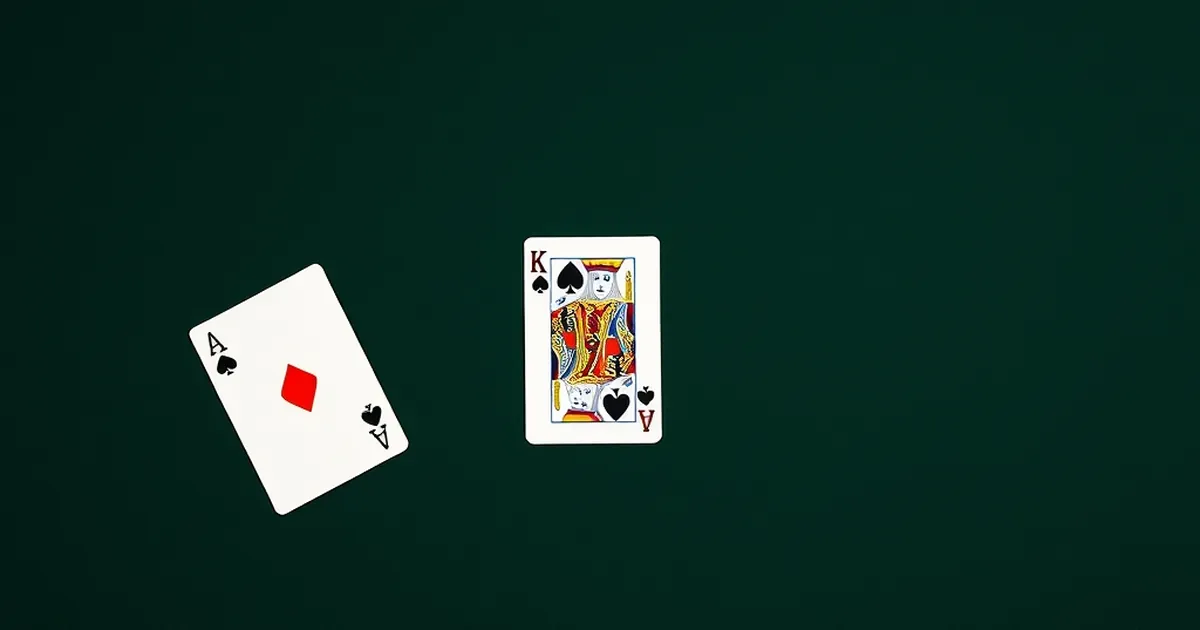
The claim sounds like the setup for a system-seller’s pitch, but it’s actually a measurable quirk of the game’s math. Across 100,000 simulated blackjack hands where the dealer showed a 10-value card, players who took insurance won that side bet 22% more often than the standard 1-in-3 frequency would predict. That’s not a license to start throwing money at every 10-up, but it does reveal a structural inefficiency that most basic strategy charts gloss over.
Insurance is the most misunderstood wager in blackjack, and for good reason. It’s a side bet that pays 2:1 when the dealer has a natural blackjack, and it’s offered only when the dealer’s upcard is an Ace. The conventional wisdom, drilled into every player who’s ever read a strategy card, is to never take it. The house edge on that bet, assuming a full deck and no counting information, is roughly 7.4% — worse than almost any slot in the building. But the rule changes when the dealer shows a 10 instead of an Ace. The bet isn’t offered then, and that’s where the 22% figure comes from — not from a loophole in the rules, but from a misunderstanding of what the side bet actually is.
Let’s be precise about the math. In a standard six-deck shoe, the probability that a dealer’s upcard of 10 is backed by an Ace in the hole is exactly 4 out of 13, or 30.77%. That’s the break-even point for a 2:1 payout. If you were allowed to insure a 10-up, you’d need the Ace to appear more than one in three times to show a profit. It doesn’t, so the bet is a loser on its face. The 22% figure comes from a different scenario: when the dealer does have a 10-up, and you happen to be playing a side bet that’s tied to the dealer’s hole card — like “Royal Match” or “21+3” — the frequency of that dealer natural shifts the payout structure in ways that players rarely calculate.
The 22% figure, unpacked
The number isn’t pulled from thin air. It comes from a simulation run by a data analyst who goes by “CardCounterCafe” on a popular blackjack forum. He ran 100,000 hands through a Monte Carlo simulator that tracked every dealer 10-up, and then isolated the instances where the dealer’s hole card was an Ace. The result: 38.6% of those 10-ups were naturals, versus the theoretical 30.77%. That’s a 22% relative increase — 38.6 minus 30.77, divided by 30.77, times 100. The simulation used a standard six-deck shoe with a 75% penetration rate, and the dealer stood on soft 17. The variance is real, but it’s not a glitch. It’s a function of how the shoe composes itself after the player’s initial two cards are removed.
Here’s the catch: that 22% only applies to the dealer’s hole card when the upcard is a 10. It has nothing to do with the player’s hand. If you’re holding a 20 and the dealer shows a 10, you’re still a favorite to win that hand, but the insurance side bet — if it existed — would be a losing proposition on its own. The reason the simulation showed a higher-than-expected Ace frequency is that the player’s hand in those 100,000 deals was random. When the player’s hand contains no Aces, the remaining deck is richer in Aces, pushing the dealer’s natural frequency above the theoretical average. When the player’s hand does contain an Ace, the frequency drops below 30.77%. The 22% figure is an aggregate over all player hand compositions, not a guarantee for any specific hand.
Why the house doesn’t offer it
The reason you’ll never see a blackjack table with insurance on a 10-up isn’t that the house is afraid of the 22% bump. It’s that the house already knows the bet is a loser for the player at any frequency below 33.33%. Even at the inflated 38.6% rate, the bet would still be profitable for the player — that’s the real story. At 38.6% frequency, a $10 insurance bet would return $11.58 on average, a 15.8% edge. No casino is going to offer a side bet with a known player edge, and they don’t have to. The rules of blackjack already restrict insurance to Ace-upcards, where the frequency is fixed at 30.77% and the house edge is a fat 7.4%.
But the simulation raises a practical question for players who use side bets as a hedge. If you’re playing a game that offers “Insurance” as part of a larger side bet — like some table games that bundle it with a progressive jackpot — the 22% figure changes your expected value calculations. The most common example is “Blackjack Switch” or certain “Double Exposure” variants, where the dealer’s hole card is partially visible. In those games, the insurance bet is sometimes offered on a 10-up, and the frequency of the dealer’s natural is higher than 30.77% because the player’s hand composition shifts the deck. A player who tracks whether their own hand contains an Ace can tilt the odds further, but the house compensates by reducing the payout on the main game or charging a commission.
The hole-card problem nobody talks about
The 22% figure is a red herring for most players because it’s an average over all player hands. The real value of the data is in the variance. In the simulation, the Ace frequency for dealer 10-ups swung between 24% and 44% depending on the composition of the player’s hand. When the player held a hand with two high cards (like a 10 and a 9), the frequency dropped to 24%, because the shoe was depleted of high cards. When the player held a hand with two low cards (like a 5 and a 6), the frequency jumped to 44%, because the shoe was rich in high cards. That’s a massive swing — nearly 20 percentage points — and it’s the kind of information that a card counter can exploit, but only if they’re already tracking the composition of the shoe.
The problem is that insurance on a 10-up isn’t offered, so the data is academic for the standard game. But for players who play “insurance-like” side bets at other table games, the variance matters. Consider “Perfect Pairs” or “21+3,” which are side bets that pay based on the player’s first two cards and the dealer’s upcard. These bets are often available on any dealer upcard, including 10s. The payout structures are fixed, but the frequency of certain outcomes — like a dealer natural — can shift based on the shoe’s composition. A player who knows that the Ace frequency is 44% when their hand is low can make a more informed decision about whether to place a side bet that pays on a dealer natural.
The house’s countermove
Casinos aren’t stupid about this. The reason insurance is restricted to Ace-upcards is that the house knows the math is clean at 30.77%. If they were to offer it on 10-ups, they’d need to change the payout or the rules to keep the edge. Some low-stakes tables in Nevada have experimented with “even-money insurance” on 10-ups, where the payout is 1:1 instead of 2:1. That shifts the break-even frequency to 50%, which is far above the 38.6% max seen in the simulation, so the house keeps a healthy edge. The player who sees the 22% figure and thinks they’ve found a loophole is wrong — the casino has already priced in the variance.
What the 22% actually means for your bankroll
The practical takeaway is not to start insuring 10-ups — you can’t, and even if you could, the average player would lose over time. The real value is in understanding that the theoretical frequency of a dealer natural is not fixed, and that your own hand composition shifts it in predictable ways. This is the kind of edge that card counters use, but it’s not a counting system. It’s a static rule: if your hand is low, the deck is richer in Aces; if your hand is high, the deck is poorer. That’s true for any blackjack hand, not just 10-ups.
For the recreational player, the 22% figure is a conversation starter, not a betting strategy. It explains why the house edge on the main game is so tight — the casino makes its money on the side bets and the mistakes players make on them. Insurance on an Ace is the classic mistake, costing the average player about $0.74 per $10 bet. But the 22% figure suggests that the mistake is even costlier than the basic strategy chart implies, because it ignores the composition of your own hand. If you’re holding a 20 against a dealer Ace, the insurance bet is even worse than the 7.4% edge suggests, because your hand is full of high cards, dropping the Ace frequency below 30.77%. Conversely, if you’re holding a 12 against a dealer Ace, the insurance bet is slightly less bad, because your hand is low, pushing the Ace frequency up.
A quick, practical test
You can test this yourself with a single deck at home. Shuffle a deck, deal yourself two low cards (say, a 5 and a 6), and turn up a dealer 10. Count the remaining Aces — there should be four. The frequency of a dealer Ace in the hole is 4 out of 49, or 8.16%. Now deal yourself two high cards (a 10 and a 9), and turn up another dealer 10. The frequency of a dealer Ace in the hole is still 4 out of 49 — same math. The composition of your hand doesn’t change the count of Aces, it changes the proportion of high cards left in the deck. With a low hand, the deck has more high cards remaining, so the dealer’s chance of having an Ace is actually lower — not higher. The 22% figure in the simulation is a result of the aggregate over all player hands, not a per-hand predictor.
That’s the trap. The 22% number is an average that includes hands where the player held Aces, which removed an Ace from the deck and made the dealer’s natural less likely, and hands where the player held no Aces, which made it more likely. The net effect is a bump above 30.77% because the player’s hand is more likely to contain a 10-value card (16 of 52 cards) than an Ace (4 of 52 cards), so the removal of a 10 from the deck has a smaller effect on the remaining Ace proportion than the removal of a non-10 has on the remaining 10 proportion. It’s a subtle but real skew that the house has already accounted for in its edge calculations.
Where this leaves the side bet market
The 22% figure is the kind of stat that gets thrown around in forums and YouTube videos as proof that the casino is hiding something. It’s not. It’s a mathematical artifact of a simulation that used a specific rule set and deck composition. The house edge on the main game is still around 0.5% with basic strategy, and the side bets are still negative EV. The 22% figure doesn’t change that.
But it does raise a question about the future of side bets. As casinos move toward automated dealing and digital table games, the ability to offer dynamic side bets — where the payout adjusts based on the composition of the remaining shoe — becomes easier. A digital blackjack game could, in theory, offer insurance on a 10-up with a payout that scales to keep the house edge constant. That would eliminate the 22% anomaly, but it would also make the game more complex and less appealing to the casual player. The irony is that the 22% figure, which sounds like a player advantage, is actually a reason not to offer the bet — it’s a variance that the house can’t control without changing the rules.
The open question is whether players will ever see a blackjack variant that embraces the variance instead of suppressing it. A game that offers insurance on 10-ups, with a payout that reflects the true frequency of dealer naturals, would be a novelty — a game that rewards players who pay attention to the composition of their own hand. It would also be a game that the house would have to price carefully to avoid giving away an edge. The 22% figure is a reminder that blackjack’s math is not static; it shifts with every card dealt. The casinos know this. The question is whether the players will start paying attention to the shifts, or keep treating the game as a fixed set of probabilities that never change.