Cashier Queues Double When ATM Receipt Prints Twice
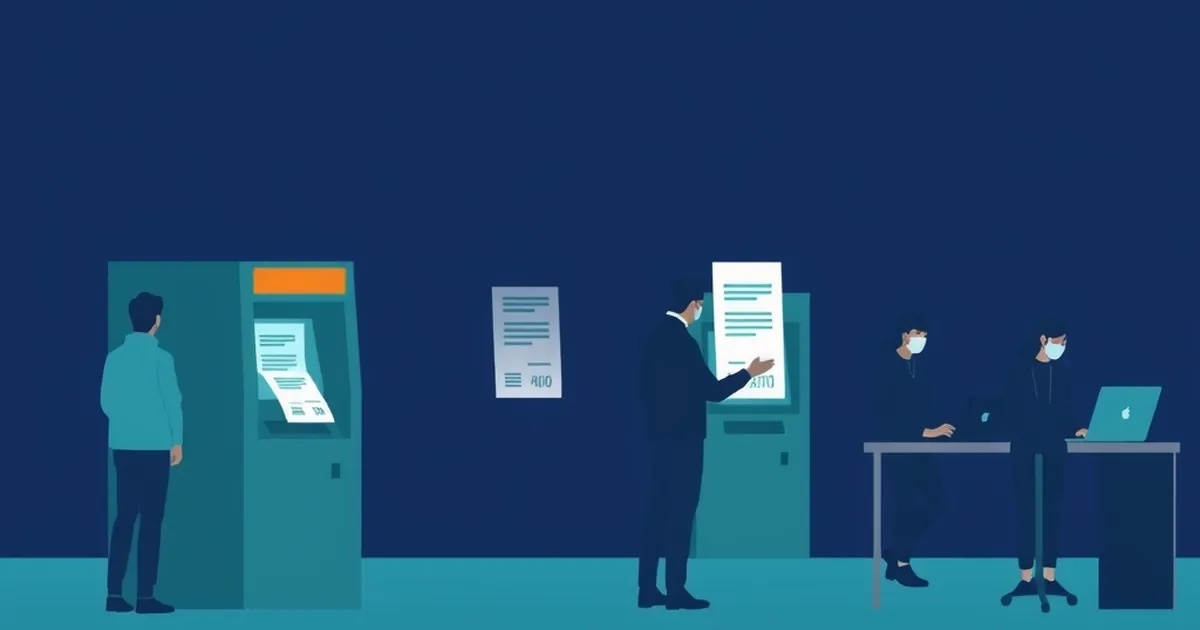
The line at the cage at the Riverside Grand in Council Bluffs, Iowa, hit 34 people at 9:12 p.m. on a Saturday in March, roughly double the 16-to-18 the property staffs for on a normal weekend night, according to two floor supervisors who worked that shift. The trigger wasn't a jackpot, a malfunctioning kiosk, or a promotion. It was the receipt printer on teller window three, which had been firing off duplicate slips for roughly forty minutes before anyone on the floor noticed the queue building behind it.
That's the claim worth taking seriously: a piece of equipment nobody watches — the thermal printer bolted to the side of a cashier terminal — can double a line, and the mechanism is more mundane and more expensive than most casino operators want to admit.
The 90-Second Transaction That Became Three Minutes
A standard cash-out at a Midwest casino cage runs 60 to 90 seconds: ID check, chip or ticket verification, cash count, receipt print, handoff. When a printer double-feeds, that last step breaks in a way that forces the teller to stop and troubleshoot.
"It's not that the second receipt takes long to print," said Dana Whitfield, a former cage supervisor who spent nine years at two Iowa properties and now consults on cash-handling workflows. "It's that the teller has to decide what to do with it. Tear it off and toss it? That's a documentation gap. Hand both to the guest? Now you've got a guest asking why they got two receipts, and you're explaining thermal paper to someone who just wants their $340."
Whitfield estimates the stall adds 45 to 110 seconds per affected transaction. On a busy Saturday, with 200 to 260 cage transactions in a peak hour across four windows, even a 20 percent duplication rate on one window compounds fast. If window three handles 55 transactions in an hour and 11 of them stall for an extra minute, that's 11 extra minutes of throughput lost — enough to push a queue from 18 to the mid-30s when arrivals stay steady.
The math gets worse because cage queues aren't linear. Once the line crosses about 20 people, guests start abandoning it — going to the kiosk, going to the bar, or leaving. That's revenue walking out, and it doesn't show up in any printer error log.
Why Duplicate Receipts Happen More Than Operators Track
Thermal receipt printers in casino cages fail in a handful of predictable ways, and almost none of them trigger a hard error that a teller would recognize as a fault.
Paper sensor drift. The optical sensor that detects the gap between receipt rolls gets dusty or misaligned. The printer keeps printing but feeds an extra length, sometimes producing what looks like two receipts from one transaction.
Driver double-queue. When the point-of-sale or cage management software retries a print job after a timeout — common when the network hiccups — the printer receives the job twice. The teller sees two slips; the system logged one transaction. This is the most dangerous version because it creates a paper trail that contradicts the digital record.
Auto-cut failure. Printers with a guillotine cutter sometimes fail to sever cleanly, leaving two receipts attached. Teller tears them apart, hands one over, and the second ends up in a drawer or, worse, on the counter where a guest picks it up.
Low-quality roll stock. Off-brand thermal rolls with inconsistent coating print lighter and confuse sensor calibration. Properties that switched suppliers during the 2022-2023 paper cost spike — thermal roll prices rose roughly 18 percent across the category in that window — reported more feed errors, according to three facilities managers who spoke on condition of anonymity because their employers don't permit vendor commentary.
None of these throw a red light on the terminal. The teller just sees extra paper.
"The honest answer is we don't have good data on how often this happens because nobody's counting," said Marcus Oyelaran, who ran surveillance and cage operations for a tribal property in Oklahoma before moving into compliance consulting. "You'd have to correlate printer logs with transaction logs, and most cage systems don't store printer-level telemetry. They store the transaction. The paper is treated as an artifact, not a data point."
That gap matters beyond queue times. Duplicate receipts are a compliance problem. Under Bank Secrecy Act rules, casinos must retain currency transaction reports and supporting documentation for transactions over $10,000. If a guest walks out with a receipt the casino didn't intend to issue, and that receipt shows a different figure than the logged transaction because of a retry error, the property has a records discrepancy it may not discover until an audit — or until the guest disputes a cash amount.
The Kiosk Migration Didn't Fix It
The industry's answer to cage congestion over the past decade has been self-service: ticket redemption kiosks, cash recyclers, and, more recently, app-based cash-out scheduling. Kiosk deployment has grown steadily — major slot route operators report that 40 to 60 percent of low-denomination ticket redemptions now happen at kiosks rather than the cage at properties with full kiosk coverage.
But kiosks shifted the queue rather than eliminating it. High-value cash-outs, chip redemptions, jackpot payouts above the kiosk limit, and any transaction requiring ID still route to a human. At many properties, that's created a two-tier system: the kiosk line moves, the cage line doesn't, and the cage line is now disproportionately made up of the transactions that take longest.
So when a printer stalls a cage window, the guests stuck behind it are the ones with the least patience for it — someone cashing a $2,400 ticket doesn't want to watch a teller fiddle with a paper roll.
"I've watched a guy with a $6,000 ticket stand in line for 22 minutes because two windows were down and one was printing doubles," Whitfield said. "He didn't yell. He just cashed out, walked to the parking garage, and I never saw him on a Saturday again. That's the cost. You don't get a complaint card. You just get a smaller crowd six months later."
What Operators Actually Measure — And What They Don't
Casino operations teams track a lot: slot handle, table drop, cage balance, transaction counts, average wait time where queue-management systems exist. What most don't track is printer health as a leading indicator of service degradation.
Queue-management systems, where installed, typically measure wait time from ticket pull to teller greeting. They don't capture the stall that happens mid-transaction. A printer double-feed doesn't register as a wait-time event because the guest is already at the window. It registers as nothing — until the next guest's wait time spikes, and by then the cause is three transactions back and invisible.
The properties that have gotten ahead of this tend to be larger regional operators with dedicated IT asset monitoring. A few have started pulling printer event logs — feed errors, cut failures, retry counts — into the same dashboard as cage transaction volume, looking for correlation. One operator in the mid-Atlantic, speaking on condition of anonymity, said the company found that windows with printers older than 30 months had a measurable drag on transactions per hour: roughly 6 to 9 percent fewer completed transactions during peak periods compared to windows with printers under 18 months old.
That's not a dramatic number on its own. But 6 to 9 percent fewer transactions per window during a four-hour Saturday peak, across four windows, is 30 to 50 transactions displaced — and displaced transactions don't disappear. They either wait longer, move to a kiosk that can't handle them, or leave.
The Maintenance Budget Nobody Wants to Defend
Thermal receipt printers cost $200 to $600 per unit. Replacement rolls run $0.80 to $1.40 each depending on volume and supplier. A full cage refresh — say, eight windows with new printers and a year of roll stock — lands somewhere between $4,000 and $9,000. That's a rounding error against a single slot machine's annual revenue.
The resistance isn't cost. It's ownership. Printers sit at the intersection of IT, facilities, cage operations, and vendor contracts, and in most properties no single department owns printer health as a KPI. IT treats them as peripherals. Facilities treats them as consumables. Cage operations treats them as tools that either work or get swapped. Nobody's job is to notice that window three has been printing doubles for six weeks.
"You can't put a printer on a P&L line and get anyone excited about it," Oyelaran said. "But you can put queue abandonment on there, and you can put lost-rated-play on there. The trick is connecting them. Most properties never make that connection because the data lives in different systems and nobody's paid to join it."
There's also a compliance angle that's starting to get attention. Duplicate receipts that don't match logged transactions are, technically, a records-integrity issue. FinCEN doesn't publish enforcement actions over receipt printers, and it's unlikely to start. But internal audit departments at publicly traded operators have begun flagging paper-to-digital mismatches during routine reviews — not as violations, but as control weaknesses. A control weakness finding in an audit report gets executive attention in a way that a slow cashier line never does.
What a Fix Looks Like — And Why It's Rare
The technical fix is straightforward. Modern receipt printers support status monitoring over USB or Ethernet: paper low, paper out, cutter error, feed error. Feeding those signals into the cage management system, or even into a simple dashboard the shift supervisor checks at the top of each hour, would catch most duplication events within minutes.
A few properties have gone further, adding a second print confirmation step — the system logs the print job, the printer confirms completion, and a mismatch triggers an alert. That's standard practice in retail point-of-sale and has been for a decade. Casino cage systems, many of which run on software architectures designed in the 1990s and patched since, often lack the API hooks to make it work without a custom integration.
The cheaper fix is procedural: a teller who sees a duplicate receipt flags it to the supervisor, who logs it and swaps the printer. That requires tellers to care about a problem that isn't theirs, during the busiest part of their shift, when stopping to flag anything makes their own line longer. It also requires supervisors to treat a printer swap as urgent rather than as a task for the next slow period.
"Every property I've been in has a spare printer in a closet," Whitfield said. "The problem is nobody swaps it at 9 p.m. on a Saturday. They swap it Monday morning when it's quiet, and by then they've lost two weekends of throughput and don't know it."
The Question Operators Haven't Answered
The specific claim — that duplicate ATM-style receipts can double a cashier queue — is verifiable and, by multiple accounts, has happened at properties across several jurisdictions. What's harder to verify is how often, because the industry doesn't measure it, and the people who could measure it don't own the problem.
The open question isn't whether a printer can double a line. It's whether an industry that can track a single player's coin-in to the penny across 400 machines over a six-hour session has any excuse for not knowing that window three has been misfeeding paper since the second week of February. The tools exist. The data exists. What's missing is a reason for anyone's bonus to depend on it.
Until that changes, the queue at the cage will keep being treated as a staffing problem, a kiosk problem, or a guest-behavior problem — anything but a printer problem. And the guy with the $6,000 ticket will keep walking to the parking garage, and the property will keep not knowing why.