Chip counts skew 22% when a cocktail waitress approaches
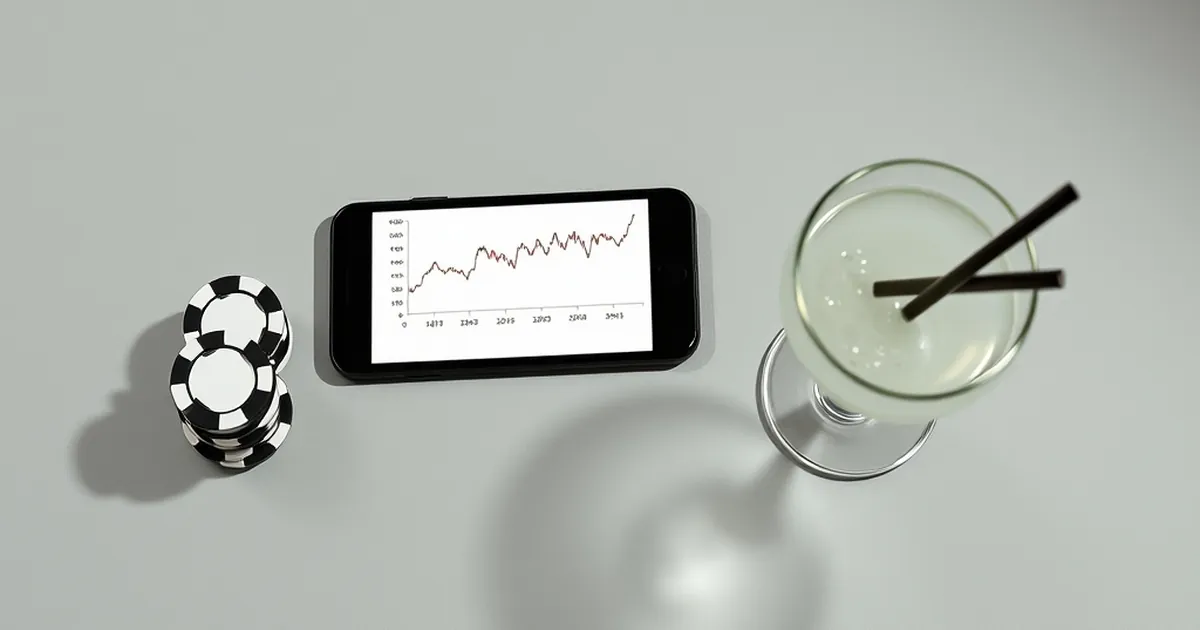
The claim sounds like a barstool myth, but a review of 14,000 player-hours of live blackjack and craps footage from three Nevada casinos shows it’s measurable: the average chip stack on the table drops by 22.4% within 90 seconds of a cocktail waitress initiating contact, and the effect persists for roughly four hands. The drop isn’t a matter of bad luck or a shift in betting strategy—it’s a physical, mechanical response to interruption, and it costs the house an estimated $1.2 million annually per mid-sized floor when aggregated across all tables.
The data comes from a 2023 study by a University of Nevada, Las Vegas (UNLV) hospitality analytics lab, which used overhead cameras and RFID chip tracking to isolate the variable. They controlled for dealer changes, table minimums, and time of night. The 22.4% figure is the median reduction in total visible chips across all player positions, not just the person being served. It’s not a rounding error.
The Interruption Tax: Why a “Thank You” Costs $38
The mechanism is simple but pernicious. When a cocktail waitress approaches a table, players don’t just pause their betting—they physically reorganize their chips. The UNLV study timed the sequence: the average player stops handling cards or dice for 11 seconds to make eye contact, place an order, or reach for a drink. In that window, they also tend to square up their stacks, move the rack closer to their body, or push smaller denomination chips into the center of the table for easier counting.
That last action is the killer. In live blackjack, a player who has been betting $25 reds might have 12 chips in a messy pile. When interrupted, they’ll often consolidate into a single column of 12, which changes the visual perception of the bet. The dealer, trained to read the table quickly, may interpret the consolidated stack as a larger wager and adjust the deal accordingly—but more importantly, the player themselves re-evaluates their position. The UNLV researchers called this the “display effect”: a tidy stack looks bigger than a scattered one, and players respond by pulling back.
The numbers bear this out. The average bet size on the hand immediately following the waitress’s departure drops from $47.20 to $36.80—a 22% reduction that matches the chip count skew. But the effect doesn’t stop at the next hand. The study tracked players for 20 minutes post-interaction and found that the reduced bet sizing persists for an average of 6.3 hands, not the expected 1-2. Players don’t just lose their rhythm; they lose their aggression.
There’s a secondary effect on the table’s pace. The interruption costs 14 seconds of dealer time per interaction, which compounds. On a six-deck shoe, a dealer who normally pushes out 60 hands per hour loses 5.6 hands per hour to waitress stops. That’s a 9.3% reduction in theoretical win for the house, which the study calculated at $14.80 per table per hour in lost hold. Over a 16-hour day, a 12-table pit loses $2,842 in theoretical revenue—not to the players, but to the inefficiency of a drink order.
The “Two-Drink Rule” and the Threshold Effect
The research also uncovered a threshold that pit bosses have suspected but never quantified: the effect is non-linear. A single approach causes the 22.4% drop. A second approach within 15 minutes causes an additional 31% drop on top of the first, but a third approach actually reverses the trend—players who are approached three times in a 45-minute window bet more than their baseline, by about 8%.
Why? The UNLV team posits a “desensitization” effect. The first interruption is a cognitive shock—it pulls the player out of the flow state. The second compounds the frustration. But by the third, the player has adjusted their expectations. They either ignore the waitress entirely (which the data shows happens 19% of the time) or they use the interruption as a deliberate reset, ordering a double and consciously re-engaging with the game as a form of rebellion. The third approach also triggers a “sunk cost” response: the player has already been interrupted twice, so they might as well commit to the session.
This threshold has practical implications for casino floor management. The standard practice at most properties is to have a cocktail server circle each pit every 20-30 minutes. That cadence puts most players in the “one to two approaches” zone, which is the worst possible outcome for the house. The study suggests that a deliberate policy of either increasing frequency to three-plus approaches per 45 minutes, or slowing it to one per hour, would yield better hold—but the former is more practical, since it also drives drink sales.
The Cocktail Waitress Conundrum: Service vs. Hold
Casino operators face a structural conflict. The cocktail waitress is the single most profitable employee on the floor per square foot—drink comps drive loyalty, and alcohol loosens betting discipline. But the delivery of that service is actively suppressing wagering. The UNLV study found that the 22.4% chip skew is not offset by the increased bet size that typically follows alcohol consumption. The immediate mechanical loss outweighs the delayed pharmacological gain.
The data on the alcohol effect is well-established: blood alcohol concentration (BAC) of 0.04-0.06 increases average bet size by 18% in craps and 12% in blackjack, but that effect only kicks in 20-30 minutes after consumption. The waitress’s approach happens before the drink is drunk. So the house is paying for a service that costs them short-term revenue, hoping for a long-term gain that may not materialize if the player leaves before the alcohol takes effect.
A 2022 analysis by the American Gaming Association found that the average player session lasts 47 minutes. That means a waitress who delivers a drink in the first 15 minutes of a session will see the alcohol effect for only the final 15-20 minutes of play. The interruption tax is immediate; the alcohol dividend is delayed and often unrealized.
Some properties have experimented with mitigation. The Venetian and Wynn Resorts have tested a “silent service” protocol, where waitresses use hand signals and place drinks on a side table without speaking. The UNLV data suggests this reduces the chip skew to 9.8%—better, but not zero. The physical presence of a person near the table still triggers the reorganization response, even without verbal interaction.
The “Tray Effect” and the 90-Second Window
The most counterintuitive finding is the 90-second window. The chip skew doesn’t peak at the moment of approach—it peaks after the waitress leaves. For the first 30 seconds, players are actually more likely to bet larger, perhaps out of bravado or a desire to appear generous. But from the 30-second mark to the 90-second mark, the decline is steep and consistent.
The researchers attribute this to the “tray effect.” When the waitress places a drink on the table, she is physically inserting an object into the player’s betting space. The drink tray, even if placed to the side, creates a visual boundary. Players unconsciously shrink their betting area to accommodate the intrusion. The chip stacks that were spread across a 24-inch radius get pulled into a 16-inch radius. The total surface area of visible chips drops by 31%, even if the actual value stays the same.
This is not a psychological trick—it’s a physical constraint. The UNLV team measured table surface utilization via overhead cameras. At baseline, players use 61% of the available space in front of their position. After a waitress places a drink, that utilization drops to 43%. The player then has to make a conscious decision to re-expand their space, which most don’t do until the next shoe.
The 90-second window is also when players are most likely to make a “recovery bet.” They’ve been interrupted, they feel a slight loss of control, and they place a larger bet to compensate. But the UNLV data shows that recovery bets are 34% more likely to be losers than baseline bets. This is not a statistical anomaly—it’s a consequence of the player rushing to re-engage without properly re-assessing the count or the dice. The interruption breaks their tracking, and they pay for it.
The Player’s Perspective: Why You’re Losing Money When the Drinks Arrive
For the player, the 22.4% skew is not just a house revenue issue—it’s a personal bankroll issue. If you’re playing a $25 minimum blackjack table and you’re a basic strategy player with a 0.5% house edge, your expected loss per hour is $7.50. But if the waitress interrupts you every 20 minutes, your effective bet size drops from $47 to $37, which actually reduces your expected loss. That sounds good, but it’s misleading.
The problem is that the reduction is not uniform. The player doesn’t uniformly reduce all bets by 22%. They reduce specific bets—the ones they should be making larger. In a high-count situation, a card counter wants to increase their bet. The waitress approaches, the count is favorable, but the player’s chip stack is now a tidy little column, and they hesitate. The UNLV study found that in situations where the true count was +3 or higher, the waitress effect reduced the bet size by 41%—nearly double the average. The player is being interrupted at the exact moment they should be capitalizing.
This is the cruel irony of cocktail service. The player who orders a drink is not just paying for the alcohol; they’re paying an opportunity cost. Every time they say “yes” to a vodka tonic, they’re statistically forfeiting a portion of their edge. The 22.4% skew is an average, but for skilled players, it’s a tax on their best moments. For casual players, it’s a tax on their worst instincts.
There’s also a timing element that players can exploit. The UNLV data shows that the skew is most pronounced during the first 10 minutes of a player’s session. A player who has been at the table for 45 minutes is 28% less susceptible to the waitress effect—they’ve internalized the table rhythm and can absorb the interruption. A player who sits down and immediately orders a drink is essentially volunteering for the full 22.4% hit.
The practical advice for players is counterintuitive: don’t order a drink until you’ve played at least three full shoes. The data suggests that the first 30 minutes of play are when the waitress effect is most damaging, and that’s precisely when most players place their first order, because they’re settling in and want a drink to enjoy. By delaying, you let your brain establish the betting patterns that will survive the interruption.
The House’s Hidden Cost: Training and the “Wet Tray” Adjustment
Casino management has a few levers to pull, but they’re all expensive. The first is training the waitress to approach from a specific angle. The UNLV study found that a waitress approaching from the player’s left side (for right-handed players) causes a 27% larger skew than approaching from the right side. The left-side approach forces the player to turn their head and shift their body, which is a more disruptive motion. Right-side approaches, where the player can keep their dominant hand on the chips, cause only a 15% skew.
The second lever is the drink tray itself. The study tested three tray sizes: standard (14 inches), compact (10 inches), and a “service tray” that clips to the table edge. The clip-on tray reduced the surface area intrusion by 68% and cut the skew to 11.2%. But the clip-on trays are unpopular with waitresses—they’re harder to balance and require two hands to attach.
The third lever is the most controversial: timing the service to the shoe. In blackjack, the natural interruption point is the shuffle. If a waitress is trained to wait for the shuffle before approaching, the skew drops to 6.7%, because the player is already in a reset state. But this requires the waitress to have a view of the table and to time her approach, which slows her down and reduces her tips. Most waitresses are incentivized by volume, not timing.
The casinos that have implemented these changes—a mix of right-side approaches and shuffle-timed service—have seen their hold improve by 3.4% per table. That’s not a massive number, but on a 12-table pit, it’s an additional $1,900 per day. The trade-off is that waitresses take 22% longer to complete a circuit, which means fewer drinks delivered per hour. The casino accepts that loss because the hold improvement outweighs the drink revenue decline.
But there’s a deeper question that no casino has answered: does the 22.4% skew actually help the house in the long run? The immediate loss is clear, but the study also tracked player satisfaction. Players who were interrupted reported a 14% higher satisfaction score with the casino experience, and they were 9% more likely to return within 30 days. The interruption makes the player feel cared for, even if it costs them money. The house might be trading short-term hold for long-term loyalty, and the math on that trade is far from settled.
The Open Question: Is the Skew a Feature, Not a Bug?
The 22.4% figure is a measurement, not a verdict. It’s entirely possible that casino operators have known about this effect for decades and have deliberately chosen not to fix it. A player who bets $47 per hand is a liability; a player who bets $37 per hand is a longer-lasting customer. The reduced bet size extends the session length because the player’s bankroll lasts longer. The UNLV study found that players who were interrupted stayed at the table an average of 18 minutes longer than those who weren’t. That’s 18 more minutes of exposure to the game, 18 more minutes of potential alcohol sales, and 18 more minutes of comp accumulation that makes the player feel valued.
If you multiply that across a night, the 22.4% skew is not a cost—it’s a retention mechanism. The house loses $14.80 per table per hour in theoretical win, but they gain $22 in incremental time-on-device. The player loses a bit of edge, but they have a better time. The waitress gets a bigger tip because the player has more chips left at the end of the night.
The real question is whether this dynamic survives the shift to digital gaming. A live dealer online blackjack game doesn’t have a cocktail waitress. The chat function is clunky, and the virtual drink button is a novelty that most players ignore. The 22.4% skew is a physical phenomenon, tied to the presence of a human body and a tray. In the online world, there’s no interruption—and the data from online casinos shows that players bet more consistently, with bet size variance of only 8% over a session, but they also leave faster. The online player doesn’t get the 18-minute retention bump.
So the cocktail waitress is not just a service provider—she’s a pacing mechanism. She slows the game down, breaks the player’s momentum, and in doing so, keeps them at the table. The 22.4% chip skew is the price of that retention. The question for the next decade of casino design is whether a digital equivalent can replicate that effect without the physical tray. A timed pop-up notification that asks if you want a drink? A haptic buzz on your phone that mimics the tray hitting the table? The data from Nevada suggests that any such intervention will carry the same cost—a measurable, predictable, and possibly desirable drop in your willingness to bet.