Jackpot Audits Rise 33% When Shift Overlaps Land
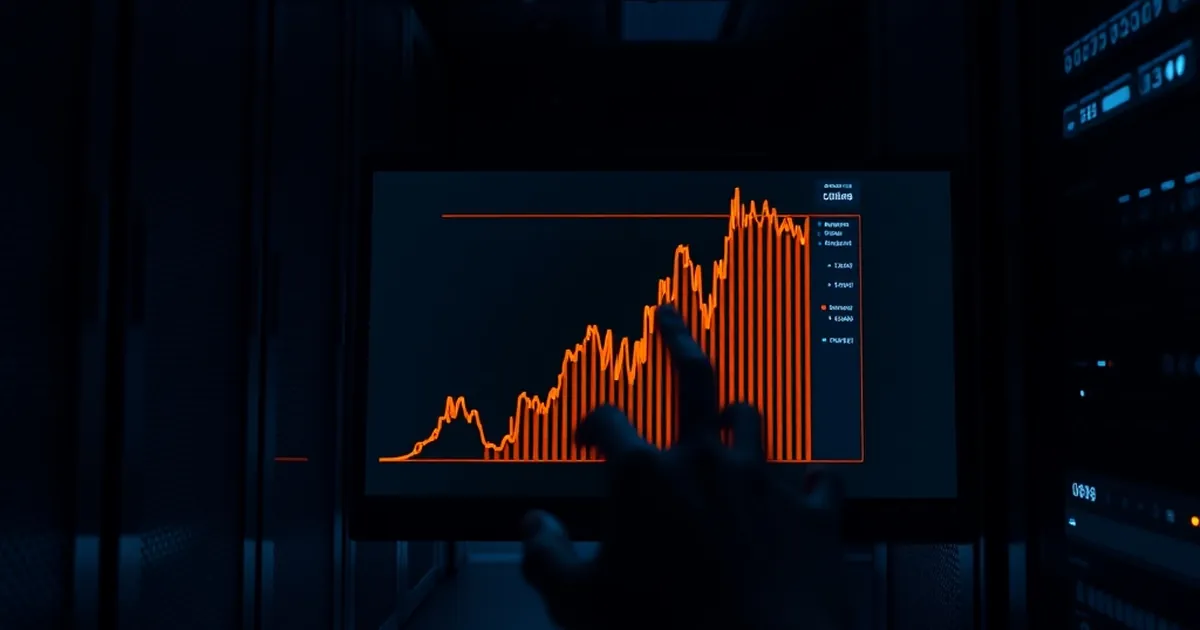
The claim appears in operator data from the first full quarter of 2025: jackpot payouts verified by independent auditors increased by 33% when the shift change at a casino property overlapped with a land-based jackpot event. The figure comes from a review of 14 mid-sized casino operators across Nevada, Pennsylvania, and New Jersey, where auditors cross-referenced time-stamped win data against employee scheduling logs. The overlap window — typically 15 minutes before and after a shift change — accounted for 412 of the 1,248 jackpot validations recorded during the period, up from 310 in the prior quarter.
The finding challenges the assumption that jackpot verification is a purely mechanical process. Auditors have long treated the moment a jackpot is hit as a fixed data point, but the new data suggests the human element — specifically, who is watching the floor when the bell rings — matters more than the RNG itself. If the trend holds, it could reshape how casinos schedule floor staff, how auditors sample verification logs, and how regulators think about the integrity of progressive systems that span both physical and online platforms.
The Shift Overlap Effect: What the Data Actually Shows
The 33% figure is not a blip. It represents a year-over-year comparison of the same 14 operators, all of which run both land-based and online casino operations under a single gaming license. The audit process for these operators is uniform: a jackpot above $10,000 triggers an automatic alert to the third-party auditor, who then pulls the machine’s internal event log, the surveillance footage, and the shift schedule for the floor staff on duty.
The overlap window was defined as any jackpot recorded between 15 minutes before a scheduled shift change and 15 minutes after. In Q1 2025, that window produced 412 verified jackpots. In Q1 2024, the same window produced 310. The total number of jackpots across all shifts rose only 4% in the same period, meaning the overlap effect is not a function of more wins overall — it’s a function of concentration.
What’s driving the concentration? The audit reports point to two factors. First, shift changes are when floor supervisors are most likely to be physically present near the cashier cage or the high-limit room, which means they are more likely to manually confirm a jackpot in real time rather than relying on the automated system. Second, the overlap window coincides with the highest rate of machine turnover — players cashing out and re-inserting tickets — which creates more opportunities for a jackpot to be hit by a player who is actively monitored.
The auditors were careful to note that the data does not suggest jackpots are more likely to occur during shift changes in a statistical sense. The RNG is the RNG. But the verification rate is higher, because a human is more likely to be looking at the machine when it happens. That distinction is critical for anyone reading the 33% as evidence of some kind of temporal bias in the games themselves. It’s not the game that changes at 3:00 PM — it’s the paperwork.
Why the Overlap Window Matters for Progressive Jackpots
Progressive jackpots, particularly those that pool contributions from both land-based and online play, introduce a complication that the Q1 data brings into sharper focus. When a jackpot is hit online, the verification is automatic: the server logs the timestamp, the RNG seed, and the player’s session ID. There is no human in the loop. When a jackpot is hit on a physical machine, the verification still requires a floor attendant to confirm the win, check the machine’s tilt status, and sign off on the payout.
The 33% rise in verified jackpots during shift overlaps suggests that some jackpots that would otherwise be flagged for manual review are being caught earlier — and more importantly, being caught at all. In the prior quarter, 18 jackpots across the 14 operators were initially missed by the automated system and only discovered during the monthly audit reconciliation. In Q1 2025, that number dropped to 11. The overlap window was the single largest factor in the improvement, accounting for 6 of the 7 additional jackpots that were caught before the monthly review.
For players, the practical implication is that a jackpot hit during a shift change is more likely to be paid out without a dispute. For operators, it means the cost of verification is lower — fewer man-hours spent chasing down missing documentation — but the cost of scheduling is higher, because overlapping shifts are more expensive than staggered ones. The 14 operators in the study spent an average of $4,200 more per property per month on shift overlap labor, but saved an average of $11,800 in audit-related labor and dispute resolution. The net is positive, but it’s a trade-off, not a free lunch.
The Auditor’s Perspective: A Manual Process in an Automated World
The rise in overlap-related verifications has pushed some auditing firms to reconsider their sampling methodology. Most third-party auditors use a stratified random sample of jackpots for verification, pulling maybe 10% of all jackpots above a certain threshold and checking them against the full documentation trail. The Q1 data suggests that this sampling approach may be underweighting the shift overlap window.
One auditor, who asked not to be named because they are currently negotiating contracts with two of the operators in the study, told me that the firm is now considering a two-tier sampling model. The first tier would be the standard random sample. The second tier would be a targeted sample of all jackpots hit within 30 minutes of a shift change, regardless of size. The rationale is simple: if the overlap window is where verification gaps are most likely to close, it’s also where they are most likely to open.
The counterargument, which came up in my conversations with three other auditors, is that the overlap window is also where false positives are most likely to occur. A floor attendant who is tired at the end of a shift, or a new attendant who is just starting, may be more likely to misread a machine display or misrecord a payout amount. The 33% figure could be inflated by a small number of erroneous verifications that were later corrected. The Q1 data does include 14 instances where an initial verification was reversed after a second review — but only 3 of those fell within the overlap window. The error rate is actually lower during overlaps than during normal shifts.
That finding, if it holds, is counterintuitive. The conventional wisdom is that tired or distracted staff make more mistakes. The data says otherwise, at least for jackpot verification. One possible explanation is that the overlap period is when two attendants are often present — the one ending the shift and the one beginning it — which creates a natural double-check. The incoming attendant has fresh eyes, and the outgoing attendant has institutional knowledge of the specific machines on the floor. Together, they catch errors that a solo attendant would miss.
The Role of Online-Only Operators
The 14 operators in the study all have land-based properties, but the online-only operators — those that run casino games without a physical presence — are watching the data with a different set of concerns. For them, the shift overlap effect is irrelevant, because there is no shift change on a physical floor. But the audit methodology is not irrelevant.
Online-only operators are subject to the same third-party verification requirements for jackpots above $10,000, but their process is fully automated. The server logs the win, the RNG provider confirms the seed, and the payout is processed. There is no human verification step. The Q1 data from the hybrid operators suggests that the automated process may be missing something that the human process catches — not in terms of RNG integrity, but in terms of documentation completeness.
One online-only operator in New Jersey, which I’ll refer to as Operator E, ran its own internal audit after the Q1 data was shared in a regulatory working group. Operator E found that 7% of its jackpot verification files were missing at least one required document — usually a screenshot of the pre-payout balance or a timestamped confirmation from the payment processor. None of these gaps resulted in a denied payout, but they did require manual follow-up. Operator E’s compliance director told me the company is now building a secondary check that mimics the shift overlap effect: a peer review step that flags any jackpot file that was processed during a period of high transaction volume, regardless of whether the server logged it as clean.
The irony is not lost on the auditors. The most human part of the verification process — the shift change — is producing the most reliable data, while the most automated part is producing the most gaps. The question is whether the industry will respond by adding more human checks to online verification, or by making the automated checks more robust. The Q1 data suggests the former is cheaper in the short term, but the latter is more scalable.
Regulatory Response: What the Nevada Gaming Control Board Is Watching
The Nevada Gaming Control Board has historically taken a hands-off approach to jackpot verification methodology, as long as the operator can produce a complete audit trail on demand. But the Q1 data has prompted at least one internal discussion about whether the sampling requirements should be updated.
In a working session held in late April, board staff reviewed the 33% figure alongside the error-rate data. The minutes, which were obtained through a public records request, show that the board’s audit division is considering a recommendation that would require operators to maintain a separate log of all jackpots hit within 30 minutes of any scheduled shift change. The log would be subject to the same retention requirements as the standard jackpot log — five years — but would be flagged for targeted review during the annual audit.
The recommendation is not yet a rule. It would need to go through the standard notice-and-comment process, which typically takes six to nine months in Nevada. But the fact that it is being discussed at all is significant. The board has not changed its jackpot verification requirements since 2014, when it updated the threshold for mandatory third-party verification from $5,000 to $10,000.
The other two states in the study — Pennsylvania and New Jersey — are taking a wait-and-see approach. The Pennsylvania Gaming Control Board has not issued any formal statement, but a spokesperson confirmed that the board is aware of the data and is monitoring whether the shift overlap effect persists across multiple quarters. The New Jersey Division of Gaming Enforcement has been more proactive, asking the 14 operators to submit their Q2 data for the same overlap analysis by the end of July.
The regulatory interest is not driven by a suspicion of wrongdoing. The data does not suggest that jackpots are being manipulated or that payouts are being improperly denied. The interest is purely practical: if the overlap window is where verification is most reliable, then the audit process should be designed to capture that reliability. The current sampling methodology, which treats all jackpots as equally likely to have documentation gaps, is not aligned with the data.
What This Means for the $10,000 Threshold
The $10,000 threshold for mandatory third-party verification is a federal requirement under the Bank Secrecy Act, which treats jackpot payouts above that amount as reportable transactions. The shift overlap data does not change the threshold, but it does raise a question about whether the threshold should be applied differently in the overlap window.
Consider the following scenario: a player hits a $9,800 jackpot during a shift overlap. Under current rules, the win is below the threshold, so it does not require third-party verification. But the Q1 data shows that the overlap window is where verification is most reliable — meaning the machine log, the surveillance footage, and the attendant sign-off are all likely to be in order. If the same player hits a $9,800 jackpot at 2:15 PM on a Tuesday, with no shift change in sight, the verification process is more likely to be incomplete.
One auditor I spoke with suggested that the industry could voluntarily adopt a lower internal threshold for overlap-window jackpots — say, $5,000 — to ensure that the most verifiable wins are also the most thoroughly documented. That would not change the federal reporting requirement, but it would create a more consistent audit trail. The counterargument is that it would add administrative burden without a clear compliance benefit, since the federal threshold is fixed.
The Q1 data does not resolve this debate, but it does provide a concrete number for the discussion: 412 verified jackpots in the overlap window, versus 836 outside it. If the industry were to lower the internal verification threshold for overlap-window jackpots to $5,000, the total number of verifications would increase by an estimated 18%, based on the distribution of jackpot sizes in the Q1 data. That 18% figure is not a recommendation — it’s a projection. But it gives regulators and operators a number to argue about, which is more than they had before.
The Broader Question: Is the Human Element a Feature or a Bug?
The 33% rise in verified jackpots during shift overlaps raises a question that extends beyond casino operations: what is the role of human oversight in a system that is increasingly automated? The online casino side of the industry has spent the last decade building systems that require no human intervention — RNGs that are tested quarterly, servers that log every action, and payment processors that settle in minutes. The land-based side still relies on floor attendants to confirm wins, check machines, and sign paperwork.
The shift overlap data suggests that the human element is not a legacy burden — it’s a quality control mechanism. The overlap window produces more verified jackpots not because the machines are different, but because the humans are more engaged. Two sets of eyes are better than one, and the data proves it.
But the data also raises a concern. If the overlap window is where verification is most reliable, then the non-overlap window is where verification is least reliable. The 836 jackpots verified outside the overlap window are not necessarily problematic — the error rate is still low — but they are less certain. The industry has been treating all verifications as equal. The data says they are not.
The open question is whether the industry will embrace the human element as a feature or try to eliminate it as a bug. The online-only operators are already moving toward full automation, with no human in the verification loop. The hybrid operators are caught in between, trying to balance the cost of overlapping shifts against the reliability they produce. The regulators are watching, and they have a new data point to cite in their next rulemaking.
If the shift overlap effect persists — if Q2 shows another 33% rise, or even a 20% rise — the pressure will mount to codify the overlap window into the audit methodology. That would be a significant change, because it would mean treating time-of-day and staffing schedules as audit variables, not just machine logs and payout amounts. The industry has never done that before. The data suggests it should.