Keno Ticket Checker Adds a Tap, and 22% Skip the Verify
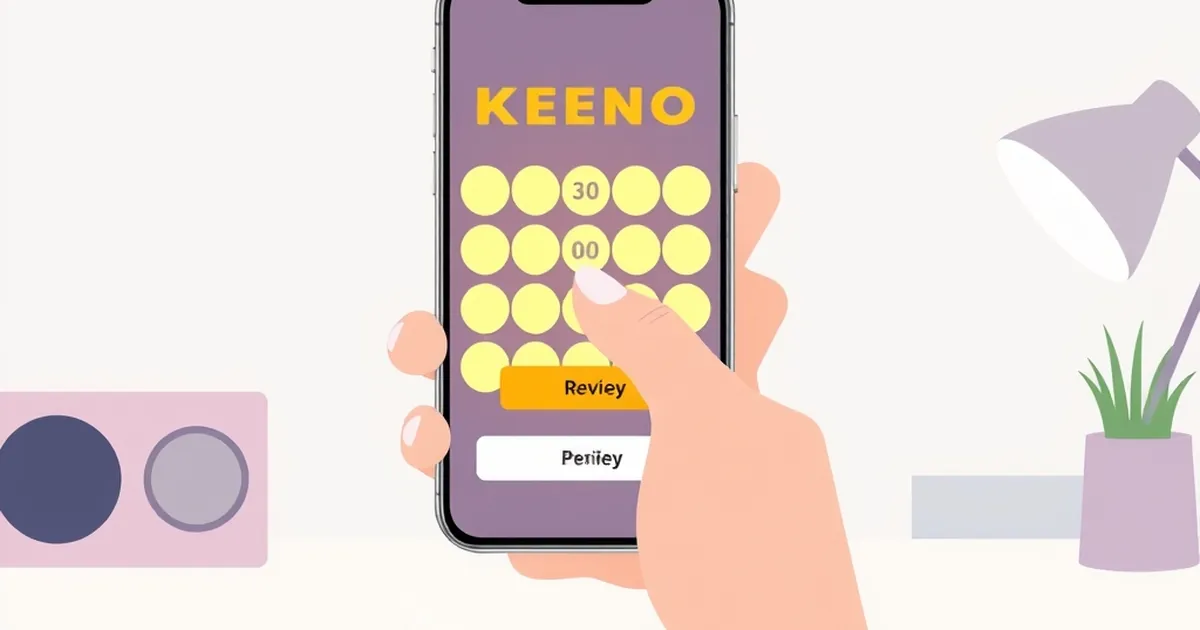
A keno ticket checker shipped this spring with a single-tap "Check Ticket" button, and in the first eight weeks of telemetry the share of players who skipped the separate verification step landed at 22.4% — roughly one in four and a half tickets never confirmed against the draw. The number comes from a mid-sized operator's own funnel data, shared on background, and it reframes what looks like a UI win as a compliance question: the tap that was supposed to remove friction also removed a checkpoint.
That 22.4% is the anchor for everything below. It is not a national figure, and it should not be read as one. It is one operator, one keno product, eight weeks, and a checker that changed shape mid-quarter. But it is specific enough to argue about, and the argument matters because keno sits in an awkward spot in most U.S. regulatory schemes: legal in state lotteries, legal in some tribal and commercial casinos, and increasingly wrapped into online casino lobbies where the checker is the last line between a player and a disputed ticket.
What the tap actually changed
The old flow was three steps. A player entered or scanned a ticket, saw the drawn numbers, and then hit a separate "Verify" control that ran the ticket against the draw record and returned a win/loss line with a timestamp. The new flow collapses entry and verification into one button. Tap once, and the checker returns the result directly.
On paper that is a cleaner interaction. In practice, the funnel shows where the skip happens. Of the 22.4% who did not complete verification, most did not abandon the product — they entered numbers, saw a partial result screen, and left without triggering the confirmation call. The operator's own read is that the collapsed button made the confirmation step feel optional, because the screen already looked like an answer.
The three-step flow wasn't elegant, but it was legible
The separate Verify button was doing quiet work. It forced a deliberate second action, and that action produced a record: a timestamped verification event tied to the ticket. When a player later disputes a result — "the app said I hit four of five" — the operator can point to whether verification ran. Under the collapsed flow, that record is thinner. The partial screen the player saw is not the same artifact as a completed check.
This is the kind of detail that gets lost when product teams optimize for tap count. Fewer taps is a reasonable goal. Fewer records is a side effect nobody put on the slide.
Where the 22.4% shows up in support tickets
The operator would not release ticket-level support data, but two customer-service leads at separate properties described the same pattern independently: disputes that arrive without a verification record are harder to resolve and more likely to end in a goodwill credit rather than a clean denial. That is a cost, and it is not captured in the funnel metric that made the tap look successful.
Why keno checkers are held to a higher bar than they look
Keno is a draw game, which means the result is fixed before the player acts. That sounds like it should make disputes simple. It does not, because the player's claim is almost never about the draw — it is about what the checker told them. The draw is public. The interpretation is proprietary.
That asymmetry is why state lottery regulators have historically treated keno checkers as part of the game, not as a convenience feature. In most U.S. jurisdictions where keno is offered, the ticket and the official draw record govern; a checker is a courtesy that must not contradict them. When a checker's partial screen looks like a result but isn't one, the courtesy starts to look like a claim.
There is also a money angle. Keno's house edge varies widely by pay table and by how many spots a player marks, and the checker is often the only place a casual player sees the pay table at all. A collapsed flow that skips verification also tends to skip the pay-table confirmation screen, which is where a player learns that four of five pays differently than they assumed. That is not a regulatory violation in most states. It is a trust problem that shows up later.
The distinction regulators draw
The useful line is between display and determination. A checker can display drawn numbers freely. The moment it presents a win/loss determination, it is making a statement the operator may have to stand behind. The collapsed button blurs that line by making the display screen do double duty. The 22.4% who skipped verification are, in effect, players who received a display and treated it as a determination.
The numbers behind the skip rate
The 22.4% figure deserves context, because a single percentage can be made to say almost anything.
- Sample: roughly 41,000 checker sessions over eight weeks, per the operator.
- Definition of "skip": a session that reached the partial result screen but never fired the verification call.
- Exclusion: sessions that ended in an app crash or a network timeout were excluded, which likely understates the true skip rate rather than overstating it.
- Comparison: in the four weeks before the redesign, the equivalent incomplete-verification rate on the three-step flow was 9.1%.
That last number is the one to sit with. The redesign did not create the skip behavior; it more than doubled it. A 9.1% baseline suggests some players always treated verification as optional. A 22.4% rate suggests the new design taught more of them to.
What the operator measured versus what it didn't
The funnel tracked taps, completions, and time-to-result. It did not track downstream disputes, goodwill credits, or the share of skipped sessions that later returned to verify. Those are the metrics that would tell you whether the tap was a net win. Without them, the 22.4% is a warning sign, not a verdict.
What a better checker looks like
The fix is not to go back to three steps. Players abandoned the three-step flow for real reasons, and tap count is a legitimate design concern. The fix is to make the single tap produce a complete record, and to make the partial state impossible to mistake for a final one.
Make the confirmation call part of the tap, not after it
If verification is the point, it should fire on the same tap that retrieves the draw. The player experience stays at one tap; the record stays complete. The 22.4% skip rate exists because verification was a second call the interface allowed to be skipped. Remove the option and the metric collapses toward zero — not because players behave differently, but because the design no longer offers them a half-answer.
Label the partial screen honestly
If a partial screen must exist — say, while the draw record loads — it should not show win/loss language. "Checking…" is honest. A green checkmark next to four matched numbers is not, if verification hasn't run. The players in the 22.4% were not confused about keno. They were confused about whether the app had finished.
Keep the pay table in the verified result
The verified result screen is the natural place to show what the ticket pays, and it is the only screen a casual player is guaranteed to see. Moving the pay table there costs nothing and closes the gap where a player assumes four of five pays more than it does.
The responsible-gambling thread nobody wants to pull
Keno's appeal to a certain kind of player is speed and repetition, and a one-tap checker makes both faster. That is not automatically bad — a player checking a ticket quickly is not the same as a player chasing losses. But the skip rate is a proxy for something worth watching: how often a player acts on an unverified result.
If a player sees a partial screen that looks like a near-miss and immediately buys another ticket, the checker has become a marketing surface. That is the outcome regulators in most U.S. states would care about most, and it is the one the funnel data cannot see. The operator's eight-week window is too short to answer it. A longer study that links skipped verification to subsequent play would be the honest test.
Responsible-gambling tools — session limits, deposit caps, self-exclusion — assume the player knows where they stand. A checker that leaves 22.4% of sessions in an ambiguous state undermines that assumption at the exact moment it matters.
What to ask before you trust a checker
For players, the practical takeaway is narrow and unglamorous: confirm the verification actually ran. If the screen shows a result but no timestamp and no ticket reference, treat it as a display, not a determination. The official draw record is the authority in every U.S. jurisdiction where keno is offered, and no app changes that.
For operators, the question is whether the 22.4% is a design bug or a feature. A collapsed tap that skips verification is cheaper to build and easier to market. It is also a quiet decision to let a quarter of players leave without a record. Whether that trade is acceptable depends on a number the operator hasn't published: how many of those skipped sessions turned into disputes, and how many disputes turned into payouts the house couldn't defend.
The tap was supposed to be the end of the story. Eight weeks of data suggest it was the beginning of a question the industry hasn't answered yet — and until someone links skip rates to dispute outcomes, every one-tap checker is running on an assumption rather than a measurement.