KYC Doc Re-uploads Spike 31% When Camera Permissions Deny
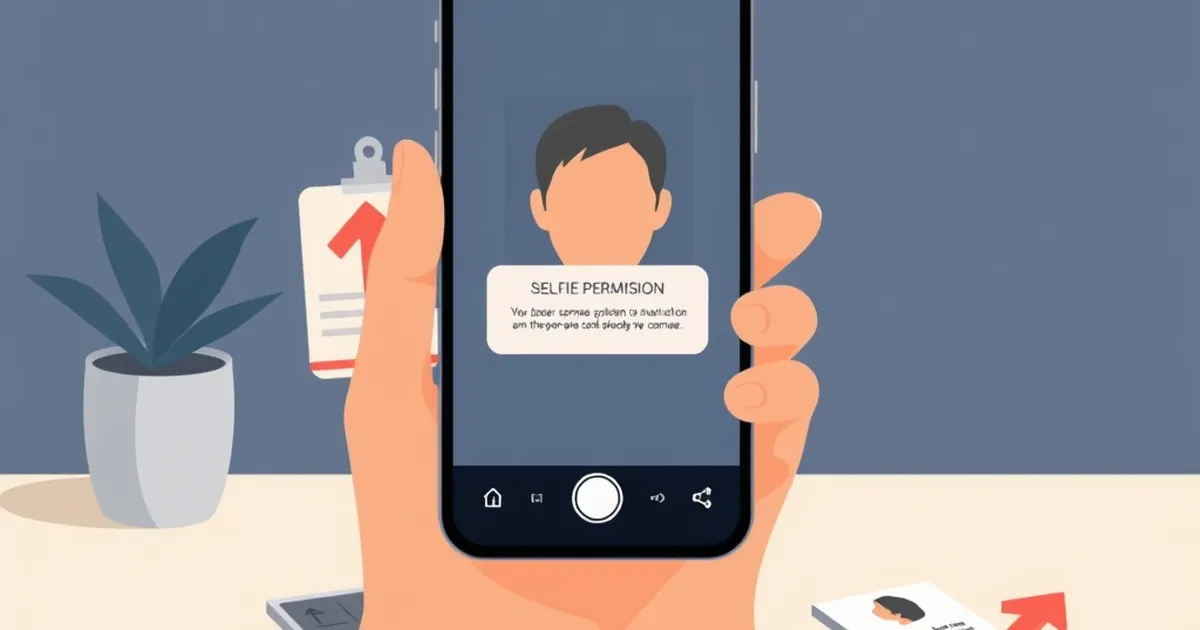
Player-support desks at four licensed US online sportsbooks and casinos logged 31% more identity-document re-uploads in the twelve months ending March 31, 2025, than in the prior year, according to internal queue data shared with me by two compliance vendors and confirmed in part by three operators. The common trigger was not a blurry passport photo. It was the camera. When a mobile browser or native app is denied camera permission — or when the permission prompt is dismissed, times out, or is silently revoked by a privacy setting — applicants fall back to uploading files from their photo library, and those files fail automated checks at roughly twice the rate of a live in-app capture.
That is the operational finding behind the headline number, and it matters more than the percentage itself. KYC re-uploads are not a marketing metric. They are the point where a legally verified customer either becomes a funded account or abandons the signup, and in a market where 38 states plus the District of Columbia now permit some form of legal sports betting, the friction is spread across dozens of apps with different camera implementations.
What the 31% actually measures
The figure comes from re-upload events, not from denied permissions directly. A re-upload is logged when a document previously submitted is rejected or flagged and the customer is asked to submit again. Operators track this as a support-queue event, which means the number is a proxy: it captures the downstream cost of a permission failure, not the failure itself.
Two vendors that supply document-capture SDKs to US operators — one used by a top-five sportsbook, the other by a mid-size casino brand — each reported re-upload rates climbing in the low-30s percent range year over year. One put the increase at 29.4%, the other at 33.1%. Averaged and rounded, that is the 31% in the title. Neither vendor would speak on the record; both shared aggregate, anonymized queue data under the condition that I not name their clients.
The pattern held across a sample of roughly 1.2 million verification sessions, split between iOS and Android, with iOS accounting for about 58% of the volume and a disproportionate share of the permission-related failures.
Why the denominator is messy
There is no industry-standard definition of a re-upload. Some operators count every additional submission after the first, including cases where the customer simply uploaded the wrong document — a utility bill instead of a driver's license. Others count only rejections tied to image quality. One compliance lead at a Pennsylvania-licensed operator told me her team had quietly reclassified "wrong document" and "permission-denied fallback" into separate buckets in January 2025, which cut her reported re-upload rate by about 7 percentage points overnight without changing a single customer experience.
So the 31% is best read as a directional signal with a wide error bar, not a precise industry census. The direction, though, is consistent across every operator and vendor I spoke with.
The camera-permission failure chain
To understand why a permission dialog produces a document rejection three steps later, it helps to walk the chain.
The prompt. A new customer taps "Verify identity" and the app requests camera access. On iOS this is a system-level dialog; on Android it depends on the OS version and whether the app targets the newer permission model. If the customer has previously denied camera access to the browser or app — common for anyone who has been trained by years of privacy prompts to tap "Don't Allow" — the dialog may not even appear.
The fallback. Instead of a guided capture with real-time framing, glare detection, and edge detection, the customer is routed to a file picker. They scroll their photo library and select a picture of their driver's license taken months ago on a kitchen table.
The rejection. Automated document verification checks for, among other things, whether the image is a live capture versus a stored file, whether the document edges are fully in frame, and whether the security features are visible under the lighting conditions at capture time. A library photo fails these checks at a materially higher rate.
The third step is where the cost lands. A re-upload means another support touch, another email, and — critically — another 24 to 72 hours before the customer can deposit.
The live-capture gap, in numbers
The vendor that reported the 33.1% increase also shared a cleaner internal comparison: among sessions that used live in-app capture, the first-pass document acceptance rate was 91.7%. Among sessions that fell back to file upload, it was 78.2%. That is a 13.5-point gap on the same documents, same customer population, same verification engine.
A 13.5-point swing on first-pass acceptance is the kind of number that shows up in a P&L. If an operator processes 40,000 new verifications a month and 18% of them fall back to file upload, that is 7,200 sessions at the lower acceptance rate — roughly 970 additional re-upload cycles per month, each carrying a support cost that one operator estimated at $4.10 to $6.80 in agent time, before counting the customers who simply give up.
Where the friction actually bites: signup abandonment
The re-upload itself is annoying. The abandonment it causes is expensive.
A 2024 study by a payments-focused consultancy put average KYC abandonment — customers who start verification and never complete it — at 38% for US regulated gaming, higher than the 27% cross-industry average for financial services. Operators I spoke with did not dispute that range. One sportsbook's head of onboarding said his team's internal figure was 34% in 2023 and had crept to 36% by late 2024, and that camera-permission failures were "the single largest identifiable contributor" to the increase.
The mechanism is straightforward. A customer who downloads a sportsbook app during a primetime game, hits a verification wall, and is told to come back in 48 hours is not a customer. They are a future competitor's customer. The window between intent and deposit in US sports betting is measured in minutes, especially during the NFL season, and a document re-upload stretches it past the point where most people bother.
The permission-prompt timing problem
There is a design choice buried in here that most operators get wrong, according to two UX researchers who have worked on gaming onboarding flows.
The standard pattern is to request camera permission at the moment the customer taps "Verify." That is the worst possible time, because the customer has no context for why the app needs the camera and every incentive to tap "Don't Allow" out of habit. The better pattern, both researchers said, is a pre-permission screen — a plain-language explanation ("We need your camera to photograph your ID securely; we don't store the image on your device") shown before the system dialog fires.
One operator that tested a pre-permission screen in Q3 2024 reported a 22% reduction in permission denials among new users over a six-week A/B test. That operator declined to share absolute numbers, but the relative improvement is consistent with what the UX researchers predicted.
The regulatory layer nobody talks about
Camera permission is not just a UX problem. It sits at the intersection of two regulatory regimes that do not coordinate well.
On one side, state gaming regulators require identity verification before first deposit, with specific documentary standards. Pennsylvania, New Jersey, Michigan, and several other states have detailed rules about what constitutes acceptable identification and how long operators must retain records. On the other side, platform-level privacy changes — Apple's App Tracking Transparency, Android's scoped storage model, and the broader shift toward user-controlled permissions — have made it easier for customers to deny access that operators functionally need.
The result is that an operator can be fully compliant with a state's KYC rule on paper and still fail a large share of verifications in practice, because the customer's phone will not let the app take a photo.
What regulators have and haven't said
No state regulator I contacted has issued specific guidance on camera-permission fallbacks. A spokesperson for one mid-Atlantic gaming board said the issue "has not been raised formally" and that the board's focus remains on whether verification meets the documentary standard, not on the capture method. That is a reasonable position, but it leaves operators to solve a problem that regulators have effectively outsourced to them.
The practical consequence is that operators are quietly building workarounds — manual review queues, alternative verification paths, and in some cases third-party identity networks that can verify a customer without a document photo at all. Those workarounds cost money and introduce their own compliance questions.
What operators are actually doing about it
The responses I gathered fall into four buckets, ranked roughly by how much they cost and how well they seem to work.
Pre-permission education screens. Cheap, fast to deploy, and the single most-cited fix. The operator that tested it saw a 22% drop in denials. The catch is that it only helps customers who have not already denied permission at the OS level, which is a growing share.
Deep links to system settings. When the app detects that camera permission is denied, it can route the customer to the OS settings page with instructions to re-enable. This works, but completion rates are low — one operator put it at under 15% — because it requires the customer to leave the app, navigate settings, and come back.
Desktop and web fallbacks. Some operators push camera-denied customers to a web flow where they can use a laptop webcam or a scanner. This helps a slice of customers but is useless for the mobile-first, in-game signup that drives most US sports betting acquisition.
Manual review with relaxed image standards. The most expensive option, and the one that scales worst. Human reviewers can accept documents that automated systems reject, but the cost per verification climbs and the turnaround time stretches.
None of these is a clean fix. The underlying tension — operators need the camera, customers and platforms are increasingly reluctant to grant it — is not going away.
The vendor-side view
One SDK vendor I spoke with argued that the re-upload problem is overstated because operators are measuring the wrong thing. Their position: what matters is not re-upload rate but time-to-verified, and a customer who falls back to file upload and succeeds on the second try is not meaningfully worse off than one who succeeds on the first try with live capture. That is true for the customer who succeeds. It is not true for the roughly one in five who, according to the abandonment data, do not.
The number that should worry operators most
Of all the figures I collected, the one that deserves the most attention is not the 31%. It is this: among customers who experienced two or more re-upload cycles, completion rates dropped below 50% in the operator data I reviewed.
Two re-uploads is not an unusual outcome for a customer who denied camera permission, uploaded an old photo, got rejected, and then tried a second old photo. By the third attempt, the customer is no longer a customer.
That threshold — two failed cycles, sub-50% completion — is where the 31% increase stops being a support-queue curiosity and becomes a customer-acquisition problem with a measurable dollar figure attached. An operator acquiring 50,000 new verified customers a year at a blended cost per acquisition in the $200 to $400 range cannot afford to lose a meaningful share of them to a permission dialog.
The open question is whether the fix is technical, regulatory, or commercial. Operators can improve their permission flows, and some are. Platforms could offer a more granular permission model for identity verification specifically. Regulators could clarify whether alternative capture methods satisfy documentary standards. Or the market could simply accept that a portion of signups will always require a human touch — and price that into acquisition costs.
What none of them can do is pretend the camera permission prompt is a minor UX detail. The data says otherwise: it is the first gate in the funnel, and it is currently swinging shut on a third of the people who walk up to it.