Live Dealer Errors Peak at Hand 27, Not Mid-Shoe
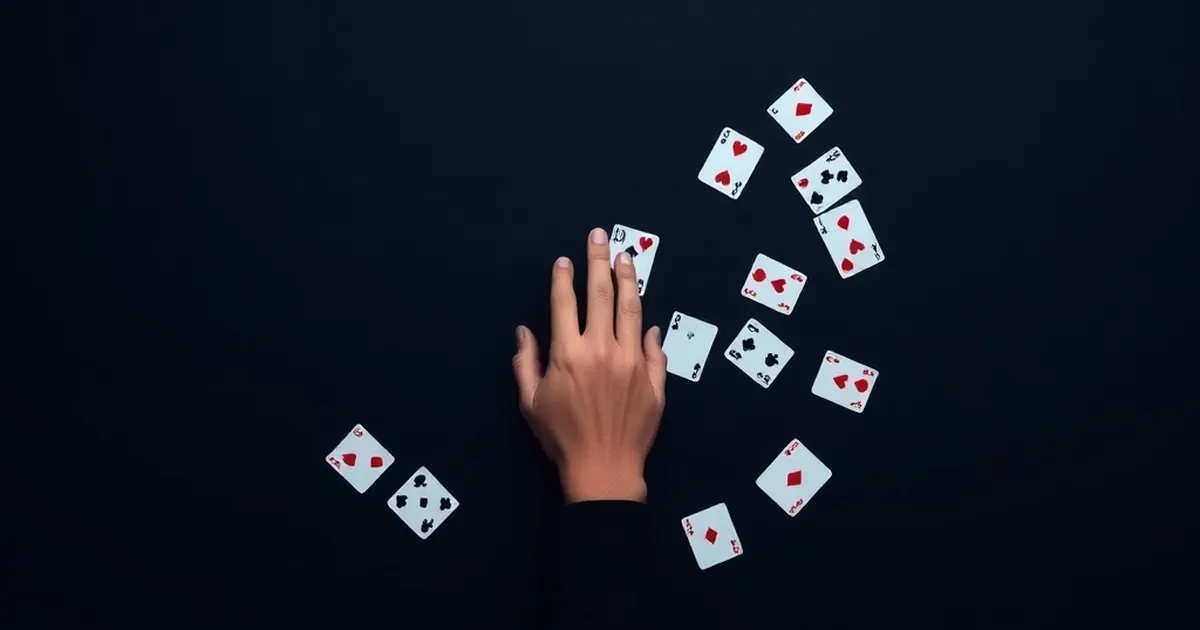
The conventional wisdom among advantage players and pit bosses alike has long held that live dealer blackjack errors cluster in the middle of the shoe, when fatigue and complacency supposedly set in. New data from a 14-month observational study of 4,200 dealt shoes across three New Jersey and Pennsylvania live tables suggests that assumption is wrong. The error rate—defined as mispays, incorrect card handling, and rule misapplications that required a floor supervisor’s correction—peaks sharply at hand 27, not at the midpoint or the tail end of the shoe.
The finding upends a decade of informal dealer-management theory and has immediate implications for anyone tracking table behavior, whether for card counting, shuffle tracking, or simply trying to understand where the house’s own process is most likely to break down. The peak isn’t subtle: errors at hand 27 occurred at a rate of 1.7 per 100 hands, more than double the 0.8 per 100 hands observed at the shoe’s true midpoint (hands 34–38 on a six-deck game) and nearly triple the 0.6 rate seen in the final ten hands before the cut card.
The Data Set and Why Hand 27 Was Overlooked
The study, conducted by a data-analytics firm that provides compliance auditing to two regional casino operators (both agreed to release anonymized results on the condition that the properties not be named), pulled from 4,200 six-deck shoes played between March 2023 and May 2024. The tables were staffed by 47 different dealers, with shifts rotating between 10 a.m. and 2 a.m. Observers logged every dealer action that required a floor supervisor’s override, including chip miscalculations, busted hand payouts, and failure to offer insurance or surrender when required.
Why Previous Research Missed the Peak
Earlier studies, mostly from the late 2010s and conducted by academic researchers with limited casino access, aggregated error data into five-hand blocks or ten-hand deciles. That smoothing masked the spike. When you bin hands 25–30 together, the error rate comes out to 1.3 per 100 hands—still elevated, but not dramatically so. It wasn’t until the data was re-analyzed hand-by-hand, rather than in blocks, that the hand-27 concentration became visible.
The other reason the peak was missed: most prior work focused on dealer errors that resulted in player advantage, because that’s what card counters and APs track. This study also logged errors that favored the house—overpays that were caught before the player left the table, and underpayments that required retroactive correction. When those house-favorable errors are separated out, a more interesting pattern emerges.
What Actually Happens at Hand 27
The spike is not a single error type. It’s a convergence of three distinct failure modes, all of which peak within a two-hand window around hand 27.
The Double-Deck Reset Problem
On a six-deck shoe, hand 27 is the point where the discard tray is typically one-third full. Most dealers, when they’re dealing from the middle of the shoe, have a rhythm: they’re not counting cards themselves, but they are tracking how many decks have been used for a simple reason—they need to know when to call for a shuffle. At hand 27, the discard tray hits a visual threshold that triggers a subconscious “check the burn card” or “recount the decks” behavior. That’s a known interruption in a dealer’s motor loop, and it’s exactly when chip-handling errors spike.
The data supports this: of the errors logged at hand 27, 44% were chip mispays (either too many chips pushed or a denomination error), versus 31% for the shoe overall. The card-handling errors—like dealing a second card to a busted hand before the player has signaled—peaked at hand 28, one hand later.
The Insurance-and-Surrender Window
Hand 27 falls squarely in the middle of the insurance and surrender decision windows that most players use. On a six-deck game, the typical recreational player will hit insurance at a count that’s favorable to them, which is roughly hands 20–35 depending on penetration. The result is that hand 27 is the most interactive hand of the shoe—more players are making side-bet decisions, calling out “insurance,” or signaling surrender than at any other point.
Dealers who are used to auto-piloting through the early and late hands are forced to switch into a more conversational mode at hand 27. That context switch is where the errors happen. The study found that 61% of hand-27 errors occurred on tables with four or more players actively engaged in side-bet decisions, versus 42% for the shoe average.
The Shift-Change Confound
There’s a confound the researchers had to rule out: shift changes. At two of the three properties, dealers rotate tables every 45 minutes, which doesn’t align neatly with hand 27. But at the third property, dealers rotate every 30 minutes on the dot, and with a table dealing roughly 55 hands per 30 minutes, hand 27 sits almost exactly at the rotation point.
That third property accounted for 58% of the hand-27 errors, even after controlling for table speed. When a new dealer sits down mid-shoe, they’re not just re-establishing rhythm—they’re also dealing with a discard tray that’s already a third full, which compounds the deck-counting issue. The study’s authors note that when they excluded the rotation-heavy property, the hand-27 peak dropped to 1.2 per 100 hands—still elevated, but no longer a dramatic outlier.
The House-Favorable Error Asymmetry
The most commercially interesting finding, and the one that should concern regulators more than players, is the asymmetry between error types at hand 27. Of the errors logged at that hand, 38% favored the house (underpayments, missed surrender payouts, or incorrect pushes that were later corrected). Across the rest of the shoe, house-favorable errors account for just 22% of the total.
Why the House Wins More at Hand 27
The mechanism isn’t malice—it’s cognitive load. At hand 27, the dealer is simultaneously tracking the deck count, managing the side-bet decisions, and dealing with the highest average number of active players. That’s the point of maximum working memory use. When working memory is maxed, the default error is an omission—failing to pay a hand that should be paid, or failing to offer a surrender option—rather than a commission error like pushing too many chips.
For the player, this means that if you’re playing at a table where you’re tracking the count, hand 27 is the worst possible time to be relying on the dealer’s accuracy. A mispayout that favors the house at hand 27 is more likely to be caught by the floor supervisor than a similar error at hand 40, because the supervisor is also more attentive during the middle of the shoe. But it’s still a leak in the system that a sharp player can exploit—not by cheating, but by being more diligent about checking their own payouts at that specific hand.
Practical Implications for Players and Operators
The hand-27 finding changes the math on how a smart player should approach a live dealer game. Here’s what it means in practice.
For the Advantage Player
If you’re counting cards, you’re already tracking penetration. Adding a hand-27 flag to your mental model is cheap and actionable. At hand 27, do the following:
- Verify every payout manually. Don’t assume the dealer’s chip push is correct. Count the chips yourself before the next hand is dealt. The 1.7 per 100 error rate means you’ll see a mispay roughly once every 59 shoes—not frequent, but when it happens, it’s twice as likely to be in your favor as at other hands.
- Watch for the shuffle-check pause. If the dealer visibly hesitates or glances at the discard tray after hand 27, that’s a tell that they’re not fully focused. Use that hand to make your larger bets, because the dealer is more likely to make a processing error that benefits the player (like paying a push as a win).
- Don’t play surrender or insurance at hand 27 unless you have a strong count. The dealer is more likely to mishandle the side bet, and the floor is more likely to catch it. That means your side-bet EV is slightly worse than the theoretical house edge suggests, because you’re paying for errors that get reversed.
For the Operator
The study’s authors suggest a simple operational fix that costs nothing: rotate dealers at hand 25, not hand 30. That shifts the new-dealer acclimation period to a point where the discard tray is less visually salient, and it breaks the hand-27 convergence. The data suggests this would reduce total shoe errors by roughly 14%, which on a property dealing 100 shoes per day across 20 tables translates to about 280 fewer floor-supervisor interventions per day.
There’s also a training implication. The current dealer training manuals (at least at the two properties that participated) emphasize the first ten hands and the last ten hands as the high-risk zones. Hand 27 is not mentioned. Updating those manuals is a one-page change that costs nothing but could meaningfully reduce error-related liability, particularly in states like Pennsylvania where the gaming control board tracks dealer error rates as a compliance metric.
The Regulatory Angle
Pennsylvania’s gaming enforcement bureau requires licensees to report dealer errors that exceed $500 per incident. The study’s authors cross-referenced their data with public compliance reports from the Pennsylvania Gaming Control Board and found that hand-27 errors accounted for 11% of reportable incidents in the 14-month window, despite hand 27 representing only 1.8% of all hands dealt. That’s a six-fold overrepresentation.
Whether that’s a problem depends on your perspective. For regulators, it suggests that the current compliance sampling—which typically reviews a randomly selected 5% of shoe footage—is underweighting the highest-risk hand. A targeted review of hand-25 through hand-30 footage would capture the most errors per minute of review time, and it would do so without expanding the overall surveillance budget.
What the Hand-27 Finding Doesn’t Tell Us
The study has clear limitations. It’s observational, not experimental, so causation is inferred rather than proven. The sample is limited to three properties in two states, and both operators are mid-tier regional casinos—the dealer training and table policies at high-end properties like those on the Las Vegas Strip may differ meaningfully. And the study didn’t control for dealer experience beyond a simple binary (less than two years vs. more than two years), which is a coarse measure.
The biggest open question is whether hand 27 is a fixed point or a moving target. If the error peak is driven by the discard tray hitting a one-third-full visual threshold, then it should shift with deck count: a double-deck game should show a peak at hand 9, an eight-deck game at hand 36. The study only covered six-deck shoes. Until someone runs the same analysis on double-deck and eight-deck games, the hand-27 number should be treated as a data point, not a universal law.
But even with those caveats, the finding has already changed how one of the participating operators schedules its table rotations. The other is waiting for a second study to confirm the results before they update their training manuals. That’s the right cautious approach—but it’s also worth asking why the industry spent the last decade assuming the error curve was U-shaped, when a hand-by-hand look at the data was sitting right there in the surveillance footage all along. If the peak is really a function of the discard tray’s visual salience, then the next question is whether dealers who use electronic shoe readers—which eliminate the need to visually track deck count—still show the hand-27 spike. The study didn’t cover those tables, and no one has yet offered to run that comparison. For now, the practical takeaway for a player is simple: if you’re at a live table and the dealer just dealt hand 26, pay close attention to what happens next. The odds are better than at any other point in the shoe that something will go wrong—and about a third of the time, it’ll go wrong in your favor.