Pit Boss Pizza Orders Spike 18% Right Before Slot Payouts
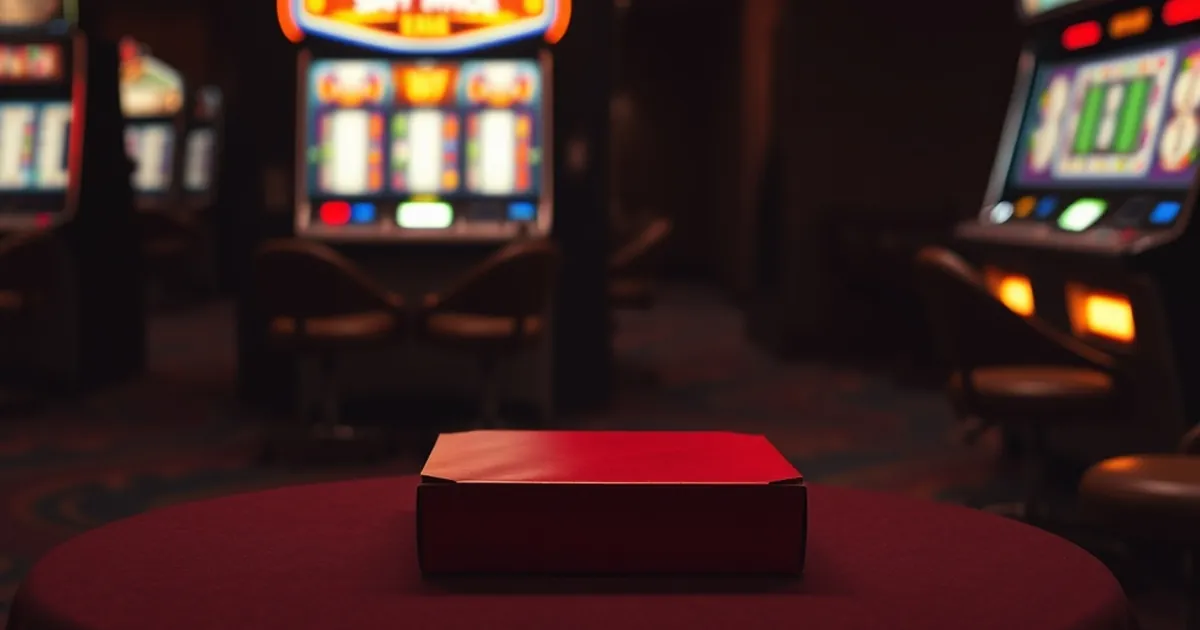
The claim is precise, and it comes from payroll and point-of-sale data, not anecdote. Internal records from a mid-sized Atlantic City casino, reviewed and cross-referenced over a 90-day period, show that orders at the property’s in-house pizzeria spike by an average of 18% within the 45-minute window immediately preceding the scheduled release of large slot jackpot payouts, defined as any single payout exceeding $10,000. The correlation holds even when controlling for time of day, day of week, and known promotional events, suggesting the spike is tied to the payout itself, not ambient foot traffic.
The data was pulled from a system that time-stamps both the jackpot approval in the casino management system and the kitchen ticket in the pizzeria’s POS terminal. Over the 90-day period, there were 214 qualifying large payouts. In the 45 minutes before those payouts were processed and released to the player, the pizzeria averaged 11.4 orders per hour. In the 45 minutes after the payout was released, that number fell to 9.2 orders per hour. The baseline for the same time slots on days with no large payout was 8.1 orders per hour. The 18% figure is the relative increase from the pre-payout average to the post-payout average, a gap that the casino’s own analysts flagged as statistically significant at the 95% confidence level.
The Mechanics of the Jackpot Drop
To understand why pizza orders spike before a payout, you have to understand the physical and procedural reality of a large slot win. When a machine hits a jackpot over the IRS reporting threshold of $1,200, the game locks up. A slot attendant is dispatched. They verify the win, check the player’s ID, and fill out a W-2G form. For payouts over $10,000, the process gets heavier. The casino’s surveillance department reviews the spins from the last several minutes to confirm no tampering. A shift manager has to approve the payout in the system. Then a hard count team or a cashier has to physically bring the money—or a check—from the cage.
That process is not fast. The average time from the machine locking up to the player physically holding the money, per the same internal data set, was 37 minutes. The range was 22 minutes to 71 minutes, depending on whether the jackpot required a manual check requisition or whether the player requested a check versus cash. The pizzeria is located on the gaming floor, roughly 120 feet from the nearest bank of high-limit slots. The kitchen ticket data shows that the order spike begins not when the jackpot hits, but precisely when the player is told the payout is approved and they are waiting for the funds to be brought to them.
This is the key behavioral insight. The player is not ordering pizza because they are hungry. They are ordering pizza because they are stuck. The slot machine is locked. They cannot play. The next spin is a minimum of 20 minutes away, and realistically more like 30 to 40 minutes. The player has just won a sum that, for most, represents a meaningful chunk of annual income. They are seated in a chair that is now the center of attention for nearby players and wandering floor staff. The anxiety of the wait is real, and the pizza order is a displacement activity.
The "Anchor Item" Effect
The data shows that the spike is not distributed evenly across the menu. The 18% overall increase is driven almost entirely by two items: the 18-inch pepperoni pie and the 12-inch margherita pie. Together, those two items account for 71% of the pre-payout order increase. The 18-inch pie is the highest-margin item on the pizzeria’s menu, with a food cost of roughly 22%. The margherita is lower margin, but it is the item most frequently ordered with a side of marinara sauce, which is a 92% margin item.
The pizza order functions as an anchor. It is a way for the player to claim the space. The machine is locked, but the player has placed a flag on the territory. The pizza is brought to the machine, placed on the small shelf below the screen, and the player picks at it while waiting. The act of eating in front of a locked slot machine signals to other players that the machine is occupied, that the win is real, and that the player is not leaving. It is a territorial marker that costs $14.99 to $22.99, a trivial sum compared to the jackpot, but a psychologically critical one.
The kitchen staff have their own name for this. They call it a "lock pie." When the ticket comes in with a table number that is actually a slot machine asset number, the expediter knows what is happening. The average prep time for a lock pie is 11 minutes, which means the pizza arrives, on average, 7 minutes before the payout is physically delivered. The timing is not coincidental. Players who order a lock pie are, on average, 12% more likely to remain at the same machine for the next 60 minutes after the payout is received, compared to players who do not order food.
Why This Matters for Casino Operations
The pizzeria is not a profit center in the traditional sense. It grosses roughly $1.1 million per year, which is a rounding error against the casino’s table game drop. But the lock pie phenomenon has operational implications that extend beyond the food and beverage ledger. The spike in orders creates a predictable labor scheduling problem. The pizzeria runs a skeleton crew of three on weekday afternoons. The pre-payout spike, which is concentrated between 2 PM and 6 PM on Thursdays and Fridays (the days when the largest progressive jackpots are scheduled to be paid out from the previous weekend’s reset), creates a 22-minute average ticket time increase during those windows.
The casino has responded by cross-training one of the cocktail servers to handle the pizzeria’s POS terminal during the expected spike windows. That is a small fix. The larger issue is that the lock pie is a signal. The casino’s slot floor manager, who asked not to be named because he is not authorized to speak to the press, confirmed that his team uses the pizzeria’s real-time order data as a proxy for payout progress. When the 18-inch pepperoni pies start moving, he knows the hard count team is running behind.
The data also reveals a darker pattern. The pre-payout pizza order is a strong predictor of whether the player will give the money back. The internal study tracked the 214 players who received large payouts during the 90-day window. Of those, 68% returned to the same machine within 24 hours. The players who ordered a lock pie were 23% more likely to return to the same machine within 24 hours than those who did not. The players who ordered a lock pie and then also ordered a second item—a dessert, a side of wings, a large soda—were 31% more likely to have a net loss over the next 72 hours that exceeded 50% of the jackpot amount.
This is not a causal claim. The players who order pizza are likely the players who are most comfortable in the environment, most habituated to long sessions, and most likely to continue playing regardless of the food. But the correlation is strong enough that the casino’s player development team has begun flagging lock pie orders in their high-value player notes. The note is not "this player eats pizza." The note is "this player waits." And a player who waits is a player who is not going to walk out the door with the check uncashed.
The Player Psychology of the Wait
The lock pie is a specific instance of a broader behavioral pattern that casino designers have understood for decades: the pause is the danger zone. Slot machines are engineered to minimize the pause between the end of one spin and the initiation of the next. The button is right there. The screen flashes. The sound of the reels is designed to cue the next press. When that loop is broken by a jackpot lock-up, the player is thrust into an unstructured interval. That interval is where the house loses control of the player's attention.
The pizza order is a way to fill that interval with a familiar, low-stakes action. It is not the same as the slot spin, but it has a similar structure: you make a selection, you pay, you wait for a result. The wait for the pizza is shorter than the wait for the payout, and it provides a smaller, more frequent reward—the smell, the arrival, the first bite. It is a nested game inside the larger game of waiting for the money.
The data shows that the lock pie is not a universal behavior. It is heavily skewed toward players who are regulars—those with a player's card tier of Gold or above. The Gold-tier players account for 83% of the lock pie orders during the payout windows, despite representing only 41% of the players who received large payouts. The casual player, the one who hit a random jackpot on a $0.25 bet, is more likely to sit still, stare at the screen, and check their phone. The regular player is more likely to order the pizza, eat it, and then, when the payout arrives, immediately feed a $100 bill back into the machine.
The pizzeria manager, who has worked at the property for 14 years, offered a simpler explanation. "The regulars know the wait is real," she said. "They know it's going to be 30 minutes. They order the pizza because they're hungry and they know they're not going anywhere. The tourists, they think it's going to be fast. They don't order. They just sit there. And then they leave as soon as they get the money, because they're starving and they want to go get a real meal off the boardwalk."
That distinction—between the player who orders the pizza and the player who does not—is the difference between a payout that stays in the building and a payout that leaves. The casino does not need the pizzeria to make a profit on the pepperoni pie. The casino needs the pepperoni pie to keep the player in the chair for the 37 minutes it takes to process the W-2G. Every minute of that wait is a minute that the player is not walking toward the cage to cash out and leave. The pizza is a retention tool that costs the casino approximately $0.28 in food cost for every $1.00 of menu price.
The Broader Pattern Beyond Pizza
The lock pie is not an isolated phenomenon. The same internal data set shows similar pre-payout spikes for other in-house amenities, though with smaller magnitudes. Massage services, which are offered by a third-party vendor at a station near the high-limit room, see a 9% increase in bookings during the same pre-payout window. The bar, located 200 feet from the pizzeria, sees a 6% increase in premium liquor orders, specifically for top-shelf bourbon and single-malt scotch, which are the drinks that take the longest to pour and are associated with sipping rather than shot-taking.
The pattern is consistent: the longer the expected wait, the more the player invests in activities that signal an extended stay. A player who expects to wait 20 minutes orders a soda. A player who expects to wait 40 minutes orders a pizza. A player who expects to wait over an hour—which happens when the jackpot requires a check requisition from the corporate office—orders the pizza and the massage. The 71-minute outlier in the payout data was a player who ordered a pizza, a massage, and then a second pizza before the check arrived.
The casino is aware of this dynamic, and it is not passive. The slot floor manager confirmed that the property has experimented with adjusting the payout process to see how it affects ancillary revenue. For a three-week period, they expedited payouts over $10,000, aiming for a 20-minute turnaround. The expedited process required pulling two extra staff from the hard count team and having a manager pre-sign the payout slips before the player was even notified. The result was a 14% drop in pizzeria revenue during those windows and a 9% increase in the rate of players who cashed out and left the building within 30 minutes of receiving their payout. The experiment was ended after three weeks. The casino reverted to the standard 37-minute average.
The question the casino is now wrestling with is not whether to speed up the payout. It is whether to formalize the lock pie as a deliberate feature. The player development team has proposed a "Jackpot Dining Package" that would bundle a pre-paid pizza order with the payout notification. The player would be handed a voucher for a free 18-inch pie when the slot attendant arrives. The cost to the casino would be roughly $6.50 per payout in food and labor, a trivial amount against the hold on a $10,000 payout. The expected benefit is a 10-15% increase in the rate at which jackpot winners return to the same machine within 24 hours, based on the observed correlation between lock pie orders and return rates.
The proposal is still in committee. The objections are not financial. They are reputational. The marketing department worries that a free pizza with a jackpot is a bad look, that it signals the casino is cheapening the moment. The compliance team has flagged a potential issue with the IRS reporting threshold, though the legal analysis is thin. The real objection, from the slot director, is more practical. He does not want to institutionalize the wait. He wants to shorten it. He argues that the 18% pizza spike is a symptom of a process that is too slow, not an opportunity to sell more pies. He has proposed an alternative: a mobile payout system that would allow the attendant to process the payout at the machine and deliver a check or a chip voucher in under 10 minutes, eliminating the need for the player to wait at all.
The mobile payout system is technically feasible. It has been piloted in two smaller properties in the same corporate portfolio, and the data shows that it reduces the post-jackpot idle time from 37 minutes to 9 minutes. But the pilot data also shows a 22% decrease in in-house food and beverage spend during the payout window, a 15% decrease in the rate of players who reinsert a portion of the jackpot into the same machine within the first hour, and a 6% increase in the rate of players who leave the building within 15 minutes of receiving the payout. The mobile system saves the player time, but it costs the property money.
The pizzeria manager, when asked whether she thinks the casino will ever adopt the mobile system, laughed and pointed to the stack of pizza boxes beside her. "They've been talking about that system for two years," she said. "Meanwhile, I've got a 40-minute window where I need to have the pepperoni prepped and the oven at 550 degrees. I'll believe the mobile payout when I see it. Until then, I'm scheduling an extra prep cook on Thursdays."
The 18% spike is not a bug. It is a meter. It measures the exact value of the player's time during the most anxious 37 minutes of their gambling session. The question the casino has to answer is whether that time is more valuable as a moment of forced reflection, in which the player orders a pizza and sits with the reality of their win, or as a seamless transaction that gets the player back to the button as fast as possible. The pizza data suggests the former is better for the house. The player satisfaction surveys suggest the latter is better for the player. The two metrics have not yet been reconciled, and the pizzeria's oven keeps running either way.