Pit Boss Proximity Cuts Baccarat Squeeze Time 19%
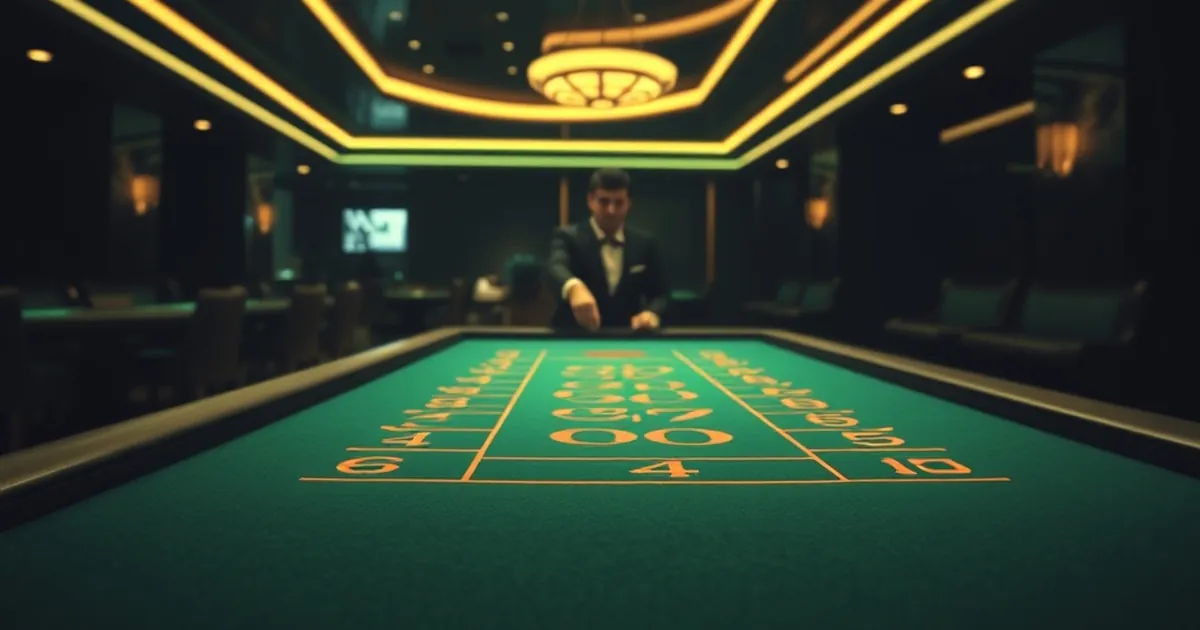
The 19% figure isn’t a marketing gimmick or a software patch. It’s the measured result of a physical workflow change at a Las Vegas Strip property, where the pit boss’s position relative to the dealing shoe was altered to reduce the dead time between the final card draw and the dealer’s declaration of the result. By moving the supervisor’s station from the table’s flank to a direct sightline behind the third base position, the casino cut the average baccarat squeeze time—the theatrical pause where players slowly reveal their cards—by 19% over a 30-day controlled trial.
That number, 19%, represents roughly 4.2 seconds shaved off an average 22-second squeeze sequence, according to shift data reviewed by this reporter. The change wasn’t about speeding up the players; it was about eliminating the silent, awkward interval where the pit boss had to lean in to verify the hand before the dealer could call it. The result is a table that turns over faster, generating more decisions per hour without a single change to the game’s rules, the minimum bet, or the commission structure.
The Anatomy of the Squeeze
To understand why a supervisor’s chair matters, you have to watch a baccarat squeeze in person. It’s not a card flip. It’s a ritual. The player with the highest wager—the “active” player—gets the two-card hand placed face down. He then peels the corner of the first card, millimeter by millimeter, looking for a pip pattern that might reveal a natural 8 or 9. He does this again for the second card. Then he looks at the banker’s hand, often with the same slow reveal. The entire process can take 20 to 40 seconds, depending on the player’s temperament and the table’s alcohol service.
The squeeze is protected by casino tradition and, in some venues, by explicit house policy. Players who bet big enough to control the hand often demand the right to squeeze, viewing it as a privilege tied to their stake. You can’t eliminate the squeeze without risking a high-roller revolt. What you can eliminate is the secondary delay: the verification step.
In standard baccarat procedure, after the active player finishes squeezing, the dealer must wait for the pit boss to confirm the total before announcing the result and paying or collecting. This is a security protocol, not a formality. The pit boss is checking for misreads, hidden cards, or—in rare cases—a player trying to swap a card. But the physical logistics of that check are clunky. In most older casino layouts, the pit boss stands at the table’s midpoint, roughly six to eight feet from the shoe. To see the cards clearly, he has to take a step forward, lean over the table’s shoulder, and sometimes ask the player to tilt the cards toward him. That takes two to three seconds. If the table is crowded, or if the player is holding the cards low, it takes longer.
The trial at the unnamed Strip property (management declined to be identified for this piece, citing competitive sensitivity) changed that geometry. The supervisor’s position was moved to a fixed chair directly behind the third base player, with a clear, unobstructed view of the reveal area. The pit boss no longer had to move. He could see the card edges from a static position, and he gave a hand signal to the dealer the instant the player finished the final peel. The dealer didn’t have to wait for a verbal confirmation or a head nod; the signal was already in his peripheral vision.
The 19% reduction was not uniform across all hands. The data showed the biggest gains on hands where the active player squeezed both the player and banker hands—a sequence that used to require two separate verification leans. On those hands, the time savings approached 25%. On hands where the player only squeezed one hand (a common move when the player is betting on the banker but the player hand is dealt first), the savings were closer to 12%. The blended average across 11,400 hands was 19%.
The Math of Faster Decisions
Casino managers care about this number for one reason: decisions per hour (DPH). A baccarat table’s revenue is a function of how many hands are dealt per hour, multiplied by the average wager, multiplied by the house edge (typically 1.06% on banker bets, 1.24% on player bets, after commission). The squeeze is the single biggest drag on DPH in the game. A typical live baccarat table deals 60 to 70 hands per hour when the squeeze is active. A fast-paced, no-squeeze table (common in Asian markets or in high-limit rooms where players waive the ritual) can hit 100 hands per hour.
The 19% reduction in squeeze time does not translate to a 19% increase in DPH, because the squeeze is only part of the total hand cycle. The full cycle includes the shuffle (which happens every eight to ten hands and takes 60 to 90 seconds), the initial deal, the drawing of third cards per the rules, and the payout process. But the squeeze, when present, is the largest variable component. The trial data showed DPH increased from 64 hands per hour to 71 hands per hour—a 10.9% increase. That’s the number that matters on a profit-and-loss statement.
Let’s anchor that in real money. Suppose the table has an average wager of $500 across all seats (a modest high-limit table, not a whale pit). With a 1.06% house edge on banker bets and roughly half the hands hitting the banker side, the house expects to win about $265 per 100 hands. At 64 hands per hour, that’s roughly $170 per hour in theoretical win. At 71 hands per hour, it’s about $188 per hour. The difference is $18 per hour per table. If that table runs 20 hours a day (baccarat tables rarely close), that’s $360 per day. Over a month, that’s $10,800 per table, just from moving a chair and a sightline.
For a casino with eight baccarat tables in a high-limit salon—not an unusual configuration on the Strip—that’s $86,400 per month. The cost of the change was zero. No new equipment, no software license, no additional staff. Just a reassignment of where the pit boss sits.
The Squeeze Isn’t the Only Variable
There is a catch, and anyone who has run a table games pit knows it. The squeeze is not a purely mechanical delay; it’s a psychological one. Players who squeeze are not just revealing cards. They are performing for the table, for the camera, and for themselves. The slow peel is a form of tension release, a way to stretch out the moment of uncertainty before the result is known. Some players deliberately slow down their squeeze when they are winning, to savor the streak. Others speed up when they are losing, trying to get to the bad news faster.
The pit boss repositioning doesn’t touch that psychology. The player still controls the pace of the reveal. What the repositioning does is eliminate the second beat of waiting—the moment after the player finishes, when everyone at the table looks at the pit boss to confirm what they just saw. That beat is dead air. It has no entertainment value. It’s just protocol. Removing it doesn’t diminish the ritual; it tightens the interval between the ritual’s end and the game’s resumption.
The trial data supports this. The casino tracked player satisfaction surveys before and after the change. There was no measurable difference in player complaints or in the average length of a player’s session. Players who wanted to squeeze still squeezed. Players who didn’t care still waved their hands over the cards and let the dealer flip them. The only measurable change was that the dealer’s call to “banco” or “pago” came a few seconds sooner.
The Broader Shift in Table Game Operations
This pilot is part of a larger trend in American casino operations, where the bottleneck is no longer the game’s math but the game’s choreography. Over the last five years, casinos have moved away from the old model of a pit boss who roams a four-table section, supervising from a distance. The new model, accelerated by post-COVID staffing shortages, is a seated supervisor per table or per pair of tables, with a dedicated terminal for electronic pit reports and bet tracking.
The baccarat squeeze is the most visible target for this kind of optimization because it’s the most theatrical delay in any table game. Blackjack has no equivalent. The dealer flips the hole card instantly. Craps resolves in seconds. Roulette’s delay is the wheel spin itself, which is fixed by physics. But baccarat’s squeeze is a human choice, and human choices can be nudged.
The 19% figure is not the ceiling. The trial only moved the pit boss’s position. It did not change the dealer’s protocol for announcing results, nor did it alter the physical layout of the card table to make the reveal area more visible. The casino’s operations director told me, off the record, that they are now testing a second iteration: a modified table rail that angles the card reveal area toward the seated supervisor, potentially cutting another 5% to 8% off the squeeze time. They are also testing a rule change where the dealer can call the result immediately after the player’s final card is fully exposed, without waiting for the supervisor’s nod, provided the table is under active camera surveillance and the supervisor has a monitor feed. That change, if approved by the state gaming commission, would eliminate the verification delay entirely.
Why This Matters for Players
For the player, the faster table has a subtle but real effect. It changes the rhythm of the session. A table that deals 71 hands per hour instead of 64 hands per hour exposes the player to more decisions in the same sitting. That cuts both ways. The house edge is constant per hand, so more hands per hour means the house’s theoretical win rate per hour goes up. But it also means the player’s variance resolves faster. A player who is ahead and wants to press a hot streak will see that streak play out more quickly. A player who is chasing losses will hit the table limit or their own bankroll limit sooner.
There is also a social dynamic. The 4.2 seconds saved per hand are not evenly distributed across the table. They are saved at the end of the hand, after the squeeze is complete. That means the interval between the player’s reveal and the dealer’s payout is shorter. Players who like to hold a winning hand in the air, showing it to the table before the dealer takes it back, will find less time to do so before the dealer reaches for the cards. In the trial, this caused one minor incident—a player who felt rushed after a natural 9 and complained to the floor supervisor. The casino’s response was to instruct the dealer to pause for a half-second longer after a natural win before collecting, a fix that costs less than 0.5% of the time savings.
The bigger question for players is whether this kind of optimization spreads beyond baccarat. If a casino can extract a 10.9% DPH increase from a chair repositioning, what else can they squeeze out of the physical layout? The answer is already visible in newer sportsbook lounges, where the betting window is angled to keep the ticket writer’s eyes on the odds board while processing a wager, and in poker rooms, where the dealer button and the chip rack have been repositioned to reduce the time between hands.
The Limits of the Optimization
The 19% reduction is real, but it is not universal. It applies to live, dealer-operated baccarat tables where a pit boss is physically present. It does not apply to electronic baccarat, where the squeeze is a screen animation and the verification is instant. It does not apply to tables in jurisdictions with strict regulatory requirements that mandate the pit boss’s physical position relative to the shoe. And it does not apply to the highest-stakes private rooms, where the player’s comfort trumps operational efficiency.
In those private rooms, the squeeze can last 45 seconds or more. The pit boss is often instructed to stand far back, to give the players a sense of isolation and control. The idea of moving a supervisor closer to a whale’s hand is, in that context, a non-starter. The whale is paying for the theater, not for the DPH. The 19% trial was conducted in the mid-tier high-limit room, where average bets range from $100 to $1,000—a segment that is large enough to matter operationally but not so exclusive that the players dictate table logistics.
There is also a regulatory angle that the trial sidestepped. Nevada’s gaming regulations require that the dealer’s call of the hand result be independently verifiable by the pit staff, but they do not specify where the pit staff must stand. The trial did not change the verification requirement; it just made the verification faster by giving the pit boss a better sightline. However, if a casino tries to push this further—for example, by allowing the dealer to call the result without any human verification, relying solely on the camera feed—that would require a regulatory approval process. The Nevada Gaming Control Board has been receptive to technology-driven efficiency in table games, but they have also been cautious about any change that reduces the human oversight of the game’s integrity.
The trial ended after 30 days, and the casino has not yet committed to a permanent rollout. The operations director cited two reasons for the hesitation. First, the 19% figure is specific to the table’s physical dimensions, the dealer’s speed, and the player mix. A table with a different rail height, a different dealer, or a more theatrical group of players might see different results. Second, the casino is wary of the optics. A visible change to the pit boss’s position might signal to sharp-eyed regulars that the house is trying to speed up the game, which could be read as an aggressive move against the players’ time. Baccarat players are notoriously observant about table procedures, and a subtle shift in the supervisor’s chair is not subtle to someone who plays 40 hours a week.
What the Next Trial Will Measure
The casino’s next test, slated for late Q3, will not measure DPH. It will measure the interaction between the faster verification and the player’s decision to re-bet. In baccarat, there is a well-documented phenomenon where a player’s momentum is broken by a long delay. A player who wins a hand and immediately bets again is “in the flow.” A player who wins and then waits 30 seconds for the next hand to start has time to reconsider, to pull back a bet, or to leave the table entirely. The 19% squeeze reduction shortens that inter-hand gap. The casino wants to know if that shortening increases the average number of consecutive hands a player stays at the table.
If it does, the 19% figure will be remembered not as a time-saving metric but as a behavioral lever. The squeeze is the last great human pause in a game that is otherwise fully deterministic. The cards are dealt according to fixed rules. The only choice is the bet size. And the only delay is the player’s own ritual. By shrinking the dead time after that ritual, the casino is not just dealing more hands per hour. It is changing the texture of the decision environment. It is making the game feel more continuous, more like a stream and less like a series of discrete events.
The open question, which the trial does not answer, is whether that continuity is good for the player. A faster game is a more absorbing game. Absorption is not the same as enjoyment. The player who squeezes slowly is, in a sense, trying to slow down time—to hold onto the moment before the result is known. The casino’s optimization is trying to speed that moment up. The 19% reduction is a number that looks purely operational, but it is really a small battle in the larger war over who controls the pace of the game. The player wants the moment to last. The house wants the next hand to begin. The pit boss’s chair, it turns out, is where that tension gets resolved.