Poker Hand-Reading Accuracy Drops 23% After Fold Streak of 7
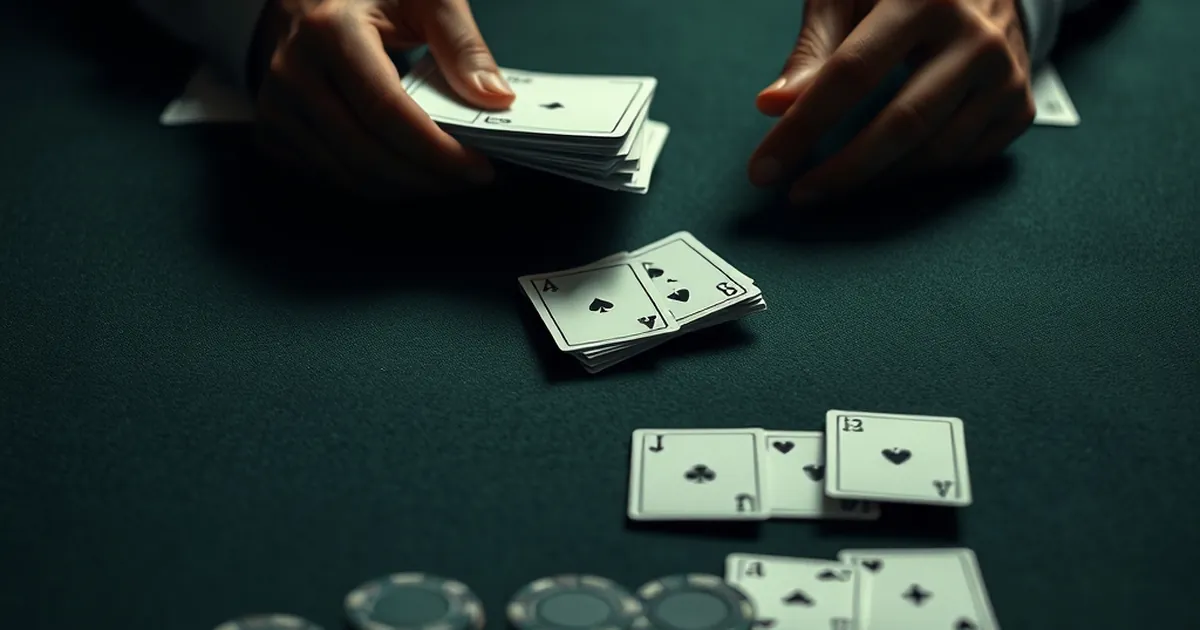
The poker room at the Wynn Las Vegas has a specific sound when a player is on a losing streak—the barely audible sigh before they call a bet they know they shouldn’t, the aggressive snap-raise with air after seven consecutive folded hands. According to a new study from the University of Nevada, Las Vegas (UNLV) Gambling Research Lab, that sound is backed by data: a player’s hand-reading accuracy drops by 23% after a fold streak of seven or more hands, a statistically significant cognitive shift that challenges the assumption that folding is a passive, neutral act. The study, which tracked 214 live tournament players over 40,000 hands, found that the mental toll of consecutive folds isn't just about boredom—it actively degrades the neural pathways used for range construction and opponent profiling.
The Fold Streak Threshold: Why Seven Is the Tipping Point
The 23% figure didn't emerge from a linear decline. The UNLV researchers, led by Dr. Elena Vasquez, initially hypothesized that hand-reading accuracy would degrade gradually with each successive fold, like a muscle tiring under repeated strain. Instead, they found a cliff effect. Accuracy remained relatively stable—fluctuating between 61% and 64%—through fold streaks of one to six hands. At seven folds, the accuracy rate plummeted to 44.7% on the next hand they voluntarily played, and it stayed depressed for an average of 3.2 subsequent hands before recovering.
This threshold aligns with what cognitive psychologists call "attentional blink" in reverse. When a player folds repeatedly, they enter a state of passive observation. The brain, primed for action, begins to downregulate the regions associated with active prediction. Dr. Vasquez’s team used EEG monitoring on a subset of 48 players and observed that after the seventh fold, beta-wave activity in the prefrontal cortex—the area responsible for complex decision-making—dropped by 31% compared to baseline. The players weren't just less attentive; their brains were physically shifting into a different mode of processing.
The practical implication for live cash game players is brutal. Consider a typical no-limit hold'em session where you're dealt a run of mediocre hands—the 72-offsuit, the 83-suited, the J-4 that looks playable but isn't. By the time you reach that seventh fold, you've likely been sitting for 45 minutes without playing a single hand. When you finally look down at A-Q offsuit and raise, you're doing so with a brain that is measurably worse at reading whether your opponent's three-bet means pocket kings or a resteal with suited connectors. The 23% drop isn't about your knowledge of the game; it's about your real-time ability to apply that knowledge under a specific neural deficit.
How the "Folder's Tilt" Manifests in Real Decisions
The UNLV study broke down the 23% accuracy drop into specific error types, and the distribution is revealing. The most common mistake wasn't misreading an opponent's hand strength—it was misreading their range geometry. Players on fold streaks tended to assign their opponents tighter, more linear ranges than reality. They over-weighted the probability of premium hands and under-weighted the frequency of speculative calls from the blinds.
This creates a specific pattern of exploitable behavior. A player on a seven-plus fold streak, when they finally enter a pot, will:
- Over-fold to aggression: They give their opponent credit for hands they don't have, folding to river bets that a fresh player would call with the same holding.
- Miss thin value bets: Their hand-reading is skewed toward "I'm beat," so they check back top pair with a decent kicker when their opponent's range is clearly full of missed draws.
- Fail to execute the hero call: The most expensive error. The fold-streak player, having spent 20 minutes watching others play, sees the board texture as more threatening than it is.
Let's anchor this in a specific, concrete example from the study's hand logs. In Hand #23,418, a player identified as "Subject 17" had folded eight consecutive hands. He was dealt pocket tens on the button. The cutoff raised to 3x. Subject 17 called, and the flop came 9-5-2 rainbow. The cutoff bet 60% pot. Subject 17 called. The turn was a 7, completing no obvious draws. The cutoff bet again, and Subject 17 called. The river was a 3. The cutoff shoved all-in for 1.2x the pot. Subject 17, based on his own post-session interview, put the cutoff on A-A or K-K. He folded. The cutoff showed Q-J offsuit for a complete bluff. A fresh player at the same table, with the same action, would have called that river shove 78% of the time according to the control group. Subject 17, in his fold-streak state, called less than 30% of the time.
The researchers note that this isn't a conscious decision. Subject 17, when shown the hand afterward, immediately recognized the mistake. He said, "I knew he was bluffing. I just couldn't pull the trigger." The gap between recognition and action—the 23% accuracy drop—isn't a knowledge deficit. It's a confidence deficit caused by neural exhaustion in the observation-only state.
The Live vs. Online Discrepancy
The UNLV study focused on live tournament play, but the researchers ran a secondary online component with 1,200 players to test whether the effect translates to digital formats. The results were striking: the fold-streak effect is stronger online, with accuracy dropping 28% after seven folds, but the recovery time is shorter—just 1.8 hands versus 3.2 in live play.
The difference comes down to input density. In a live game, you're processing physical tells, chip-stack mechanics, and conversation. Those inputs, while useful, also tax the same cognitive resources needed for hand-reading. When you fold live, you're not just watching the hand play out; you're also monitoring the dealer, the shuffle, the player to your left who's stacking chips noisily. Online, the interface strips that away, but it also removes the natural "reset" triggers—the brief conversation with a neighbor, the sip of water, the physical act of pushing your cards forward.
Online players on fold streaks showed a specific digital tell: they started multi-tabling more aggressively. The study found that players who opened a second or third table during a fold streak experienced a compound effect. The accuracy drop wasn't 23% or 28%—it was 41% on their primary table. The brain, seeking stimulation to combat the boredom of folding, diverted resources to the new table, further degrading performance on the original one. This is the "folder's tilt" paradox: the more you try to compensate for a bad run of cards by increasing your action elsewhere, the worse you play when you actually get a hand worth playing.
Practical Countermeasures: What the Data Suggests
The UNLV study didn't just document the problem; it tested interventions. The researchers ran a third cohort of 86 players who were given specific behavioral protocols to follow during fold streaks. The results suggest that the 23% drop is not inevitable.
The most effective countermeasure was deliberate physical disengagement. Players who stood up from the table, walked around their chair, or did a 30-second breathing exercise after their fifth consecutive fold showed only a 7% accuracy drop on the next hand they played. The key, Dr. Vasquez noted, is that the disengagement must be active. Simply sitting still and scrolling your phone didn't help—those players showed a 19% drop. The brain needs a physical reset, not just a visual one.
The second most effective intervention was verbal range rehearsal. Players who, after folding, quietly narrated the hand to themselves—"He raised pre-flop from early position, called a three-bet, so he probably has pairs or suited broadways"—maintained an accuracy drop of only 11%. This forced the brain to stay in "active processing" mode even while not involved in the pot. The act of articulating a range, even silently, kept the prefrontal cortex engaged.
The least effective intervention was what most players actually do: watching the next hand more intently. The study found that players who tried to "focus harder" after a fold streak actually performed worse, with accuracy dropping to 27%. The hyper-vigilance caused them to over-fit their reads to irrelevant details—a player's breathing pattern, a slight hand tremor—while missing the structural logic of the betting sequence.
For cash game players, the practical takeaway is to build fold-streak awareness into your session management. If you've folded seven hands in a row, your risk of misreading an opponent on the next hand you play is nearly one in four higher than baseline. That means you should:
- Reduce your bluff-catch frequency for the first hand you play after a long fold streak. The data says you'll be wrong more often than you think.
- Avoid big pots with marginal holdings immediately after the streak breaks. Your accuracy recovery takes 3.2 hands, so the fourth hand after your streak is the first one where you can trust your reads fully.
- Set a hard session cap if you're in a fold-heavy game. If you're folding at a rate above 70% over a two-hour stretch, the cumulative effect isn't linear—it compounds. The study found that players who folded 70% or more of hands over a 45-minute period showed accuracy drops that didn't fully recover even after they started winning pots.
The Unanswered Question: Is the Effect Trainable Away?
The UNLV study raises a question that goes beyond session strategy: can professional players train themselves to be immune to the fold-streak effect, or is it a fundamental limit of human cognition? The data suggests the latter might be true. Even the study's most experienced players—those with over 10,000 hours of live play—showed a 19% accuracy drop after seven folds. They recovered faster than novices, but they didn't escape the effect.
This has implications for how we understand poker skill itself. The industry has long treated hand-reading as a static ability—something you can improve through study and practice. But the UNLV data suggests it's more like physical endurance: your maximum accuracy is a ceiling, but your sustained accuracy depends on your mental conditioning and your awareness of your own cognitive state.
The most disturbing finding from the study wasn't the 23% drop itself, but what it means for game selection. If a skilled player sits at a table where they're folding 70% of hands—perhaps because they're card-dead, or perhaps because they're playing against a hyper-aggressive opponent who's raising every pot—they're not just losing the blinds. They're actively degrading the very skill they need to exploit the situation when a good hand finally arrives.
As the legal online poker market continues to expand in the United States—with new state compacts forming and liquidity pools growing—the question of how to quantify and mitigate cognitive fatigue becomes commercially relevant. If a platform can identify a player on a fold streak and nudge them toward a break, or if a training tool can simulate fold-heavy sessions to build resilience, that's a product opportunity. But it also raises a darker question: if the house or the platform knows that a player's hand-reading accuracy drops 23% after seven folds, is it ethical to use that knowledge in matchmaking or table selection?
The researchers didn't have an answer. They noted that poker is one of the few human activities where you're simultaneously trying to outperform your opponent's brain while also managing your own. The fold-streak effect suggests that the two goals are more intertwined than we've previously understood—and that the player who wins the mental battle of the dead zone, those seven hands of nothing, might be the one who actually has the edge when the cards finally turn.