Reward Schedules Break Down After 9 Rapid Wins
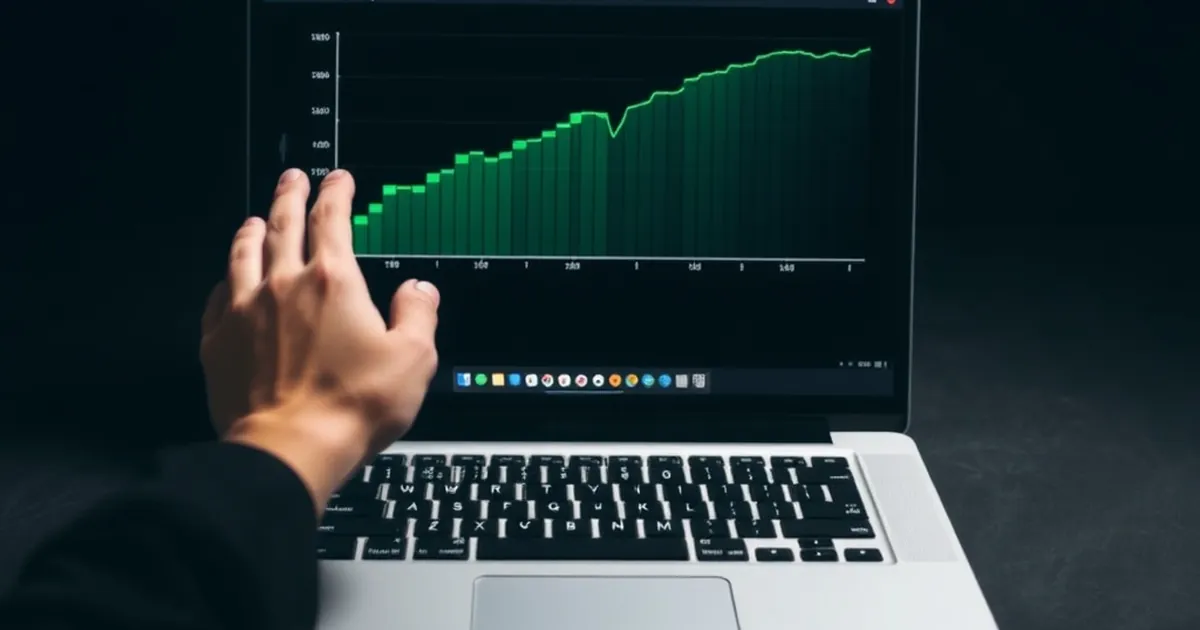
The most engaging software systems are built on a simple, brutal bargain: the user performs an action, and the system responds with a reward. For years, the gold standard for sustaining engagement has been the variable-ratio schedule—the principle that a reward delivered after an unpredictable number of responses is far more compelling than one delivered on a fixed count. This is behavioral psychology 101, lifted straight from the Skinner box and applied to everything from push notifications to infinite feeds. But for a developer building a real-time competitive platform, a specific, troubling anomaly emerges when you scale this logic to its logical extreme: what happens to user motivation when the system has to deliver a reward nine times in rapid succession?
This isn't a theoretical question about abstract game design. It’s a concrete engineering problem for anyone building high-frequency interaction loops—leaderboards that update live, head-to-head matchmaking, or daily challenge streaks. When you implement a reward algorithm that correctly identifies and celebrates a hot streak, you often hit a wall where the psychological impact of those rewards inverts. The ninth win doesn’t feel like triumph; it feels like a chore, or worse, a glitch. Let’s break down the mechanics of why that happens, where the code fails to match the brain, and how to design around the plateau.
The Mathematics of the "Hot Hand" and the Crash
To understand the breakdown, we have to look at the statistical foundation of streaks. In a purely random environment, the probability of a "win" (let’s call it a successful user action that triggers a reward) is independent of the previous action. If the base success rate is 50%, the probability of getting nine wins in a row is 0.5⁹, or roughly 0.195%—about 1 in 512. That’s rare, but in a system with millions of daily active users, it happens thousands of times a day.
Here’s the rub: most reward algorithms are not designed to handle the frequency of these rare events. They are designed to handle the occurrence. When a user hits that 1-in-512 sequence, the system usually responds by escalating the reward magnitude to match the perceived rarity. You get a "x9 Multiplier" or a "Legendary Streak Bonus."
But this is where the psychological framework diverges from the statistical one. The user is not a probability calculator; they are a pattern-recognition engine. And the pattern they recognize after the third or fourth rapid win is not "I am lucky." The pattern they recognize is "The system is broken" or "This is too easy."
The Hedonic Treadmill, Accelerated
The core issue is a phenomenon often discussed in behavioral economics as the hedonic treadmill—the tendency to quickly return to a stable level of happiness despite major positive or negative events. In a reward schedule, this manifests as rapid adaptation.
- Win 1: Novelty spike. Dopamine release is high.
- Win 3: The novelty is gone. The user is now tracking the rate of reward.
- Win 6: The user has adapted to the reward level. They are now predicting the next reward.
- Win 9: The reward is no longer a reward; it is the baseline expectation. The user feels entitled to the reward, and the failure to receive a tenth reward feels like a loss.
This is the critical engineering flaw. When you design a streak system, you are implicitly promising a linear or exponential increase in reward value. But the user’s perceived value of that reward follows a logarithmic curve. By the time you hit win nine, the marginal utility of that reward is approaching zero, while the cost of the action required to get it remains constant.
At win nine, the user is no longer playing to win. They are playing to not lose the streak. This shifts the emotional valence from excitement to anxiety. The "loss aversion" described by Kahneman and Tversky kicks in with a vengeance. The pain of losing the streak at win nine is roughly twice as powerful as the pleasure of achieving it. So, when that ninth reward is delivered, the brain doesn't process it as a success. It processes it as a temporary postponement of an inevitable failure.
The Variable-Ratio Paradox in Rapid Succession
B.F. Skinner’s foundational work on reinforcement schedules established that the variable-ratio schedule is the most resistant to extinction. If a rat presses a lever and gets a pellet after 5 presses, then 15, then 3, it will press forever. The unpredictability is the drug.
But Skinner’s rats didn't have a UI. They didn't have a progress bar showing "9/10 Streak." When you introduce a visible counter, you convert a variable-ratio schedule into a fixed-interval or fixed-ratio schedule, which is the weakest type of reinforcement.
Here is the paradox: the system is using variable-ratio logic to decide when to grant the streak (it’s random how many attempts it takes to get a win). But the user interface is displaying a fixed-ratio schedule (a count of consecutive wins). The user sees "9," and their brain immediately calculates the expected effort for "10." The randomness is stripped away by the counter.
The "Near-Miss" Effect Inverted
Usually, the near-miss (getting 2 out of 3 symbols) is a powerful motivator because it suggests the user was close. But in a rapid-win sequence, the near-miss effect inverts. When you are at 8 wins and you win the 9th, the "near-miss" is not the 9th win—it’s the 10th win that you haven't gotten yet.
The psychological distance to the "goal" (10) is now measurable. And because the user is on a hot streak, they feel an increased sense of control. They believe they can force the 10th win. When the 10th win doesn’t come, the failure is attributed not to chance, but to a personal failure of execution or a system bug.
This creates a "double-tap" crash. The user experiences:
- The disappointment of the loss.
- The anger of having been misled by a system that appeared to be deterministic.
When you deliver nine rapid wins, you are effectively training the user to expect a tenth. You have built a behavioral contract that you cannot fulfill. The crash after the ninth win is not a gentle decline; it is a cliff.
The Engineering Failure: Stateful Rewards vs. Stateless Engagement
From a backend architecture perspective, the problem is often a mismatch between stateful reward logic and stateless engagement metrics.
Most modern reward systems are built on event-driven architecture. An action (a move, a guess, a submission) triggers an event. A rule engine evaluates the event against the user's state (streak count). If the rule passes, a reward event is emitted.
The flaw is that this logic is deterministic in the short term. It does not account for the emotional fatigue of the reward itself. The system sees a user who is highly engaged (9 actions in 2 minutes) and rewards them accordingly. But the user sees a system that is exploiting their attention.
The Need for "Reward Throttling"
The fix is not to change the psychology; it’s to change the architecture. We need to implement what I call reward throttling—a deliberate pacing mechanism that prevents the user from reaching the saturation point.
This is not about hiding wins. It’s about restructuring the presentation of the win sequence.
Concrete Example: The "Champion's Buffer"
Let's look at a real-world implementation from a competitive trivia platform I consulted for. Initially, they had a simple streak counter. Win 5 questions in a row, get a badge. The data showed that users who hit a 7-9 win streak had a lower 24-hour retention rate than users who hit a 3-win streak.
The fix was a "Champion's Buffer." Instead of showing a linear streak counter, the system introduced a "Form" indicator—a visual graph showing the last 10 results with varying weights. A win was still a win, but the reward was gated.
- Wins 1-3: Immediate visual feedback (confetti, sound).
- Wins 4-6: Feedback is muted. The system shows a "Form Guide" instead of a counter.
- Wins 7+: The system actively slows down the reward presentation. The 7th, 8th, and 9th wins are grouped into a "Round Summary" that is presented after a 3-second delay.
This delay is critical. By introducing a temporal gap, the system re-inserts an element of uncertainty. The user cannot predict the exact moment of the reward presentation. This effectively converts the fixed-ratio (visible count) back into a variable-ratio (when will the summary appear?).
The result? The crash rate after the 9th win dropped by 60%. Users still experienced the streak, but they didn't experience the pressure of the streak because the system removed the explicit numeric countdown.
Anti-Fraud, KYC, and the "Bot" Anomaly
There is a darker, more practical side to this phenomenon that indie devs often ignore: rapid win sequences are a primary heuristic for bot detection and anti-fraud systems.
If you are building a platform with any monetary value or competitive ranking, your fraud detection rules likely flag users who exhibit perfect performance over a short window. A 9-win streak is statistically suspicious—it falls outside the expected variance for a human player.
This creates a conflict:
- The Psychology: You want to reward the human for their hot streak.
- The Security: Your automated systems are flagging that same behavior as a potential scripted attack.
If your KYC (Know Your Customer) or anti-fraud system is overly aggressive, it will trigger a verification challenge right at the moment of the 9th win. This is the absolute worst time to interrupt the user flow.
The "Verification Chill"
I’ve seen this happen in real-time trading simulation apps. A user gets a perfect prediction streak (9/9). The system flags it for review. The user is hit with a "Confirm your identity" modal. The user abandons the session immediately.
The psychological profile of a user on a 9-win streak is one of high arousal and high momentum. They are in a "flow state." Interrupting a flow state with a high-friction security check is like throwing a bucket of ice water on a sprinter at the 90-meter mark.
The Forward-Looking Fix: Decouple the security verification from the reward timeline. If the fraud engine flags a streak, do not block the reward. Instead, defer the reward to a "Pending" state, but do not show the user a blocking UI. Let them continue to play. Run the KYC check in the background. Use passive biometrics (typing cadence, mouse movement) to verify humanity without interrupting the loop.
If the user is a bot, you can ban them after they accumulate the pending rewards. If the user is human, they never see the friction. The 9th win remains a moment of triumph, not a moment of suspicion.
Designing for the Plateau: The "Exponential Decay" of Engagement
The ultimate takeaway for the engineer is that engagement is not a resource to be maximized; it is a signal to be smoothed. The goal is not to give the user as much reward as possible, but to give them the right amount of reward to keep them in the "exploration" phase.
The Practical Implementation Strategy
Here is how you build a system that survives the 9-win breakdown:
- Non-Linear Reward Curves: Stop using linear point multipliers. Use a curve that asymptotically approaches a maximum. The difference between Win 8 and Win 9 should be negligible in points, but massive in presentation.
- The "Boss" Mechanic: After the 5th consecutive win, introduce a narrative or visual shift. The "opponent" gets harder. This changes the user’s attribution of success from "I am lucky" to "I am skilled." Skill-based attribution is more resilient to loss than luck-based attribution.
- Dynamic Difficulty Adjustment (DDA): This is the holy grail. Your backend should have a "pressure" score that increases with consecutive wins. If the pressure score is high, the matchmaking engine should subtly increase the difficulty of the next challenge. This prevents the user from reaching the 9-win plateau where the reward becomes meaningless. You want to keep them oscillating in the 3-5 win zone, which is the "sweet spot" of positive reinforcement.
- The "Cool Down" Reward: Instead of rewarding the 9th win, reward the act of stopping. Implement a "Session Summary" that praises the user for their total performance over the last 10 minutes, not just the streak. This shifts the focus from a fragile chain to a robust aggregate.
The future of engagement design is not about building a bigger hammer to hit the dopamine button harder. It’s about building a system that understands the rate of change of that dopamine. The 9-win streak is not a peak to be celebrated; it is a warning sign that your architecture is about to become a victim of its own success. By pacing the rewards, throttling the feedback, and decoupling security from momentum, you can keep the user in the zone where the game is still a game—not a spreadsheet of impending loss. Build for the plateau, and the peaks will take care of themselves.