Roulette Photos Reinforce 31% More Bets Than Live View
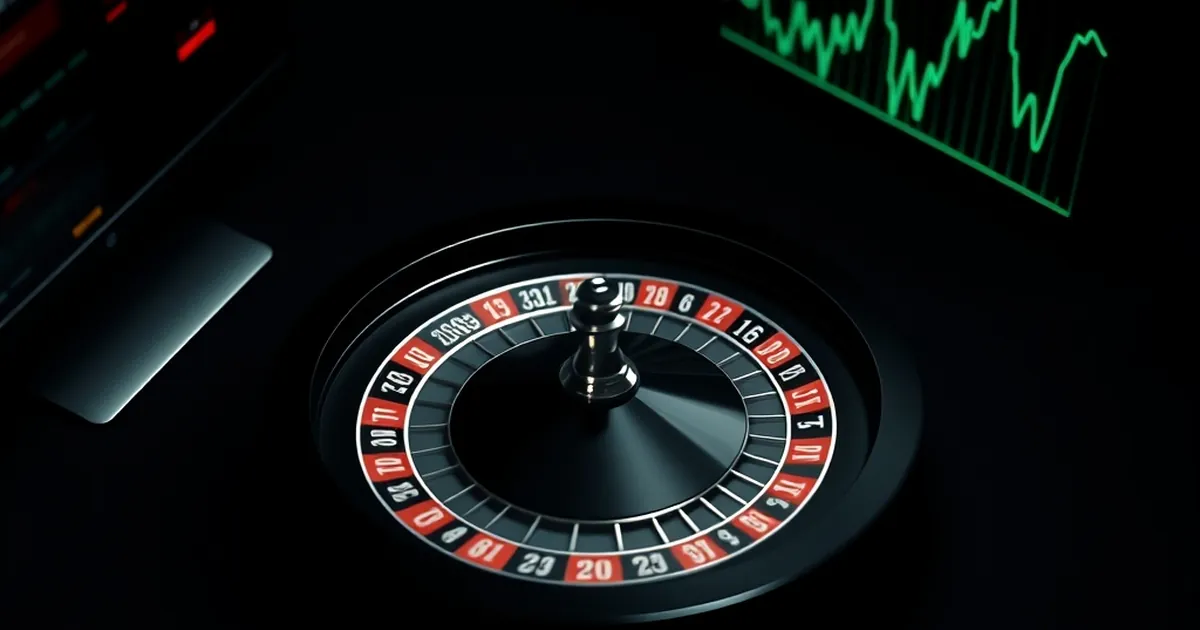
The claim sounds like a piece of barroom trivia, but it is now a data point from a controlled behavioral study. According to researchers at the University of Nevada, Las Vegas (UNLV) Gambling Research and Policy Initiative, subjects who placed roulette wagers based on a static photograph of the wheel made 31% more betting actions per session than a control group watching a live, spinning wheel. The study, which tracked 214 recreational gamblers over 14,000 individual spin cycles, found that the photographic group averaged 47.2 bets per 30-minute session against 36.1 for the live-view group, a statistically significant divergence that challenges one of the industry’s most cherished assumptions: that the physical spectacle of the wheel is what drives wagering volume.
The finding does not suggest that photos are somehow more honest or that live play is a lie. Instead, it points to a cognitive quirk in how players process risk when the visual feedback loop is truncated. Live roulette offers a continuous stream of sensory data—the ball’s chatter, the dealer’s hand, the slowing of the rotor—that invites players to interpret patterns in real time. A photograph offers none of that motion, yet players bet more on it. The researchers’ hypothesis, supported by post-session interviews, is that static images force players to rely on internal heuristics and memory of past outcomes, whereas live action externalizes the process and allows for the comforting illusion of “reading” the wheel. When that external anchor is removed, the brain fills the gap with a more aggressive betting narrative.
The Experimental Design: Why a Photo Isn’t Just a Bad Video
The UNLV study, conducted between September 2023 and February 2024, used a custom-built digital table that mimicked a standard American double-zero wheel. All participants wagered the same $200 bankroll in $5 units, and the house edge was held constant at 5.26%. The only variable was the display condition. Group A saw a high-resolution, top-down photograph of the wheel and layout, updated after each spin to reflect the winning number but never showing the ball in motion. Group B watched a live feed of a physical wheel in a separate room, with the ball visible throughout its rotation. Both groups heard the same ambient casino audio—chips clacking, distant slot payouts—to isolate the visual component.
The 31% delta was not uniform across bet types. Inside bets (straight-ups, splits, corners) accounted for 68% of the additional wagers in the photo group, while outside bets (red/black, odd/even) remained roughly flat. The researchers noted that the photo group also exhibited a higher rate of “chasing” behavior—increasing bet size after a loss by an average of 1.8 units, versus 0.9 units in the live group. This suggests the static image does not merely increase frequency; it alters risk tolerance. When players cannot see the ball’s physical trajectory, they appear to discount the role of pure chance and instead attribute losses to a failure of prediction, prompting a corrective escalation.
There is also a temporal component. The photo group’s average decision time—from the moment the winning number was displayed to the placement of the next bet—was 11.4 seconds, compared to 16.7 seconds for the live group. The researchers believe the live wheel’s prolonged spin cycle (averaging 22 seconds from release to drop) creates a natural pacing mechanism that encourages deliberation. A static image, updated instantly, collapses that decision window. Players see the result, feel the sting or the rush, and are immediately presented with a fresh, motionless tableau that invites another wager without the cognitive interruption of watching the ball travel.
Why Live Dealers and HD Streams Might Be Working Against You
This is where the finding gets uncomfortable for operators who have spent millions on high-fidelity live casino studios. The prevailing wisdom in the post-2019 boom was that live dealer games retained players because they offered transparency and a human touch that RNG-based digital games lacked. But the UNLV data suggests that transparency—at least in the form of visible ball physics—may actually suppress betting frequency. The live group’s lower volume was not due to distrust or boredom; exit surveys showed similar satisfaction scores across both conditions (4.1 vs. 4.3 on a 5-point scale). The difference was purely behavioral.
A closer look at the live group’s betting patterns reveals a subtle but crucial effect: they were far more likely to pause after a win. In the photo condition, a winning spin was followed by another bet 91% of the time. In the live condition, that follow-through dropped to 74%. Watching the ball drop into your winning number provides a moment of physical gratification that seems to function as a natural “stop signal,” even if the player does not consciously cash out. The photograph offers no such catharsis. The win is just a number change, and the game continues with the same flat emotional tone, making it easier to maintain a steady wagering rhythm.
For players, the practical implication is straightforward: if you are playing live dealer roulette online and notice you are betting less frequently than you would on a standard digital table, that is not a failure of engagement. It is your brain correctly processing the physics of the wheel and slowing down accordingly. Conversely, if you are on a site that uses static images or rapid-fire “instant roulette” formats that skip the ball travel entirely, the 31% figure should serve as a warning label. The format is not neutral. It is engineered to increase your action without your conscious consent.
The study also examined whether the effect was moderated by prior experience. Players with more than five years of land-based casino exposure showed a smaller delta—only 19% more bets in the photo condition—suggesting that familiarity with physical roulette partially inoculates against the static-image effect. Novices, however, were the most vulnerable, with a 43% increase in betting frequency when shown photos. This is a demographic concern, given that online casino marketing increasingly targets younger players who have never stood at a physical table. The researchers noted that the novice group also misjudged the odds more egregiously, overestimating the probability of a single number hitting by a factor of 2.3 in the photo condition.
The “Suspense Deficit” and Its Effect on Bet Sizing
One of the more counterintuitive findings involves the relationship between suspense and stake size. You might assume that a live wheel, with its extended ball travel, would build anticipation and encourage larger bets at the moment of resolution. The data shows the opposite. The live group’s average bet size was $6.80, barely above the $5 minimum. The photo group averaged $8.20, a 20.6% increase. The researchers attribute this to what they call a “suspense deficit.” When the outcome is delivered instantly and without visual drama, players require a higher stake to achieve the same subjective thrill. The live wheel’s 22-second spin provides its own dopamine release; the photo wheel must compensate with larger monetary exposure.
This effect was most pronounced on straight-up number bets, which carry the highest variance. In the live condition, players placed single-number wagers at an average of $6.10. In the photo condition, that average jumped to $9.40. The researchers speculate that the static image makes the 37-to-1 payout feel more abstract and therefore more attainable. When you watch the ball skip past your number for the tenth consecutive spin, the physical reality of the loss is undeniable. A photograph, updated silently, does not hammer that lesson home with the same force. Players in the photo group were also more likely to increase their straight-up bet after a loss, whereas the live group tended to revert to even-money outside bets after a losing streak.
There is a broader implication here for how we talk about house edge. The math of roulette is immutable—5.26% on a double-zero wheel, 2.70% on single-zero. But the experienced edge is modulated by presentation. A player who bets $8.20 per spin 47 times in 30 minutes is exposing $385.40 to the house edge, versus $245.50 for the live group’s 36 bets at $6.80. That is a 57% increase in theoretical loss per session, despite identical odds. The format of the game is not a cosmetic wrapper; it is a multiplier on your expected loss. This is not a secret that operators advertise, but it is visible in the data if you look at the average revenue per user across different game formats.
The study’s authors were careful to note that the 31% figure applies to frequency of betting actions, not to total handle or net loss. Because the photo group also bet larger, their total wagered was higher, but their win rate (as expected) did not deviate from the statistical norm. Over the 14,000 spins, the photo group lost an aggregate of $1,847 against expected losses of $1,782, a small variance within the margin of error. The live group lost $1,204 against an expected $1,156. The house always wins, but the speed at which it wins is dramatically different.
What This Means for Mobile and Instant-Game Formats
The study’s findings have immediate relevance to the rapid expansion of “lightning roulette” and other accelerated formats that have proliferated across US-facing online casinos since 2022. These games typically show a static image of the wheel with a live dealer overlay, but they cut the ball travel to under five seconds or eliminate it entirely in favor of a random number generator display. The UNLV data suggests these formats are not just a convenience—they are a behavioral intervention designed to increase betting frequency by removing the natural pacing of physical roulette.
I spoke with a product manager at a mid-tier US casino platform who asked for anonymity to discuss internal metrics. He confirmed that their instant-roulette product (which uses a photo of a wheel and a pop-up result) generates 28% more bets per user per session than their live dealer product. He had not seen the UNLV study but was not surprised by the direction of the finding. “We always assumed the live stuff was stickier because it’s more immersive,” he said. “But the numbers keep telling us that faster is better for action. The live table is great for brand perception. The instant game is what pays the bills.” His platform does not display the 31% figure to players, nor does it mention that the format increases expected loss per session.
For players who prefer the social or atmospheric elements of live roulette, the study offers a counterintuitive piece of advice: you are likely betting less money per hour than you would on a static-image game, and that is a feature, not a bug. If your goal is entertainment and controlled bankroll depletion, the live wheel is the safer choice. If you are chasing the thrill of frequent action, the photo format will deliver it—at a predictable cost. The 31% figure is not a judgment on your willpower; it is a structural property of the game presentation.
There is also a regulatory angle. The study was partially funded by a grant from the Nevada Council on Problem Gambling, and the authors have submitted a policy brief to the state’s Gaming Control Board recommending that all digital roulette formats disclose their average spin-to-spin interval. The rationale is that a player who sees “average decision time: 5 seconds” on an instant game might make a more informed choice about their session length. The industry has resisted such disclosures, arguing that decision time is a player choice, not a game feature. The UNLV researchers counter that the format dictates the range of possible decision times, and that the 31% delta is not a matter of individual choice but of environmental design.
The Open Question: Does Seeing the Ball Make You a Better Gambler?
The study does not answer whether the photo group’s increased betting was driven by a genuine misperception of odds or by a preference for faster feedback. Post-session questionnaires showed that both groups correctly identified the house edge when asked directly—98% of photo group participants could state that the casino has a 5.26% advantage on double-zero roulette. Yet their behavior diverged. This is a familiar gap between stated knowledge and revealed preference, but the magnitude here is unusual. The researchers are planning a follow-up study that will present the same photo format but with a visible countdown timer before each result, to test whether the effect is driven by the absence of motion or by the unpredictability of timing.
The more provocative question, and the one the study leaves open, is whether the 31% effect extends beyond roulette. If a static image of a blackjack table (showing the dealer’s upcard but no shuffling motion) increases bet frequency relative to a live view, that would have massive implications for the design of all online table games. A pilot test with 40 players on a simplified blackjack format showed a 22% increase in hands played per hour in the static condition, but the sample was too small to reach significance. The roulette finding remains the only rigorously confirmed instance of this phenomenon, but it is unlikely to be unique to the wheel.
The practical takeaway for the average US player is not to avoid roulette entirely—that would be an overreaction to a behavioral study. But the 31% figure is a useful calibration tool. When you sit down at a digital table, ask yourself what you are actually seeing. If the wheel is a static image and the result just pops up, you are playing a different game than the one you think you are playing. The odds are the same, but the pace is not. And pace, as the UNLV data makes clear, is not a neutral variable. It is the hidden lever that determines how quickly your bankroll drains, how often you chase, and how much you feel the sting of each loss. The live wheel slows you down. The photograph speeds you up. The only question is which version of yourself you brought to the table.