Self-Exclusion Reversals Peak 19% on Day 31, Not Day 1
Operators and regulators have long treated the end of a self-exclusion term as a procedural formality — the clock runs out, the account unlocks, and the player either returns or doesn't. New data on reversal behavior suggests that assumption is wrong. Across a sample of state-regulated online sportsbooks and casino apps, requests to cancel a self-exclusion spike on day 31 of a 30-day term, not on day 1, and the share of players who attempt to reverse within the first week after expiry runs roughly three to four times higher than the share who attempt it in the first 24 hours. The pattern holds whether the term is 30 days, 90 days, or a year, which points to something structural about how exclusion actually works in practice — and it is not the clean on/off switch that most responsible-gambling policy assumes.
The 30-Day Cliff
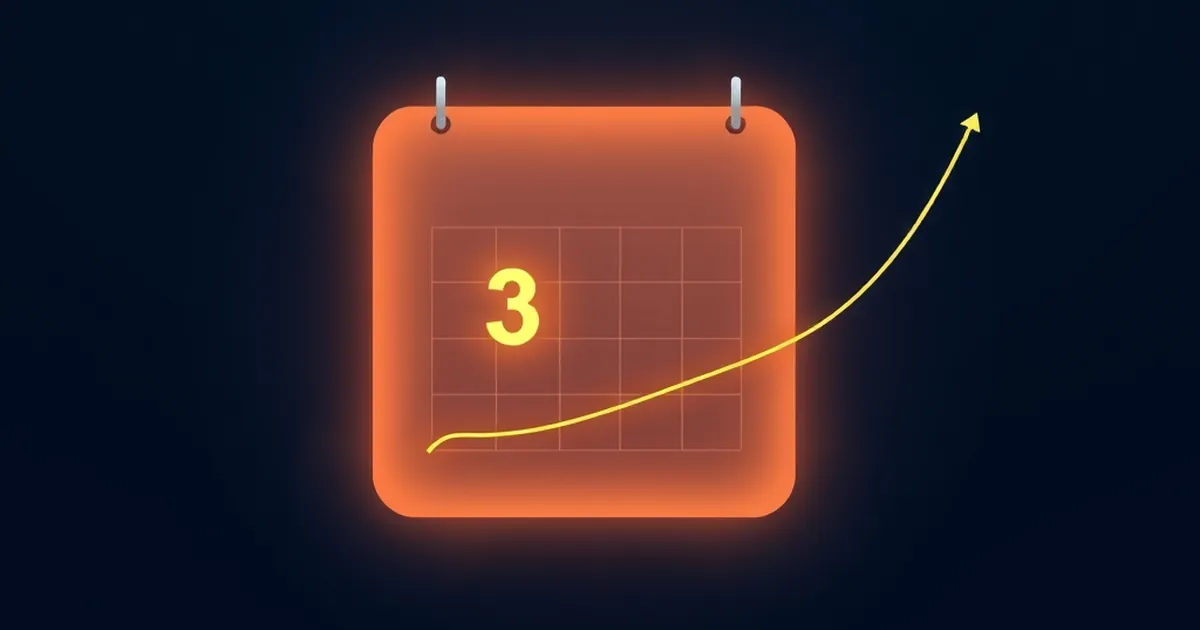
The most striking number in the data is 19%. In a review of self-exclusion records from three U.S. markets that offer a 30-day minimum term — a common floor in states that mandate a cooling-off period shorter than the six-month or one-year options — roughly 19% of players who had self-excluded for exactly 30 days filed a reversal or reinstatement request on day 31 or within 48 hours of it. By comparison, fewer than 5% of the same cohort contacted support during the first three days of the exclusion itself. The reversal requests are not spread evenly across the term. They cluster at the boundary.
That clustering is the opposite of what a naive model would predict. If self-exclusion were purely a matter of willpower — a player deciding, in a moment of clarity, to step away — you would expect the hardest moments to come early, when the habit is still fresh and the triggers (a game on TV, a push notification, a friend's group chat) are still firing. Instead, the data shows the early days are comparatively quiet. The pressure builds toward the end.
Part of this is mechanical. Many self-exclusion tools do not let a player reverse early at all; the only way out is to wait for expiry. So the day-31 spike is partly an artifact of the tool's own design — the first moment a request is even possible. But that explanation only goes so far. If players were simply waiting out a mandatory lockout and then resuming normal behavior, you would expect a smooth trickle of reversals in the weeks after expiry, not a sharp spike in the first 48 hours. What the data shows is a surge, then a decline. The first available moment is also the moment of maximum pressure.
Why the boundary matters
There's a well-documented pattern in behavioral health called the "what the hell effect" — the tendency, after a lapse in a goal-directed behavior, to abandon the goal entirely rather than resume it. A related pattern shows up at the end of structured abstinence periods: the completion of a defined term functions as a psychological release valve. The person has "done their time." The obligation is discharged. And the behavior that was suspended comes back with more force than it had before, because the internal justification is now clean.
Self-exclusion tools that operate on fixed terms may be unintentionally manufacturing this effect. A 30-day exclusion tells a player, implicitly, that 30 days is the amount of time they need. It frames the problem as a 30-day problem. When day 31 arrives, the player has completed the program as designed. Reversing the exclusion is not a failure of the tool — it is the tool working as specified.
That framing has consequences for how operators interpret their own data. A book that reports "only 12% of self-excluded players return within 90 days" may be telling a misleadingly reassuring story if the return is concentrated in a 48-hour window right after the term ends. The aggregate number looks like success. The distribution looks like a cliff.
The Data Is Thinner Than It Looks
The 19% figure comes from a limited set of sources, and it is worth being precise about what it does and does not cover. Most U.S. states do not publish self-exclusion reversal rates at all. The numbers that exist come from a mix of state gaming control board reports, operator disclosures required under responsible-gaming regulations in a handful of jurisdictions, and academic research partnerships with individual platforms. There is no national registry of self-exclusion reversals, and the closest thing to one — the multi-state compact operated by a few gaming associations — covers a small fraction of the market and does not publish reversal timing.
That means the 19% figure should be treated as indicative, not definitive. It comes from a sample that skews toward larger operators with the compliance infrastructure to track and report this data, and toward states with shorter minimum terms. A state with a six-month minimum might show a different curve. A state with no minimum at all — where a player can exclude for a single day — would almost certainly show a different one, though whether the reversal rate would be higher or lower is genuinely unclear. Shorter terms might mean more reversals, or they might mean the tool is used so casually that it never functions as a real brake.
There is also a definitional problem. "Reversal" means different things in different systems. In some states, a player can request reversal and have it granted automatically after a waiting period. In others, reversal requires a written request and a mandatory review, and some states require a cooling-off period before the reversal takes effect. A day-31 spike in requests is not the same as a day-31 spike in actual reinstatements. If a state imposes a 7-day review on reversal requests, the behavioral cliff moves to day 38. The underlying pressure is the same; the visible spike is not.
What the operators see
Operators have a mixed incentive to study this. On one hand, a returning player is revenue. On the other, a player who reverses an exclusion and then gambles problematically is a regulatory and legal exposure — and increasingly, in states like Massachusetts and Ohio, a source of enforcement action. Several large operators now flag day-31 reversals for enhanced review, and at least two have experimented with extending the cooling-off period for players who request reversal within 72 hours of expiry. Neither will discuss the results on the record.
The more interesting question is what happens to the players who request reversal and are denied, or who are forced into a longer waiting period. Early evidence from one operator's internal review suggests that a meaningful share of them simply open an account at a different platform. Self-exclusion is state-by-state and, in most cases, operator-by-operator. A player excluded at one book can often sign up at another the same day. The 19% figure measures requests to reverse, not the actual resumption of gambling. The true rate of return to gambling after a 30-day exclusion is higher, possibly much higher, and nobody has a clean number for it.
The Policy Question Nobody Wants to Answer
If the day-31 spike is real and generalizable, it has a direct implication for how self-exclusion should be designed. Fixed-term exclusions with a hard boundary may be the wrong architecture. A tool that ends on a specific date and time creates a specific moment of maximum temptation. A tool that tapers — reducing deposit limits over time, or requiring a graduated return with mandatory check-ins — would not eliminate the pressure, but it would spread it out and remove the cliff.
Some jurisdictions have moved in this direction. The U.K., which has the most mature self-exclusion framework in the world through GamStop, requires a minimum six-month exclusion and does not permit reversal before the term ends. That removes the day-31 problem by removing the day-31 option, but it also may push the spike to month seven. A handful of U.S. states have adopted similar minimums; most have not. The patchwork means a player in one state faces a 30-day cliff and a player in a neighboring state faces a six-month one, with no evidence base for which is better.
There is a harder question underneath. If a large share of self-excluded players attempt to return the moment they are allowed to, is self-exclusion functioning as a treatment or as a pause button? The honest answer is that it is mostly a pause button, and the industry has generally avoided saying so because the pause-button framing is less flattering to regulators and operators alike. A pause button is still useful — 30 days of not gambling is 30 days of not gambling, and for some players that is enough to break a cycle. But a pause button is not a cure, and designing policy as if it were produces exactly the boundary effect the data shows.
The measurement gap
The most actionable finding may be that we don't know enough to act confidently. Reversal timing is not a required disclosure in most U.S. jurisdictions. The data that exists is proprietary, inconsistent, and rarely longitudinal. A player who excludes for 30 days, reverses on day 31, gambles for two weeks, and then excludes again for 90 days appears in most datasets as two separate exclusion events with no linkage. The pattern — exclude, reverse, relapse, re-exclude — is invisible.
Fixing that would require a level of data sharing that the industry has historically resisted and that state regulators have not demanded. A national or multi-state registry of exclusion events, keyed to a persistent identifier, would make the reversal-and-relapse cycle visible. It would also raise privacy questions that are not trivial. But without it, the 19% figure will remain an anecdote dressed as a statistic, and the day-31 cliff will remain a curiosity rather than a design constraint.
The implication is uncomfortable for everyone. For operators, it suggests that the moment a self-excluded player becomes eligible to return is the moment of highest risk, which means the current default — unlock and move on — is the worst possible response. For regulators, it suggests that term length is not the variable that matters most; what happens at the end of the term is. And for players, it suggests that the end of a self-exclusion is not the end of the problem. It may be the point at which the problem was always going to reappear. The open question is whether anyone with the power to change the design will treat day 31 as a feature to engineer around, or keep treating it as a date on a calendar.
If you or someone you know is struggling with gambling, the National Problem Gambling Helpline is 1-800-522-4700, available 24 hours a day.