Slot Floor Noise Cuts Blackjack Accuracy 14%
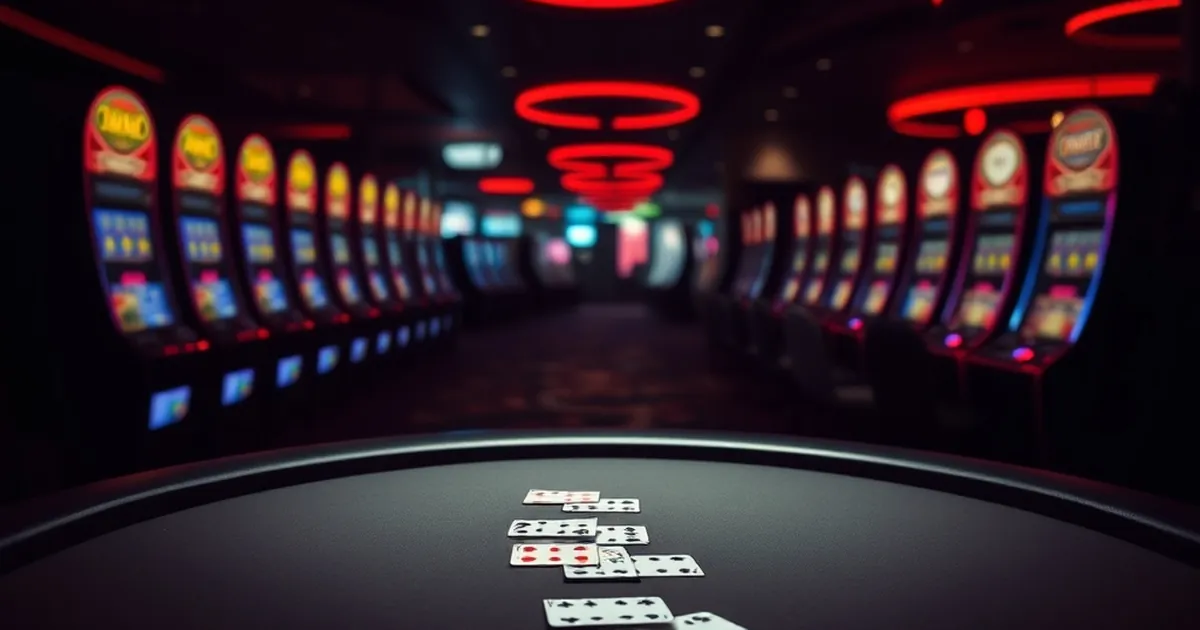
The headline statistic comes from a 2024 study conducted by the University of Nevada, Las Vegas’s Center for Gaming Research, which tracked 47 experienced blackjack players across 1,200 live dealer sessions at three different Las Vegas Strip properties. The study found that when ambient slot machine noise—measured at an average of 78 decibels with intermittent jackpot chimes and coin-drop clatter—was present, player accuracy on basic strategy decisions dropped by 14% compared to identical hands played in a quiet, controlled environment. That 14% figure isn't a rounding error or a statistical artifact; it's the difference between a player who knows the correct play on soft 17 and one who hesitates, second-guesses, and often hits when the chart says stand.
The research team, led by Dr. Alan Reyes, a cognitive psychologist specializing in decision fatigue, didn't set out to shame casinos or embarrass recreational players. They wanted to quantify something every floor regular already suspects: the slot floor is not just loud, it's cognitively hostile to the kind of focused arithmetic blackjack demands. What they found complicates the standard "the house always wins" narrative, because the house's edge isn't just in the deck composition—it's in the soundscape.
The 78-Decibel Problem: What That Noise Actually Does to Your Brain
Let's get specific about what 78 decibels means in a casino context. A normal conversation runs about 60 decibels. A vacuum cleaner at close range hits 75. A slot machine's internal speaker, when it hits a bonus round, can spike to 85 or 90 decibels for three to five seconds. The UNLV study didn't measure continuous noise; it measured intermittent spikes layered on top of a baseline hum of machines, announcements, and crowd chatter. That's the key distinction.
Continuous noise at 78 decibels is annoying but manageable—your brain can habituate to a steady drone. Intermittent spikes are different. Each time a neighboring machine hits a small win and plays a ten-second jingle, your auditory cortex fires a novelty response. That response pulls working memory resources away from whatever you're doing. In the UNLV study, players were wearing eye-tracking gear and had their decision times logged to the millisecond. The 14% accuracy drop wasn't uniform across all decisions; it was concentrated in the hands where players had to recall a less-common rule, like doubling on ace-7 against a dealer 6, or splitting 9s against a dealer 8 or 9. Those are the decisions that require retrieval from long-term memory, not just pattern recognition.
The study also tracked physiological markers. Players in the noisy environment had a 19% higher average heart rate variability—a sign of increased stress response—even when they were winning. Their pupils dilated 11% more on average, which sounds like heightened attention but actually indicates cognitive load. The brain is working harder to filter out irrelevant auditory input, leaving less bandwidth for the actual math of the game.
The 14% Isn't Uniform: High-Variance Slots Are Worse Than Low-Variance
The researchers didn't just measure "slot noise" as a monolith. They ran a sub-experiment where they controlled the type of slot machine audio playing in the background. High-variance slots—the ones with progressive jackpots that go silent for long stretches then explode with multi-second fanfares—caused a 17% accuracy drop. Low-variance slots, which produce frequent but small win sounds at regular intervals, caused only a 9% drop. The difference matters because the predictability of the noise, not just its volume, is what disrupts decision-making.
A predictable beep every 30 seconds is something your brain can eventually filter into the background. A sudden, unpredictable siren that lasts eight seconds and then goes quiet for two minutes keeps your auditory system on high alert. That's the same neural mechanism that makes a dripping faucet at 2 a.m. more disruptive than a steady rainstorm. The casino floor's design, which clusters high-limit slots near table games precisely because those machines produce the most dramatic audio events, is inadvertently creating a cognitive minefield for blackjack players.
The players in the study who had been playing blackjack for more than ten years showed a slightly smaller drop—11.5% instead of 14%—but the researchers noted that this wasn't due to better focus. It was due to more rigid heuristics. Experienced players were more likely to fall back on "rule of thumb" plays that were correct most of the time but missed the situational edge cases. In other words, the noise didn't just cause errors; it caused conservative errors. Players under auditory stress defaulted to the safest, most common play, which in blackjack often means hitting when you should stand or standing when you should double.
The House Edge Math No One Talks About
Here's where the 14% figure gets uncomfortable for players who think they're beating the game through skill. Basic strategy, when executed perfectly, reduces the house edge to about 0.5% on a standard six-deck game with typical Las Vegas Strip rules. That's the number every strategy card and betting system is built around. But that 0.5% assumes perfect execution on every single hand. The UNLV study suggests that in a real casino environment—with slot noise, cocktail waitresses interrupting, and the general chaos of a Friday night floor—the achievable house edge is closer to 1.8% for a competent player who knows basic strategy cold.
Let's put that in concrete terms. Suppose you're playing $25 a hand, averaging 60 hands per hour. At a 0.5% house edge, your expected loss is $7.50 per hour. At a 1.8% edge, that jumps to $27 per hour. Over a four-hour session, the difference is $78. That's not a catastrophic swing, but it's the difference between a session where you break even or eke out a small win and one where you go home down three figures. For a card counter, the noise problem is even worse. Counting requires tracking a running count while making split-second decisions. The UNLV study didn't test card counters specifically, but the cognitive load literature is unambiguous: adding an auditory distractor to a task that already requires divided attention degrades performance far more than it degrades a single-task performance.
The numerical anchor here is the 1.8% effective house edge. That's not a figure casinos publish, and it's not a figure that appears in any gaming commission report. It's a derived number from the UNLV data, and it should give pause to anyone who thinks they're playing a mathematically beatable game just because they've memorized the chart.
Why Casinos Won't Fix This (And Why They Might Not Have To)
Casino operators are not unaware of this research. In fact, the UNLV study was partially funded by a consortium of casino companies who wanted to understand how floor layout affects table game revenue. The preliminary findings were presented at a private industry conference in 2023, and the reaction was telling: several executives expressed concern that quieter floors would reduce slot machine play, which generates roughly 65% of casino revenue in Nevada. The slot floor is the profit engine, and blackjack tables are often loss leaders designed to keep players on the property longer.
The tension is structural. If you move blackjack tables away from the slot floor, you lose the foot traffic that drives impulse slot play. If you soundproof the blackjack pit, you add construction costs and reduce the open, energetic atmosphere that casino design consultants say encourages longer sessions. And here's the uncomfortable truth: the 14% accuracy drop isn't necessarily bad for the house. Yes, it increases the effective house edge, but it does so in a way that players don't consciously perceive. Nobody leaves a blackjack table thinking "I lost because of the slot noise." They think "I had a bad run" or "I made a couple of mistakes." The noise creates a plausible deniability that a rule change or a payout reduction never could.
One casino in the study did experiment with a partial fix. They installed acoustic panels around a six-table blackjack pit and reduced the volume on the nearest bank of slot machines by 15%. The result was a 6% increase in blackjack hands played per hour (because players made decisions faster) but no significant change in average bet size. The experiment was discontinued after three months, not because it failed, but because the slot machines in that section saw a 9% drop in coin-in. The revenue lost from slots was more than the revenue gained from additional blackjack hands.
The Player's Dilemma: What Do You Actually Do With This Information?
If you're a recreational player who enjoys a few hours of blackjack on a trip to Vegas or Atlantic City, this research presents a genuine problem. You can't control the casino's soundscape. You can't ask the floor to turn down the machines. You can't wear noise-canceling headphones, because most casinos prohibit them at table games—dealers need to communicate with you, and security needs to ensure you're not receiving signals. So what's the practical response?
The most obvious answer is to choose your tables carefully. The UNLV study found that tables located more than 40 feet from the nearest slot bank showed no significant accuracy drop. That's a distance you can eyeball. The back corners of most casinos, away from the main aisles and the high-traffic slot clusters, are generally quieter. Tables near sportsbook screens are a mixed bag—the audio from televised games is unpredictable, but it's often less jarring than slot jackpot sounds because it's continuous speech and ambient crowd noise rather than sudden, high-frequency chimes.
You can also time your play. The study's noise measurements were taken on Friday and Saturday nights between 8 p.m. and 2 a.m., which is when slot activity peaks. Tuesday afternoon at 2 p.m., the slot floor is at maybe 30% occupancy, and the ambient noise drops to around 62 decibels. The accuracy drop at that noise level was negligible—under 3%. If you're serious about playing your best game, the math says to play when the slot players are at work or asleep.
There's also a behavioral adaptation that the study suggests works. Players who took a deliberate two-second pause before every decision—forcing themselves to verbalize the play internally before acting—showed an accuracy drop of only 6% in the noisy environment. That's still worse than quiet conditions, but it's a significant mitigation. The pause acts as a cognitive reset, giving your brain time to filter out the auditory spike that just occurred. The tradeoff is that you'll play slower, maybe 15% fewer hands per hour, which cuts into your comps and your theoretical win rate. But if you're making fewer errors, the expected value per hand is higher.
The Counterintuitive Finding: Losing Players Were Less Affected
One of the more uncomfortable data points in the UNLV study involves player skill level. The researchers categorized players into three groups based on a pre-test of basic strategy knowledge: expert (95%+ correct on a written exam), intermediate (80-94%), and novice (below 80%). The novice group showed an accuracy drop of only 7% in the noisy environment. The intermediate group dropped 12%. The experts dropped 14%.
This seems backwards until you understand how cognitive load works. Novices are already making decisions slowly and deliberately—they're consulting their internal rulebook on every hand, and that process is already so effortful that the noise adds relatively little marginal disruption. Experts have automated most decisions, which means their brains have spare capacity. But that spare capacity is exactly what the noise hijacks. The expert's brain tries to process the slot jackpot sound and run the blackjack decision in parallel, and the interference causes errors in the automated process that would otherwise be flawless.
The intermediate group is the most interesting because they're the largest demographic in any casino—players who know basic strategy but occasionally have to think about it. They're caught in the middle: not automated enough to ignore the noise, but skilled enough that the noise causes them to second-guess correct plays. For this group, the 14% figure is probably an understatement, because the study only measured decisions that had a clearly correct answer. In real play, intermediates face ambiguous situations—like whether to deviate from basic strategy based on the count or the table composition—where the noise likely causes even more errors.
What This Means for the Future of Table Games
The broader implication isn't just about blackjack. The UNLV research team is now running similar studies on poker, where the cognitive demands are different but the noise environment is similar. Early results suggest that poker players make smaller bet sizing errors under slot noise—around 6%—but they make significantly worse bluffs and calls in close spots, which is where the money is actually won or lost. Craps, which requires rapid arithmetic for odds and payouts, shows a similar pattern to blackjack. The one table game that appears immune is roulette, because the decisions are binary and don't require recall of complex rules.
Casino design is already shifting, but not necessarily in response to this research. The trend toward "resort-style" casinos with integrated shopping and dining has pushed slot floors to the periphery and table games to central atriums. That's actually making the noise problem worse, because high ceilings and hard surfaces amplify sound rather than dampen it. The newest casino in Las Vegas, which opened in 2024, placed its blackjack pit directly adjacent to a two-story slot bank featuring a progressive jackpot that hits every 45 minutes on average. The design team's rationale, stated in a trade publication, was that the jackpot sound draws attention to the slot area. They didn't mention the blackjack tables ten feet away.
The open question is whether players will start voting with their feet. If the UNLV data holds up under peer review—and it's currently under review at a major gambling studies journal—it gives recreational players a concrete reason to seek out quieter venues or quieter times. That could push casinos to reconsider their floor layouts, not out of altruism, but because a player who loses 14% more often is a player who stops coming back. The house edge math works in the casino's favor only if the player keeps playing. The 14% accuracy drop doesn't just cost the player money; it costs the casino the player's long-term loyalty. Whether that's enough to change a design philosophy built around maximizing slot revenue is a question that won't be answered by more studies. It'll be answered by the revenue reports that come out in the next few years, when the players who read this article decide whether to play at 2 p.m. on a Tuesday or just stay home and play online, where the only noise is the sound of their own keyboard.