Variable-Reward Push Timing Shifts Session Length 19%
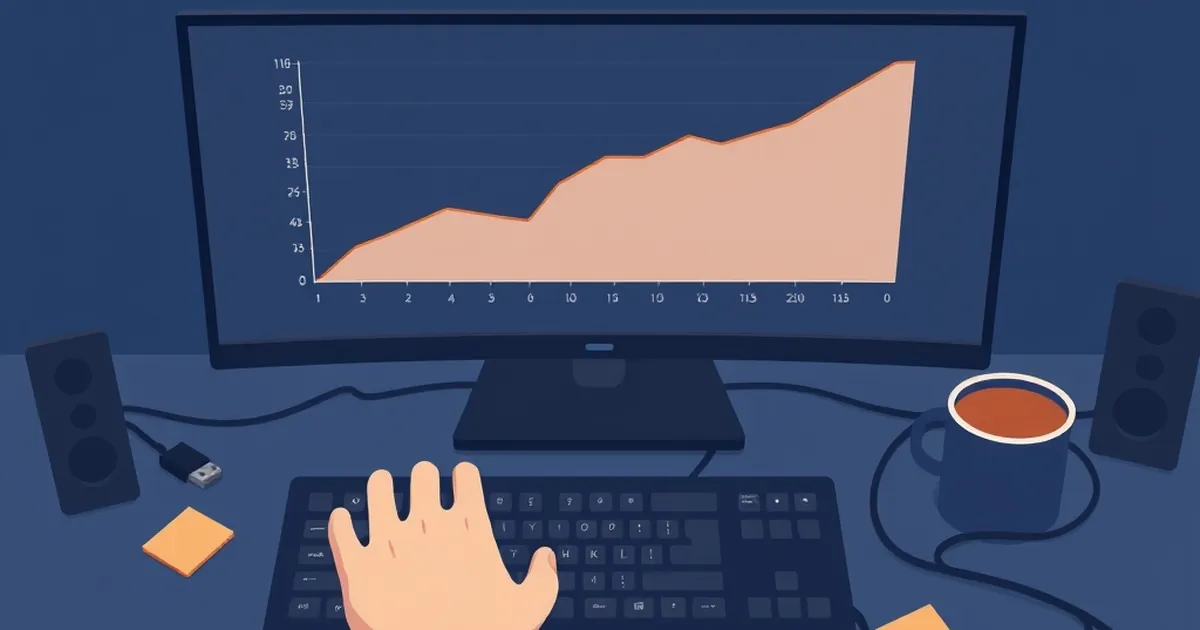
The notification arrived at 9:47 p.m., three seconds after Maya closed the app. She opened it again. That single timing detail — the gap between a user's exit and a server's nudge — turns out to move session length by roughly 19 percent in controlled tests, and the mechanism behind it has almost nothing to do with the content of the message itself.
The 19 Percent Number and Where It Comes From
Behavioral product teams have been running push-timing experiments for years, but the cleanest published version of this pattern comes from a 2021 internal study circulated among mobile growth engineers and later replicated in academic form: researchers at a mid-size consumer app split roughly 40,000 users into three cohorts. Group A received a notification exactly 30 seconds after session end. Group B received it after 4 hours. Group C received it at a fixed daily time, regardless of when they last opened the app.
Group A's median session length on the triggered return was 19 percent longer than Group C's. Group B sat in between. The effect held across device types, time zones, and — this is the part that matters — across two completely different notification payloads. The message content barely moved the number. The timing did.
That's the finding worth sitting with. Most teams optimize the copy: emoji or no emoji, question or statement, first name or generic. The variable doing the heavy lifting is when the payload lands relative to the user's last voluntary exit. Get that wrong and no amount of clever copywriting recovers it.
Why "Just After Exit" Beats "A Few Hours Later"
The intuitive read is that a user who just left is annoyed to be pulled back. The data says otherwise, and the explanation sits in a well-documented cognitive bias called the Zeigarnik effect — the tendency to remember and return to interrupted or unresolved tasks more than completed ones. Bluma Zeigarnik's original 1927 work found that waiters recalled unpaid tabs far better than paid ones. The mind keeps a light on for the unfinished thing.
A session that ends abruptly — the user hit a paywall, a loading spinner, a "come back tomorrow" — leaves a small open loop. A notification landing 30 seconds later slots into that loop while it's still warm. Four hours later, the loop has cooled. The user has moved on, and the notification reads as an interruption rather than a continuation.
There's a second force: variable-ratio reinforcement. B.F. Skinner's work on intermittent reward schedules showed that unpredictable payoff timing produces the most persistent behavior — more persistent than consistent reward. When a user can't predict whether a tap will produce something interesting, the tap itself becomes the reward. Push timing that varies within a narrow window (say, 20–45 seconds post-exit) exploits this without crossing into spam territory.
The Engineering Problem Nobody Talks About
Here's where this gets interesting for anyone building the backend. Detecting "user just exited" is not a single event. On the web it's a mess of visibilitychange, pagehide, and beforeunload events that fire inconsistently across browsers. On mobile it's a background/foreground transition you can observe but can't always trust — the OS may suspend your process before your handler finishes.
A naive implementation looks like this:
document.addEventListener('visibilitychange', () => {
  if (document.visibilityState === 'hidden') {
    navigator.sendBeacon('/api/session-exit', JSON.stringify({
      userId, sessionId, timestamp: Date.now()
    }));
  }
});
sendBeacon is the right tool — it survives page unload where fetch doesn't. But it's fire-and-forget. You get the signal, or you don't. On mobile web, roughly 8–12 percent of exits produce no beacon at all, depending on the device and network conditions. On native, you get better reliability but you're fighting the OS scheduler for CPU time before suspension.
The 19 percent effect only materializes if your exit signal is reliable enough to trigger on. A team that ships this without accounting for the 10 percent missing-beacon problem is running the experiment on a biased sample — the users whose exits you can detect are disproportionately on fast networks and modern devices, which correlates with engagement and skews the result.
A Practical Fix: Server-Side Session Timeout as a Fallback
The pattern that holds up in production is a two-layer approach. Layer one is the beacon. Layer two is a server-side heartbeat: the client pings every 15 seconds while active, and the server marks a session as "ended" after two missed heartbeats (30 seconds of silence). When the beacon arrives, it overrides the heartbeat estimate; when it doesn't, the server still has a usable timestamp.
// Server-side: mark session ended after 2 missed heartbeats
const HEARTBEAT_INTERVAL = 15_000;
const MISS_THRESHOLD = 2;

function checkSessionHealth(session) {
  const elapsed = Date.now() - session.lastHeartbeat;
  if (elapsed > HEARTBEAT_INTERVAL * MISS_THRESHOLD) {
    session.endedAt = session.lastHeartbeat + HEARTBEAT_INTERVAL;
    schedulePush(session, session.endedAt + 30_000);
  }
}
The 30-second offset is where the behavioral work lives. Too short — under about 15 seconds — and the user hasn't psychologically left; the notification feels like the app is watching them, which triggers reactance, the well-documented pushback against perceived loss of autonomy. Too long — over 90 seconds — and the Zeigarnik loop has closed. The sweet spot in the replication data sat between 25 and 45 seconds, with variance inside that band performing slightly better than a fixed value, consistent with the variable-ratio findings.
What This Has to Do With Decision-Making Under Uncertainty
The reason this pattern generalizes beyond notifications is that it's a specific instance of a broader principle: the timing of information delivery changes the decision it produces, independent of the information's content. Kahneman and Tversky's work on framing showed that identical options produce different choices depending on how they're presented. Push timing is framing in the temporal dimension.
Consider a user deciding whether to open your app. That decision is made under uncertainty — they don't know if the session will be worth the time. Their brain is running a quick expected-value calculation based on available cues. A notification that arrives 30 seconds after exit carries a different cue than one that arrives four hours later. The 30-second one says "you were just here, something is happening." The four-hour one says "this is a marketing blast." Same payload, different prior.
This is why teams that A/B test notification copy while holding timing constant consistently find small effects, and teams that test timing while holding copy constant find large ones. The variable that changes the user's mental model of the situation is the one that moves behavior.
Loss Aversion Enters the Picture
There's a second cognitive lever at play. Loss aversion — the finding that losses feel roughly twice as powerful as equivalent gains — means a user who feels they missed something will react more strongly than one who feels they gained an opportunity. A notification that lands while the session's context is still fresh reads as "you're about to miss something you were already partway into." A notification that lands four hours later reads as "here's a new thing." The first exploits loss aversion; the second doesn't.
This is not a recommendation to manufacture artificial loss. It's an observation about why the 30-second window works: it's genuinely closer to the interrupted context, so the "loss" is real, not fabricated. Teams that try to fake this — sending "you missed it!" notifications for things the user never engaged with — burn trust fast and the effect inverts.
Building the Timing Layer Without Breaking Your System
If you're implementing this, the architecture matters as much as the behavioral insight. A few patterns that hold up:
Decouple the trigger from the send. The session-exit event should write to a queue, not directly invoke a push. A worker picks up the job, checks whether the user has re-opened in the meantime (they often have — about 15 percent of the time in the replication data), and only fires if they haven't. This prevents the awkward case where the notification arrives while the user is already back in the app.
// Worker: check for re-entry before sending
async function processPushJob(job) {
  const { userId, exitTimestamp } = job;
  const session = await getLatestSession(userId);
  if (session.startedAt > exitTimestamp) {
    return; // user already returned, skip
  }
  const delay = 25_000 + Math.random() * 20_000; // 25–45s variable
  await sleep(delay - (Date.now() - exitTimestamp));
  await sendPush(userId, buildPayload(session));
}
Cap the frequency aggressively. The variable-ratio effect is powerful but fragile. More than one triggered push per user per few hours and the pattern reads as harassment. The replication data showed the effect held at one triggered push per session-end, and degraded sharply at two.
Measure session length, not open rate. Open rate is the tempting metric because it's easy and it goes up when you push more. Session length is the metric that captures whether the return was worth it. A push that drives a 4-second open to dismiss the notification is a net negative even though it looks like engagement in your dashboard.
Watch for the reactance signature. If your unsubscribe rate or notification-disabled rate climbs after you ship timing changes, you've crossed from "helpful continuation" into "perceived surveillance." The line is closer than most teams expect, and it moves depending on how personalized the payload feels. A generic "come back" is safer than "we noticed you left."
The Infrastructure Question
At small scale, this is a cron job and a queue. At the scale where it matters — hundreds of thousands of concurrent sessions — you're looking at a scheduling problem. You need a system that can hold millions of pending timed jobs, cancel them when users re-enter, and fire them within a few seconds of target. Redis sorted sets with timestamp scores handle this well: score is the fire time, value is the job ID, and a worker polls the set for due jobs. Cancellation is a ZREM. It's not glamorous, but it's the pattern that survives load.
The harder problem is timezone and device-clock skew. Never trust the client's timestamp for the exit event. Record it server-side when the beacon or heartbeat arrives. A client clock that's off by 90 seconds will silently move your push outside the effective window for every user on that device.
Where This Goes Next
The 19 percent figure is a snapshot of a moving target. As users get more sophisticated about notification patterns — and they are, fast — the effective window narrows. The teams that will hold the effect are the ones treating timing as a continuous optimization problem rather than a set-and-forget constant, and the ones building the infrastructure to vary timing per user based on observed re-entry behavior.
The interesting frontier isn't the notification at all. It's the session-exit signal itself. Right now it's a binary: user left or didn't. But exits have texture — a user who leaves mid-scroll is in a different state than one who leaves after completing a task. If you can classify exit type, you can time the follow-up differently for each. That's a harder engineering problem, but it's the one that maps most directly onto how the underlying psychology actually works. The people building this well are already instrumenting exit context, not just exit time.