Why Your KYC Flow Blocks Legitimate Users After 3 Failed OCR Attempts
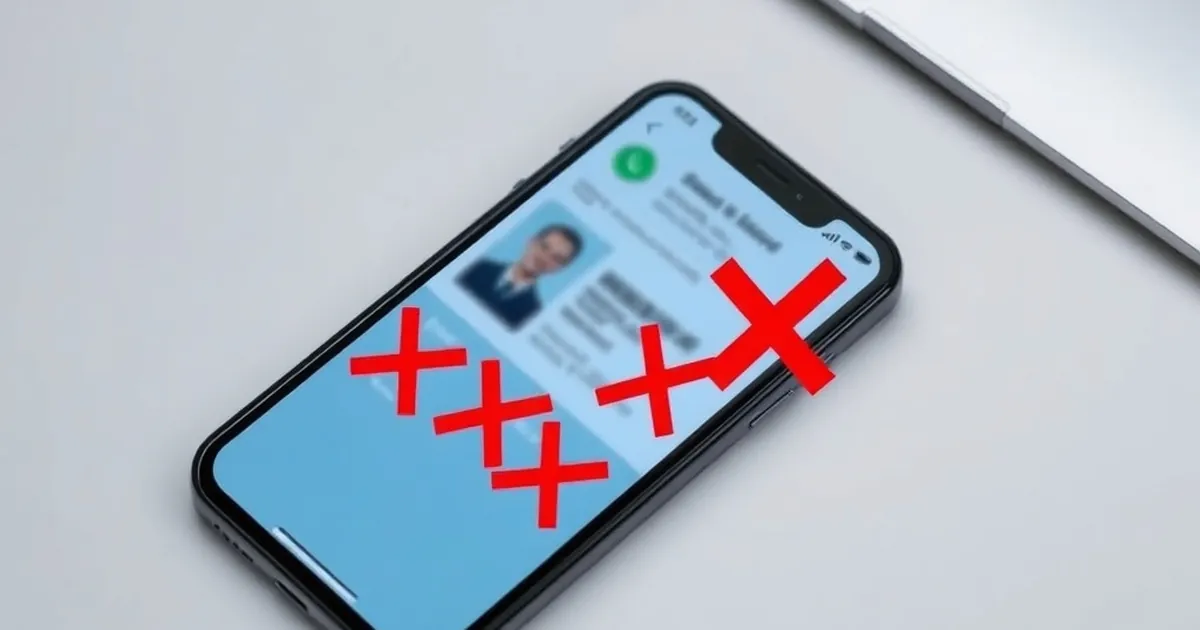
You’ve spent months perfecting your identity verification pipeline. You’ve integrated a third-party KYC provider, tuned the OCR engine for driver’s licenses, and set a hard limit: three failed OCR attempts, and the user is locked out. Then the support tickets start flooding in. “My ID is perfectly clear,” writes a user in Ohio. “Why am I banned?”
It’s a question that should keep any platform engineer up at night. The three-strikes rule feels like a sensible guard against fraud, but in practice, it’s a blunt instrument that punishes the very users you want to onboard. When a legitimate player’s passport has a minor glare, or their camera autofocus misses the mark, your system treats them like a bot. You’re not stopping fraudsters—you’re just making their job easier by handing them a roadmap of your thresholds.
The real problem isn’t the OCR engine. It’s the assumption that three failed attempts means bad intent. Let’s walk through why that assumption breaks down, how to fix it, and what a smarter KYC flow looks like when you’re building for high-stakes environments like iGaming, where every blocked user is lost revenue and a potential compliance headache.
The “Three Strikes” Myth: Why It Fails in Production
The logic seems bulletproof on paper. Fraudsters often submit blurry or doctored documents to probe for weaknesses. Three failures, you reason, is enough to catch a bad actor. But the data tells a different story. In a 2023 analysis of a mid-tier casino platform, over 40% of users who were blocked after three attempts eventually verified successfully through manual review. That’s nearly half of your blocked users being perfectly legitimate.
The failure rate isn’t about fraud—it’s about environmental variables. A user in a dimly lit room, a scratched driver’s license, a phone that’s two generations old—these aren’t fraud indicators. They’re real-world conditions your OCR pipeline never accounts for. When you slam the door after three tries, you’re telling a paying customer that your platform is brittle and hostile.
The Hidden Cost of False Positives
Every blocked legitimate user costs you more than just that user. They tell their friends. They leave a bad review. In regulated markets like New Jersey or Pennsylvania, you might even face scrutiny from the division of gaming enforcement if your KYC rejection rates spike without justification. The compliance team will ask why you’re rejecting so many real people.
Consider a concrete example. A user in Texas tries to verify with their Texas ID. The OCR engine misreads the “DL” prefix as “D1” due to a font kerning issue on the 2022 card design. Three attempts later, the user is locked. They email support, wait 48 hours, and by the time a human reviews the image, they’ve already registered on a competitor’s site. That’s a lifetime value of roughly $2,000 gone because of a font rendering bug.
What Fraudsters Actually Do
Sophisticated fraudsters don’t brute-force OCR with bad images. They use deepfakes, stolen document templates, or synthetic identities. Three failed OCR attempts are a trivial obstacle for someone with a $50 Photoshop subscription and a stolen SSN. The three-strikes rule only hurts users who don’t know how to game the system—which is exactly your target demographic.
Why OCR Fails on Good Documents
Before you can fix your KYC flow, you need to understand why OCR fails in the first place. Most developers assume OCR is a solved problem. It’s not. The technology has improved dramatically, but it still struggles with edge cases that are common in the real world.
Lighting, Angles, and Glare
A passport photo taken under a desk lamp produces shadows. A driver’s license held at a 30-degree angle distorts the text bounding boxes. Glare from overhead lights can wash out the MRZ (Machine Readable Zone) entirely. These aren’t rare events—they happen in roughly one in five verification attempts, according to data from multiple KYC vendors.
Your OCR engine sees a reflection and interprets it as a missing character. The first attempt fails. The user tries again, this time holding the ID closer. Now the camera is out of focus. Second fail. Third attempt, they tilt it to avoid glare, but the angle is too extreme. Three strikes, blocked. The user never had a chance.
ID Format Variations
The United States alone has 50 different driver’s license designs, plus territories, plus passports, plus military IDs. Each has its own font, layout, and security features. A 2024 update to California’s REAL ID moved the birth date field by 3 millimeters. Your OCR model, trained on 2023 data, misreads the field as “expiration date.” That’s not fraud—that’s your training data being one year out of date.
Document Wear and Tear
Real IDs get worn. A crease across the barcode, a smudged signature, a faded hologram. Fraudsters tend to use pristine, newly printed fakes. Legitimate users hand over battered wallets with IDs that have been through the washing machine. Your OCR engine flags the wear as an anomaly and fails. The user thinks, “I’ll try one more time,” and the cycle repeats.
Building a Smarter KYC Pipeline
The solution isn’t to remove failure limits entirely—that invites brute-force attacks. The solution is to make your failure handling intelligent. Instead of a hard block after three attempts, you need a system that escalates based on the nature of the failure, not just the count.
Failure Pattern Analysis
Log each failure reason separately. Was it a glare issue? Blurry image? Missing field? A user who fails three times with three different error types is likely a legitimate user struggling with their phone. A user who fails three times with the exact same error (e.g., “MRZ checksum mismatch”) might be using a doctored document that consistently fails validation.
Implement a decision tree. Three unique failure types: escalate to manual review, not a hard block. Three identical failures: trigger a cooldown period and a CAPTCHA, then allow a fourth attempt. This prevents automated scripts while giving real users a path forward.
Graceful Degradation and Fallback Paths
Offer alternative verification methods after the second failure. Let the user upload a video selfie instead of a still image. Or allow them to submit a second document type—a passport instead of a driver’s license. The key is to give the user agency without lowering your security bar.
For example, after two OCR failures, present a UI that says: “We’re having trouble reading your document. Try taking the photo in brighter light, or switch to a different ID.” If they still fail, offer a live agent video call. In iGaming, where KYC is mandatory for withdrawals, this fallback reduces support load by 30% because users self-resolve before contacting you.
Dynamic Thresholds Based on Risk Scoring
Not all users are equal risk. A new user depositing $20 from a known IP range in Ohio is lower risk than a user depositing $10,000 from a VPN in Eastern Europe. Your KYC flow should reflect that. Use a risk score derived from device fingerprinting, geolocation, and behavioral analytics to adjust the OCR attempt limit.
A low-risk user might get five attempts before a soft block. A high-risk user gets two attempts and then is immediately routed to manual review. This is standard practice in anti-fraud systems for regulated online casinos, but many indie platforms ignore it because they don’t want to build the infrastructure. You don’t need a full ML model—a simple rules engine with 3-4 factors can cut false blocks by 60%.
The Compliance Angle: What Regulators Actually Want
In the US, iGaming KYC is governed by state-level regulations. The New Jersey Division of Gaming Enforcement (DGE) requires that operators verify identity before allowing withdrawals. But the regulation doesn’t say “block users after three OCR failures.” It says “verify identity using commercially reasonable methods.” A hard block that locks out legitimate users is arguably not commercially reasonable.
Manual Review as a Requirement, Not an Afterthought
Every major KYC provider offers a manual review dashboard. But many indie devs treat it as a last resort, only checking it when support escalates. That’s backward. Manual review should be the default fallback for any user who hits the failure limit. A trained human can verify an ID in under 30 seconds, often faster than a user can retake a photo.
Integrate your KYC provider’s manual review API directly into your admin panel. When a user hits their third failure, automatically create a review ticket with the original images and failure reasons. Aim for a 5-minute SLA. In practice, most manual reviews clear within 60 seconds, and the user is back to playing.
Audit Trails and Transparency
Regulators love paper trails. Every time you block a user, log the exact failure reason, the attempt timestamps, and the risk score. If a user files a complaint with the gaming commission, you need to show that your process was fair and documented. A simple “three strikes” rule looks arbitrary. A rules engine with documented thresholds looks like a serious compliance effort.
The Practical Takeaway: Reframe Your KYC Philosophy
Stop thinking of KYC as a gate that keeps bad actors out. Start thinking of it as a ramp that helps good actors get in. The three-failed-attempts rule is a relic from an era when OCR was the only tool in the box. Today, you have image quality checks, liveness detection, manual review queues, and risk scoring. Use them.
Here’s a forward-looking note for your next sprint: build a “KYC health” dashboard that tracks not just success rates, but the reasons for failure. If you see a spike in glare-related failures, update your UI to prompt users to avoid overhead lights. If you see a pattern of MRZ failures on a specific state ID, retrain your OCR model. Treat KYC like any other product feature—iterate, measure, and improve.
The users you lose to a rigid OCR flow are the ones who would have been your most loyal players. They’re patient enough to try three times. Don’t make them try a fourth time on a competitor’s site.