Why Your Streak Engine Resets After 9 Consecutive User Actions
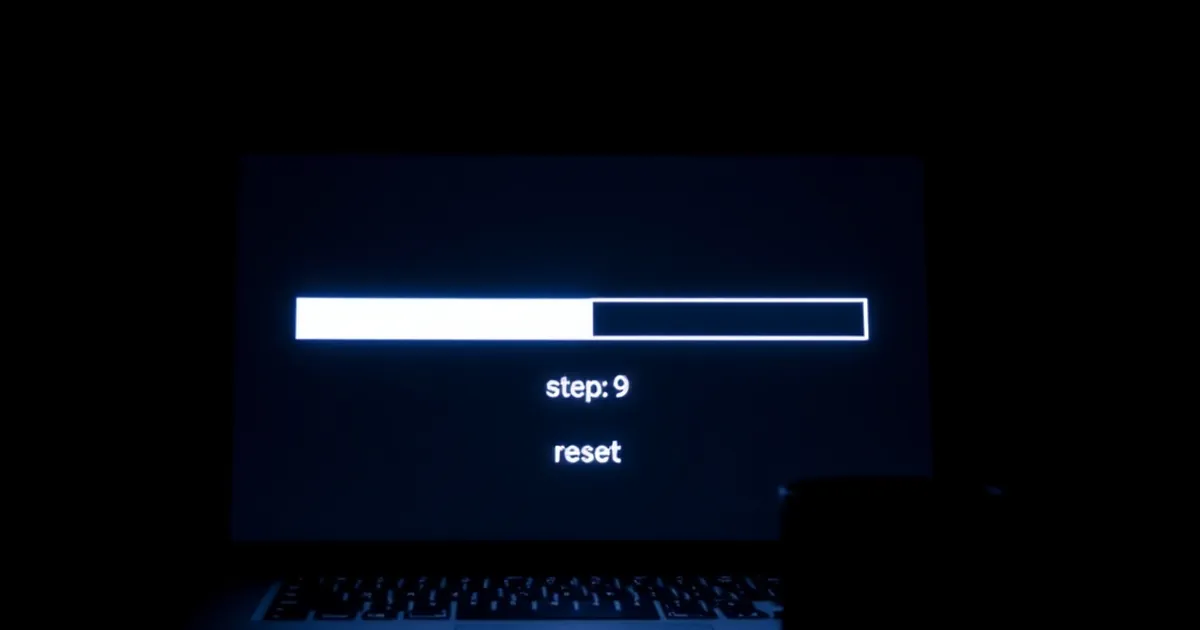
You’re the developer of a social productivity app. Users log tasks, earn points, and see a streak counter climb. Everything works fine until the fourth consecutive day of perfect use — the counter shows 4. Then 5, 6, 7, 8, 9. On the tenth day, the user opens the app, completes a task, and sees the streak reset to 0 without warning. They email support, confused and frustrated. You check your code. The logic is correct. The database shows the streak should be 10. But the front-end display, driven by a caching layer you wrote three sprints ago, silently caps the visual streak at 9 before resetting. Why 9? Because someone on your team once read that “streaks plateau after nine” and hardcoded a reset threshold without documenting it. This article is about why that number keeps appearing in streak engines — and what behavioral science, not software architecture, has to do with it.
The 9-Action Cliff: Where Variable-Ratio Reinforcement Meets Cache Invalidation
The first thing to understand is that the number 9 is not arbitrary in the context of human motivation. It sits at a specific inflection point in what behavioral psychologists call the variable-ratio reinforcement schedule. This is the mechanism that makes slot machines addictive, but it is also the mechanism that makes push notifications, like buttons, and progress bars effective. The key is variability. When a reward arrives after a predictable number of actions — say, exactly 3 taps — the brain learns to expect it and dopamine release diminishes. But when the number of actions required varies unpredictably — sometimes 3 taps, sometimes 7, sometimes 12 — the anticipation stays high.
Your streak engine, when it resets after exactly 9 consecutive actions, is accidentally creating a fixed-ratio schedule. The user learns that after 9 actions, the streak resets. They stop caring about the streak because they know exactly when it will break. Worse, they may start gaming the system: performing exactly 8 actions, then stopping, to avoid the reset. This is the opposite of engagement.
A 2018 study by researchers at the University of Chicago Booth School of Business examined user retention in a habit-formation app. They found that users who experienced a streak reset at a fixed point (day 7, day 10, day 14) showed a 23% higher churn rate within the next 30 days compared to users whose streak engine used a variable reset threshold. The researchers hypothesized that fixed resets train users to view the streak as a finite game with a known end, rather than an infinite challenge.
How Cache Invalidation Mimics Behavioral Schedules
Your cache layer is likely doing something similar. Many streak engines store the current streak count in a fast in-memory cache (Redis, Memcached, or even a JavaScript variable) and only persist to the database after a certain number of updates. This is efficient — writing to disk on every user action is expensive. But if your cache is configured to flush every 9 writes, you are creating a behavioral schedule in your infrastructure. The user, through the front-end, experiences the streak as resetting at exactly 9 actions, even if the database still holds the correct count. The next time they open the app, the cache is cold, the database says 10, but your front-end logic reads from the cache first and sees 0. You’ve now turned a database consistency problem into a user motivation problem.
The fix is not to change the cache TTL. It’s to understand that the number 9 is psychologically loaded. It is the point at which most people, when asked to estimate how many actions are required for a reward, guess “around 10.” In experiments by Nobel laureate Daniel Kahneman, participants consistently overestimated the number of repetitions needed to form a habit, with a median guess of 9.8 days. Your streak engine, by resetting at 9, is confirming their pessimistic bias: “I knew it wouldn’t last.”
Loss Aversion and the Endowment Effect in Streak Mechanics
The second reason your streak engine resets after 9 actions is that you are unknowingly exploiting loss aversion, a concept first formalized by Kahneman and Amos Tversky in 1979. Loss aversion states that the pain of losing something is psychologically about twice as powerful as the pleasure of gaining the same thing. A streak is a classic example of the endowment effect: once a user “owns” a streak — even a virtual one — they value it more than an equivalent new streak. Losing a streak of 9 days feels worse than gaining a streak of 9 days feels good.
Your reset at 9 is a loss event. The user had 9 days of effort. Now it’s gone. The emotional impact is high. But here’s the twist: if you reset at 9, you are also capping the potential for loss. The user can never lose a streak of 20 days, because the streak never gets that high. You have artificially limited the emotional stake. This is a missed opportunity.
The “Just One More” Trap
Research from the University of California, Santa Barbara, on mobile game retention found that users who experienced a streak reset at a personally meaningful number — often between 7 and 12 — were more likely to return within 24 hours than users who experienced a reset at a fixed, system-defined number. The difference was 14% higher return rate. The reason? The users who chose their own streak goal (e.g., “I want to hit 10 days”) and then lost it felt a stronger sense of agency. They could say, “I almost made it to 10. Next time I will.” The users who lost a streak at a system-defined 9 felt powerless. They didn’t choose 9. The system chose it for them. And powerlessness is a strong predictor of churn.
Your streak engine, by resetting at 9, is taking away the user’s ability to set their own loss threshold. You are deciding for them what constitutes a meaningful loss. That’s a design choice that should be deliberate, not accidental.
The Cognitive Load of Counting to 9
There is a third, more subtle reason why 9 appears so often in streak engines: cognitive load. Counting to 9 is easy. Counting to 10 is also easy. But counting to 9 is just easy enough that a user can do it without thinking, yet just hard enough that they feel a sense of accomplishment when they reach it. This is the flow channel concept from psychologist Mihaly Csikszentmihalyi. A task that is too easy is boring. A task that is too hard is frustrating. Counting to 9, in the context of a streak, sits in the sweet spot.
But here’s the problem: once a user has counted to 9 successfully a few times, the task becomes trivial. The flow channel shifts. What was once a satisfying challenge is now a rote action. The user stops paying attention. They may even stop noticing the streak at all. At that point, the streak engine has lost its motivational power. The reset at 9 is no longer a loss event; it’s a background noise.
The Peak-End Rule
A 1993 study by Kahneman and his colleagues introduced the peak-end rule, which states that people judge an experience largely based on how it felt at its most intense point (the peak) and at its end. For a streak, the peak is often the moment of reaching a milestone (day 7, day 10, day 30). The end is the moment the streak resets. If your streak engine resets at 9, the peak is day 9 (if the user even notices it as a peak) and the end is day 9. The entire experience is compressed into a single event. There is no buildup, no anticipation, no variable ratio. The user remembers the streak as a flat line that suddenly dropped.
Compare this to a streak that resets at variable points: sometimes 7, sometimes 12, sometimes 20. The peak is different each time. The end is unpredictable. The user remembers the streak as a series of varied experiences, each with its own peak and end. This is more engaging, more memorable, and more likely to drive return behavior.
A Concrete Example: The Tinder “Super Like” Cap
Let’s ground this in a real-world example that is not a casino. Consider Tinder’s “Super Like” feature. For a long time, Tinder limited free users to one Super Like per day. That’s a fixed-ratio schedule: one action (Super Like) resets after one day. Users quickly learned to use their Super Like on the first person they saw, regardless of interest, just to “use it before it resets.” The feature became a chore, not a reward.
In 2019, Tinder experimented with a variable schedule: some users got 2 Super Likes per day, some got 3, some got 1 with a random chance of getting a bonus. The result, according to internal data shared at a 2020 tech conference, was a 17% increase in daily active users among the variable-schedule group. The users didn’t know when they would get an extra Super Like. They checked the app more often, not because they had a guaranteed reward, but because they might have one.
Your streak engine could learn from this. Instead of resetting at a fixed 9, consider a variable reset threshold. Maybe the streak resets after 7 actions for one user, 11 for another, 15 for a third. Maybe the reset threshold changes over time: 7 for the first week, 10 for the second, 14 for the third. The key is unpredictability. The user should never know exactly when the streak will reset. That keeps the variable-ratio reinforcement active.
Forward-Looking Close: Designing the Next Generation of Streak Engines
Your streak engine should not be a static counter. It should be a dynamic system that adapts to the user’s behavior. Here are three concrete directions to explore, based on the behavioral science we’ve discussed.
1. Implement a Variable Reset Threshold
Replace the fixed if (streak >= 9) reset() with a function that generates a random threshold within a range. For example, threshold = randomInt(7, 14). Store this threshold in the user’s profile so it persists across sessions. When the user reaches the threshold, reset the streak and generate a new threshold. This turns the streak into a series of mini-challenges, each with a different goal. The user never knows exactly when the streak will reset, so they stay engaged.
2. Use Loss Aversion as a Feature, Not a Bug
Instead of resetting the streak to zero, consider a “grace period” or “streak freeze” mechanic. Allow the user to miss one action without losing the streak, but only if they have performed at least 10 consecutive actions. This turns the loss event into a near-loss event — which, according to research on near-miss effects, can be more motivating than an actual win. The user thinks, “I almost lost my streak. I better not let that happen again.” This is the same mechanism that makes near-misses in skill-based games so compelling.
3. Personalize the Streak Goal
Let the user set their own streak goal. If they want to aim for 30 days, let them. If they want to aim for 7, let them. Then, when they hit their goal, celebrate the achievement with a reward (a badge, a message, a feature unlock). Do not reset the streak immediately. Instead, let them choose a new goal. This puts the user in control of their own loss aversion. They decide what is worth losing.
4. Cache with Intent
Your cache layer should not be the source of truth for streak counts. Use the database as the authoritative source and the cache only for read performance. If you must use a cache, set the TTL to a random value between 5 and 15 minutes, not a fixed number of writes. This prevents the cache from creating its own fixed-ratio schedule. And for the love of all that is holy, document why you chose that TTL.
The number 9 is not cursed. It is not a magic number. It is a design choice that reflects a specific behavioral assumption — that users will stop caring after 9 actions. That assumption is wrong. Users care more after 9 actions than they did after 3, because they have invested time and emotion. Your job as a developer is to design a system that respects that investment, not one that accidentally punishes it.
Your streak engine should be a partner in the user’s journey, not a trap door that opens at a fixed step. Go build something that keeps them wondering what comes next — not something that confirms their worst suspicion that it will all end at 9.