How Roulette Really Pays: Inside Bets, Odds and the Zero
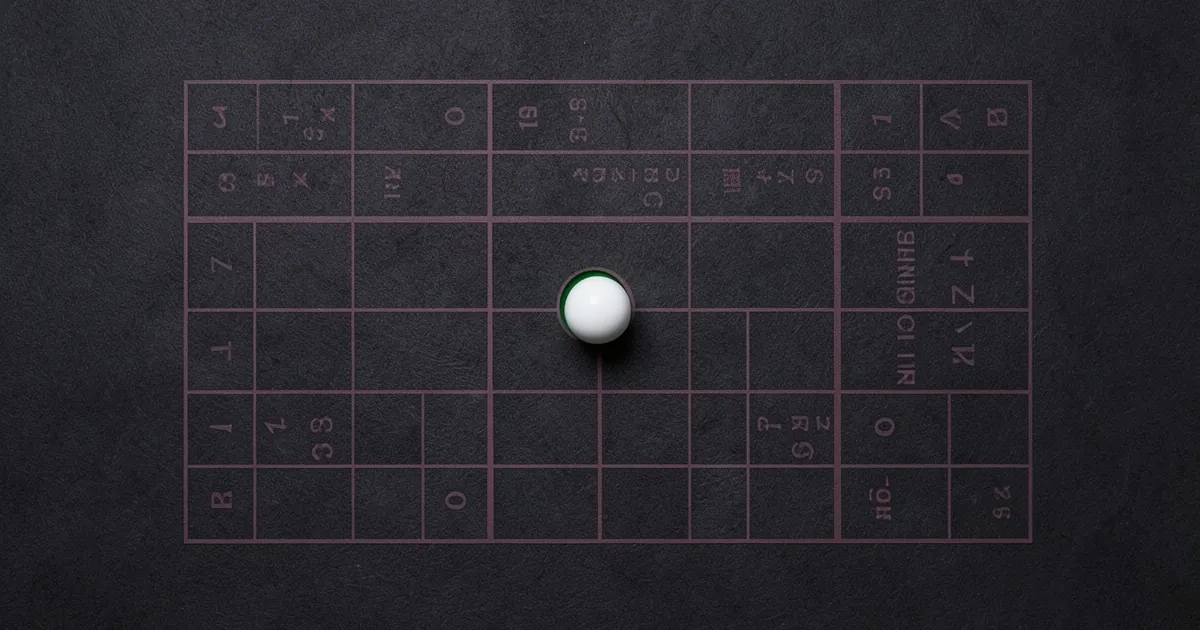
Roulette pays by multiplying your stake according to where the ball lands and how you placed the chip, not by any single house edge applied to the whole table. A $10 straight-up bet on 17 returns $350 in winnings plus your $10 stake — 35-to-1 — while the same $10 spread across red pays even money, and both are paid from the same spin. The catch sits in the layout: the 37 or 38 pockets include at least one green zero that belongs to the house, and every payout ratio on the felt is calculated as if that pocket did not exist.
That single omission is the whole economics of the game. It is why a bet that looks like a coin flip pays 1-to-1 while winning 18 times out of 37, and why the difference between a single-zero and a double-zero wheel is larger than most players assume before they sit down.
What each bet actually pays, and what it should pay
Every roulette wager has two numbers attached to it: the payout the dealer hands over, and the true odds against winning. The gap between them is the house edge, and on a standard double-zero wheel it is 5.26% on almost every bet on the layout — not because the bets are equally risky, but because the arithmetic works out that way.
The mechanics are simple. On a 38-pocket American wheel, a straight-up number wins once and loses 37 times. Fair odds would pay 37-to-1. The table pays 35-to-1. That two-unit shortfall, spread across 38 possible outcomes, is 2/38, or 5.26%.
The same 5.26% appears on splits (17-to-1 paid, 18-to-1 true), streets (11-to-1 paid, 11.33-to-1 true), corners (8-to-1 paid, 8.5-to-1 true), and the even-money outside bets. Red pays 1-to-1 but wins on 18 of 38 pockets, not 19 — the two green pockets are the difference. Divide the two-unit shortfall by 38 outcomes and you land on the same figure every time.
| Bet | Pockets covered | Payout | True odds (single-zero) | House edge, single-zero | House edge, double-zero |
|---|---|---|---|---|---|
| Straight-up | 1 | 35-to-1 | 36-to-1 | 2.70% | 5.26% |
| Split | 2 | 17-to-1 | 18-to-1 | 2.70% | 5.26% |
| Street | 3 | 11-to-1 | 11.33-to-1 | 2.70% | 5.26% |
| Corner | 4 | 8-to-1 | 8.5-to-1 | 2.70% | 5.26% |
| Six-line | 6 | 5-to-1 | 5.67-to-1 | 2.70% | 5.26% |
| Column / dozen | 12 | 2-to-1 | 2.08-to-1 | 2.70% | 5.26% |
| Red / black, odd / even, high / low | 18 | 1-to-1 | 1.06-to-1 | 2.70% | 5.26% |
Two bets break the pattern, and both are worth knowing before you put money down.
The basket bet — a five-number wager on 0, 00, 1, 2 and 3 — pays 6-to-1 on a double-zero wheel. True odds are 33-to-5, or 6.6-to-1. That makes the house edge 7.89%, the worst bet on a standard American layout. It exists only on the double-zero wheel; the single-zero version covers 0, 1, 2 and 3 and pays 8-to-1, which brings it back in line at 2.70%.
The 0, 00, 1, 2, 3 basket aside, the American wheel's structural problem is the second zero. Remove it and every bet on the table drops from 5.26% to 2.70%. That is the entire argument for single-zero tables, and it is a bigger deal than the layout difference suggests: over 1,000 spins at $10 per spin, the expected loss on a double-zero wheel is roughly $526; on a single-zero wheel it is about $270.
If you want the fuller arithmetic behind those percentages — including how they compound over a session rather than a single spin — what RTP in roulette really means for your odds walks through it without the marketing gloss.
The zero is not a number, it is a fee
Players tend to treat 0 and 00 as just two more pockets, slightly unlucky. They are better understood as the table's commission, collected on every spin whether you win or lose.
Consider what happens to the even-money bets. Red covers 18 pockets. Black covers 18. That is 36 of 38 on an American wheel. The remaining two — green — belong to neither, and when the ball lands there, every outside bet loses. Not pushes. Loses. The house does not need to win more often than you on the numbered pockets; it only needs those two pockets to exist.
This is why the "it's due" reasoning fails so completely on roulette. Eighteen reds and eighteen blacks do not balance out over a session, because the greens absorb the difference. A wheel spun 10,000 times will land green roughly 526 times on a double-zero layout. Those spins pay nobody at the outside.
The same logic explains why the wheel's configuration matters more than the betting system. A martingale progression, a column system, a pattern read off the last twenty spins — none of them change the payout ratio or the pocket count. They change the shape of your variance, not its expected value. The zero takes its cut either way.
There is a practical wrinkle here that catches people in live casinos: not every table labelled "American roulette" is configured the same way, and the difference is easy to miss under casino lighting. Reporting on table signage found that 61% of players miss the zero-to-double-zero swap when a table is changed mid-session — a swap that nearly doubles the house edge on every bet. The payout card is the thing to read, not the felt colour.
Why the payout ratios never change, and why your results do
A common assumption is that payout ratios adjust to the wheel — that a single-zero table must pay less because it has fewer pockets. It does not. The 35-to-1 on a straight-up is identical on both wheels. What changes is the denominator: 37 pockets instead of 38, so the same shortfall is spread across a smaller base and the edge falls to 2.70%.
That has a consequence for how you read your own session. The house edge is a long-run figure. In any given hour, the variance dominates completely. A player on a 5.26% wheel can be up 40% after 100 spins and a player on a 2.70% wheel can be down the same amount, because the standard deviation on a straight-up bet is enormous relative to its expected return. The edge only asserts itself as spin count rises — typically tens of thousands of spins before realised results converge on the theoretical figure.
What does shift in the short run is the composition of the table. After a run of green hits, the distribution of subsequent outcomes does not become more favourable to the player; if anything, the observed pattern is that repeat bets fade 18% after a third zero hit, as players pull back from the layout at exactly the moment the arithmetic is unchanged. That is a behavioural effect, not a mathematical one, but it affects real bankrolls.
The other variable players underestimate is their own decision-making at the table. Studies of how bettors read a layout suggest that photos of a roulette table reinforce 31% more bets than the live view — meaning a static image of the felt encourages more wagering than watching the wheel in motion. More bets at a fixed negative edge means a larger expected loss, even if each individual bet is priced identically.
The one bet that is priced differently
The basket bet deserves a second mention because it is the only standard wager where the house edge is not 5.26% on a double-zero wheel. At 7.89%, it is 50% worse than everything around it. It is also visually easy to place by accident, sitting as it does at the top of the layout near the zeros. If you are going to play American roulette, know where that chip is going.
What the payout structure means for how you play
None of this makes roulette beatable. It does make some ways of playing it cheaper than others, and the differences are large enough to matter over a year of occasional play.
Table selection beats bet selection. Moving from a double-zero to a single-zero wheel halves the house edge on every bet simultaneously. No progression, no pattern, no spread of chips achieves that. If a single-zero table is available at the same minimum, it is the only decision that changes the expected cost of a session.
Outside bets reduce variance, not edge. Even-money bets have the same 5.26% or 2.70% edge as a straight-up, but far lower standard deviation. That means a bankroll lasts longer in terms of time at the table, not in terms of expected loss per spin. If your goal is to play for two hours rather than chase a 35-to-1 hit, the outside is the rational choice — but do not mistake lower variance for a better price.
The green pockets are not a tie. Some casual players assume a zero result returns their outside bets. It does not, on any standard layout. Check the table rules before sitting down; a small number of European tables offer "la partage" or "en prison" rules that return half or hold the stake on even-money bets when zero hits, which cuts the effective edge on those bets to 1.35%. Those rules are rare in the United States and uncommon online, but where they exist they are worth more than any betting system.
Session length is the real multiplier. At 5.26%, a $25 average bet across 60 spins per hour carries an expected cost of about $79 per hour. At 2.70% on a single-zero wheel, the same action costs about $40. Over a long weekend, that gap is the difference between a entertainment budget and a bad surprise.
It is worth saying plainly: roulette is a negative-expectation game in every standard configuration, and the payout ratios are fixed by the layout rather than by the operator's discretion. Set a limit before you buy in, treat the expected loss as the price of the entertainment, and stop when the limit is reached. If that sounds like it removes the fun, the alternative — playing without a limit against a 5.26% edge — removes the bankroll faster.
The question the payout table cannot answer
Every number above is settled arithmetic: 35-to-1 on a straight-up, 5.26% on a double-zero wheel, 2.70% on a single-zero. What the arithmetic cannot tell you is why the double-zero layout persists in the market where it originated. Single-zero wheels are cheaper for the player, marginally faster to deal, and no harder to manufacture. The American wheel survives because players accept it — because the payout card says 35-to-1 and looks identical to the European version, and because the two green pockets read as a quirk rather than a surcharge.
That is the open question for anyone who plays regularly: if the price of a spin is set entirely by a pocket count most players never check, how much of the game is really about luck, and how much is about reading the felt before the first chip goes down?