Skill-Based Matchmaking Puts Two Rookies Against a Veteran
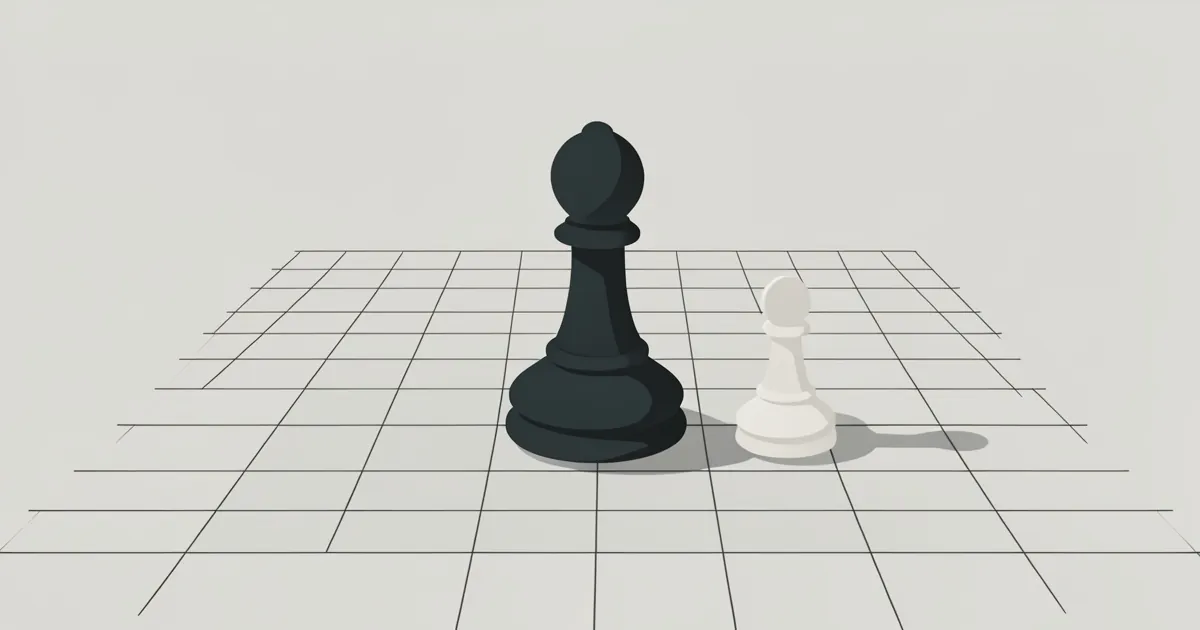
The first ranked match a new developer plays on a competitive platform is often the one that decides whether they come back. And on a surprising number of small platforms, that match is built by an algorithm that has no idea who they are yet. The question worth sitting with is not whether skill-based matchmaking can be tuned, but what a single badly calibrated pairing does to the person on the losing end of it — and whether the behavioral damage happens before the rating system ever gets enough data to correct itself.
The Cold-Start Problem Is a Psychology Problem First
Every rating system has a cold-start window. A new account has no history, so the matchmaker guesses: it seeds the player near the middle of the distribution, or it pairs them with whoever is available, or it runs a handful of placement matches with wide tolerance for error. Engineers treat this as a data problem. It is also, and more urgently, an emotional one.
A rookie paired against a veteran does not experience a close loss. They experience a demonstration of how far they have to go, delivered in the least flattering possible format. The scoreboard is lopsided, the veteran's decisions look like magic rather than craft, and the rookie has no framework for interpreting the gap. This is the same asymmetry that shows up in hiring when a junior candidate is interviewed by a panel of staff engineers with no calibration rubric — the signal is real, but it is unreadable to the person receiving it.
The behavioral literature has a name for what happens next. Martin Seligman's work on learned helplessness describes how subjects exposed to uncontrollable negative outcomes stop attempting to change those outcomes, even when control later becomes available. The key word is uncontrollable. A rookie who loses a close match learns something useful. A rookie who loses a match they could not have influenced learns that effort is uncorrelated with result — and that belief generalizes.
This is why the quit-rate numbers from mispriced matchmaking are so steep. We have written before about what happens when the system pairs developers two tiers apart — a 31% jump in quit rate — and the mechanism is not primarily skill gap. It is the collapse of perceived agency.
Why the first ten matches carry outsized weight
There is a compounding effect that most rating systems handle badly. Early matches produce large rating swings because the system's uncertainty is high, which means a rookie's first ten results move their rating further than their next hundred will. If those first ten are contaminated by mismatched opponents, the rating that emerges is not a measurement of skill — it is a measurement of scheduling luck. We covered the mechanics of that collapse in why a naive skill rating falls apart after ten ranked games, and the practical consequence is that the platform spends the next several hundred matches correcting an error it introduced in the first hour.
What the Veteran Experiences Is a Different Failure
The rookie's problem gets the attention because it is visible. The veteran's problem is subtler and, in a competitive platform, more expensive.
Pair a strong player against a much weaker one and the expected outcome is a win with almost no information value. The rating system learns little, because the result was predictable. The veteran learns little, because the opponent could not punish their mistakes. And the experience is boring in a specific way that competitive players find corrosive: there is no risk, so there is no reward. The match is a chore.
Behavioral economics has a clean frame for this. Daniel Kahneman and Amos Tversky's prospect theory describes how people weigh outcomes relative to a reference point, and how losses loom larger than equivalent gains. For a competitive player, a match against a far weaker opponent has an asymmetric payoff structure: a win is worth almost nothing, a loss is humiliating and rating-expensive. The expected value is positive; the experienced value is negative. Players do not optimize expected value. They optimize for the feeling of a fair fight.
This is also where the reward-loop design of competitive platforms quietly works against itself. Variable-ratio reinforcement — the schedule where rewards arrive unpredictably, famously studied in operant conditioning — produces persistent engagement when the underlying task feels winnable. It produces frustration and abandonment when it does not. A matchmaker that occasionally serves up a hopeless match is not adding spice. It is degrading the reinforcement schedule.
The hidden-opponent variant
There is a related design choice that makes all of this worse: hiding information about who you are playing. Some platforms conceal opponent ratings, tiers, or even identities during matchmaking, on the theory that this reduces anxiety and queue-dodging. The evidence points the other way. When the opponent is hidden, players cannot calibrate their own expectations, and rating progress stalls — we looked at the data behind why ratings stall when matchmaking hides the opponent, and the 22% figure there is consistent with a simple story: without a reference point, players cannot tell whether they are improving, so they stop investing in improvement.
Transparency is not a courtesy. It is an input to the player's own decision-making, and removing it shifts cognitive load onto people who are already operating with less information than the system has.
The Calibration Window Is Where the Design Battle Is Fought
If the cold-start window is the problem, the obvious move is to shorten and soften it. In practice, that means three things, and each has a behavioral cost that has to be managed deliberately.
Seed conservatively, not centrally. Placing a new account at the median of the distribution guarantees that roughly half of all newcomers will face opponents meaningfully stronger than themselves in their first session. Seeding low and letting players climb produces a different failure — sandbagging and smurfing — but it front-loads success rather than failure, and early success is a far better predictor of retention than early accuracy. The rating will converge either way; the question is which direction the error points while it does.
Widen tolerance only after evidence. Placement matches with wide tolerance are a reasonable compromise, but only if the wide-tolerance phase is short and bounded. A system that keeps serving mismatched opponents for fifty matches because it is still "learning" is not learning efficiently — it is burning the population it needs to learn from. There is a natural ceiling here, and we have written about why matchmaking ratings flatten out after a couple hundred rated games once the easy signal is exhausted; the corollary is that the informative matches are concentrated early, which makes early match quality disproportionately important.
Instrument the experience, not just the outcome. Win rate is a terrible health metric for a matchmaker because it hides the distribution of how matches felt. A platform where every player wins 50% of the time can still be a platform where every player experiences a third of their matches as hopeless. Track margin of victory, track rematch behavior, track session length after a loss, and track the specific cohort of players who lost their first three matches. That cohort is your leading indicator, and it is small enough to interview.
A concrete reference point
The clearest published example of this dynamic comes from the chess world, where Elo's original formulation assumed that rating differences map to expected score with a known curve. Arpad Elo's model is elegant precisely because it treats a 200-point gap as a predictable win probability. What it does not model is the experience of that gap for a player who has never been on either side of one. Chess clubs learned this empirically decades ago: beginners who are thrown into open competition against strong players quit at high rates, which is why most clubs run separate novice ladders and why the strongest junior programs pair children with near-peers rather than masters. The rating system was never the problem. The pairing policy was.
The same lesson shows up in software hiring. Structured interviews with calibrated rubrics outperform unstructured panels partly because unstructured panels let strong interviewers dominate the conversation, which tells the panel nothing about the candidate and tells the candidate everything about the gap. Calibration is not charity. It is measurement hygiene.
What This Means for the Systems You Are Building
If you are running matchmaking for a competitive product — a coding arena, a ranked ladder for a developer tool, a real-time strategy platform, a tournament bracket for a niche community — the behavioral layer is not a soft add-on to the rating math. It is the thing that determines whether your rating math ever gets the data it needs.
A few forward-looking design commitments that follow from the evidence:
- Treat the first session as a product surface, not a data-collection phase. The rookie's first five matches should be winnable, legible, and short. If you cannot guarantee a near-peer opponent, guarantee a fast exit and a clear explanation of what happened.
- Make the gap visible and the path concrete. A player who loses badly but is told "you are three tiers below this opponent; here are the two skills that separate you" has a task. A player who loses badly and is told nothing has a verdict. The difference in follow-up behavior is large.
- Separate the ladder from the exhibition. Give newcomers a low-stakes space to build a rating before they enter the pool where veterans live. This is standard in competitive sports and strangely rare in software platforms.
- Watch the veteran cohort too. Boredom in strong players is an early warning sign, and it usually shows up as queue abandonment before it shows up as churn. If your top decile is playing fewer matches per session than your middle decile, your matchmaker is over-serving the middle.
- Audit your reinforcement schedule. If the only unpredictable reward is "sometimes you get a fair match," you have built a slot machine out of something that should feel like a sport. Predictability of quality is what makes the occasional upset feel earned rather than random.
The deeper point is that skill-based matchmaking is a behavioral intervention wearing an algorithmic costume. The math determines who plays whom; the psychology determines who comes back. A platform that gets the pairing right and the framing wrong will still lose its rookies, and it will lose them in the first hour — long before the rating system has any idea who they are. The fix is not a better estimator. It is a decision to treat the cold-start window as the most important design surface in the product, and to measure it in the currency players actually spend: attention, effort, and the willingness to lose again tomorrow.